By: Nilay Ernst and Jessica Latham
The Former British Consulate Yokoma Museum
The Former British Consulate General in Yokohama today stands as a museum to the public, displaying the city’s history after opening ports to international trade. While originally having closed ports since the early 17th century, under the samurai sakoku (“closed country”) policy, Japan later opened its ports under the treaties made in 1854 and 1858 with the arrival U.S. naval squadrons.
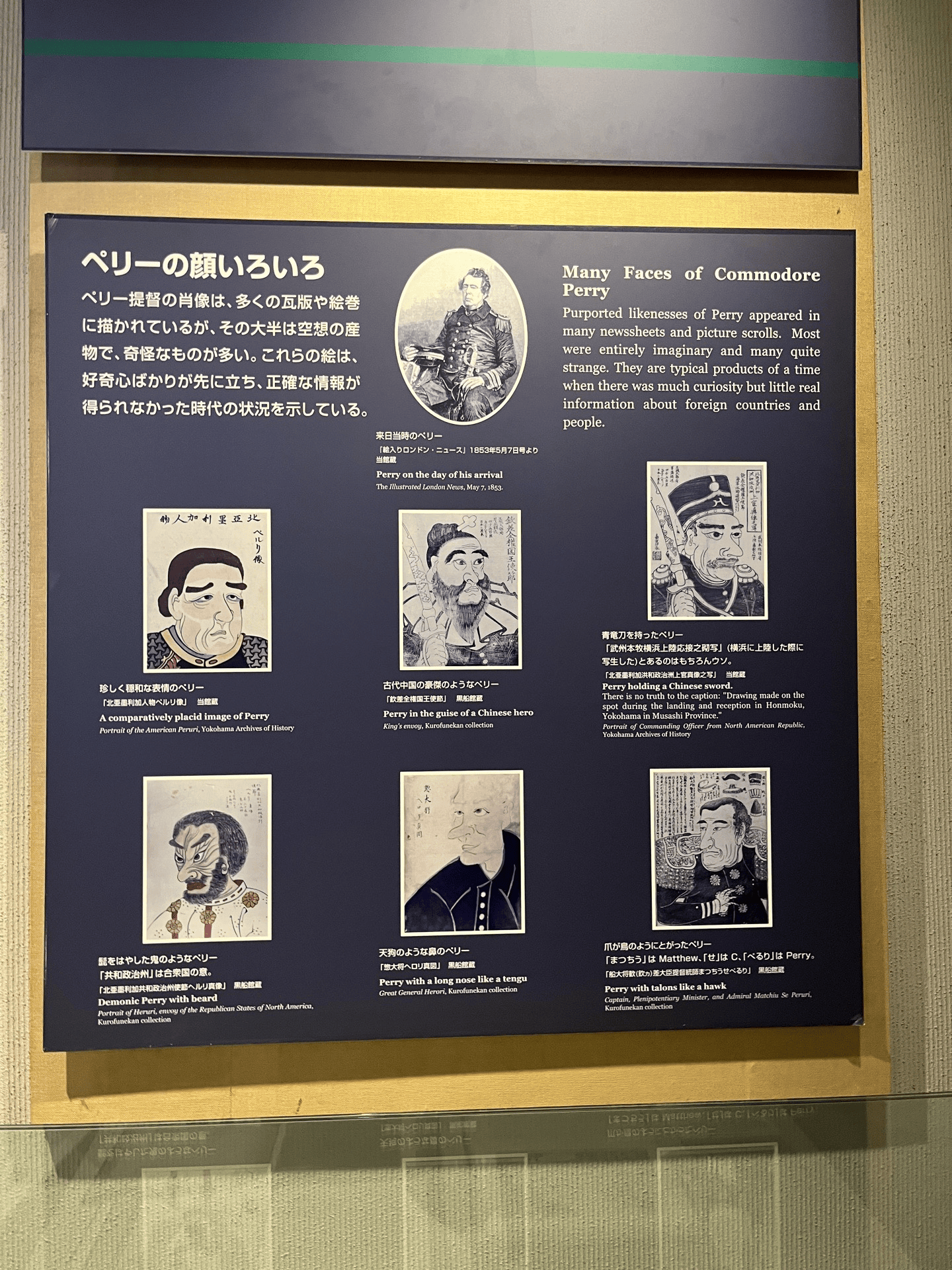
The “Many Faces of Commodore Perry” display show the effect of having closed ports on people’s knowledge of foreign people. These portrayals of U.S. Commodore (leader of the U.S. naval expedition) show the different perspectives Japanese artists imagined foreigners to resemble.
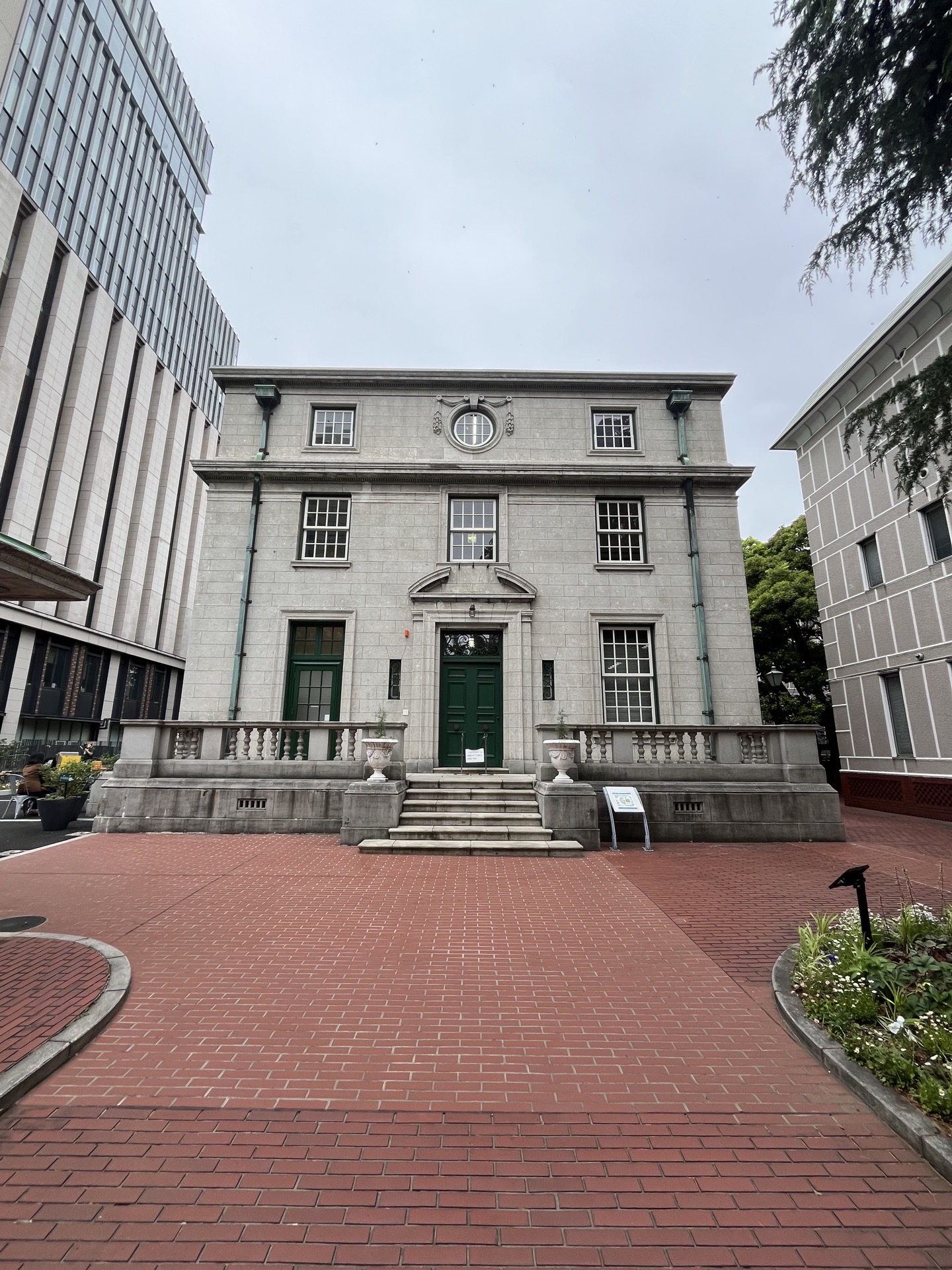
While the building had to be rebuilt in 1931 due to the Great Kanto Earthquake and Fire of 1923, the building still holds the western architecture that many buildings in Yokohama display due to the introduction of Western culture into Japan through newly opened borders. Even in the main courtyard, the Tabunoki tree’s roots survived the Great Kanto Earthquake and Fire of 1923, allowing the tree to regrow and remain where it is today.
The museum contains products throughout the periods of Yokohama development, displaying the influence of modernization, introduction of international relations, and the development of Yokohama markets.
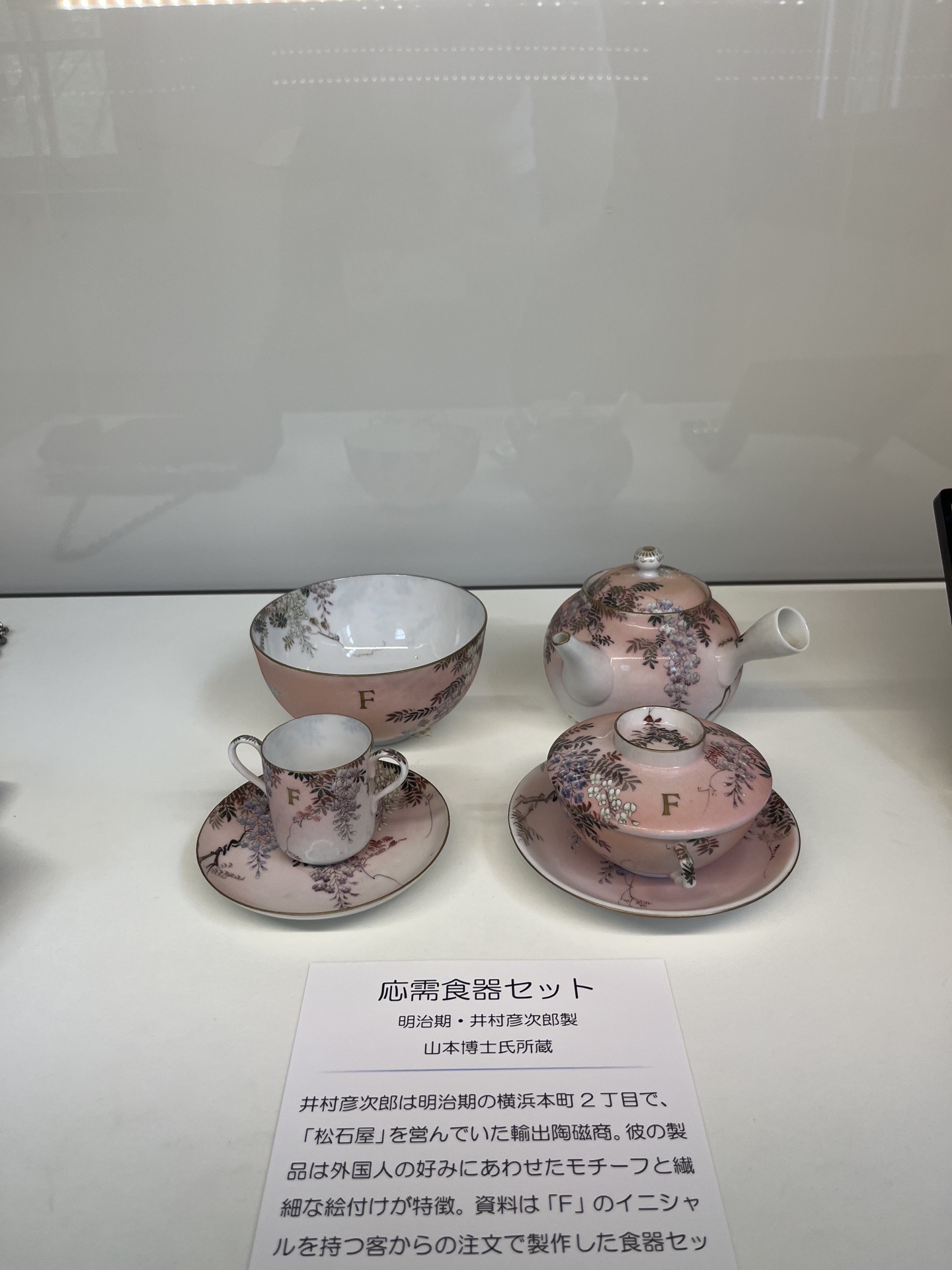
This ceramic set was made by artist Hikojiro Imura, who during the Meiji period, would export ceramics that included artwork popular to Western consumers. The customer, who went by the initial “F”, was included by the artist to personalize the products.
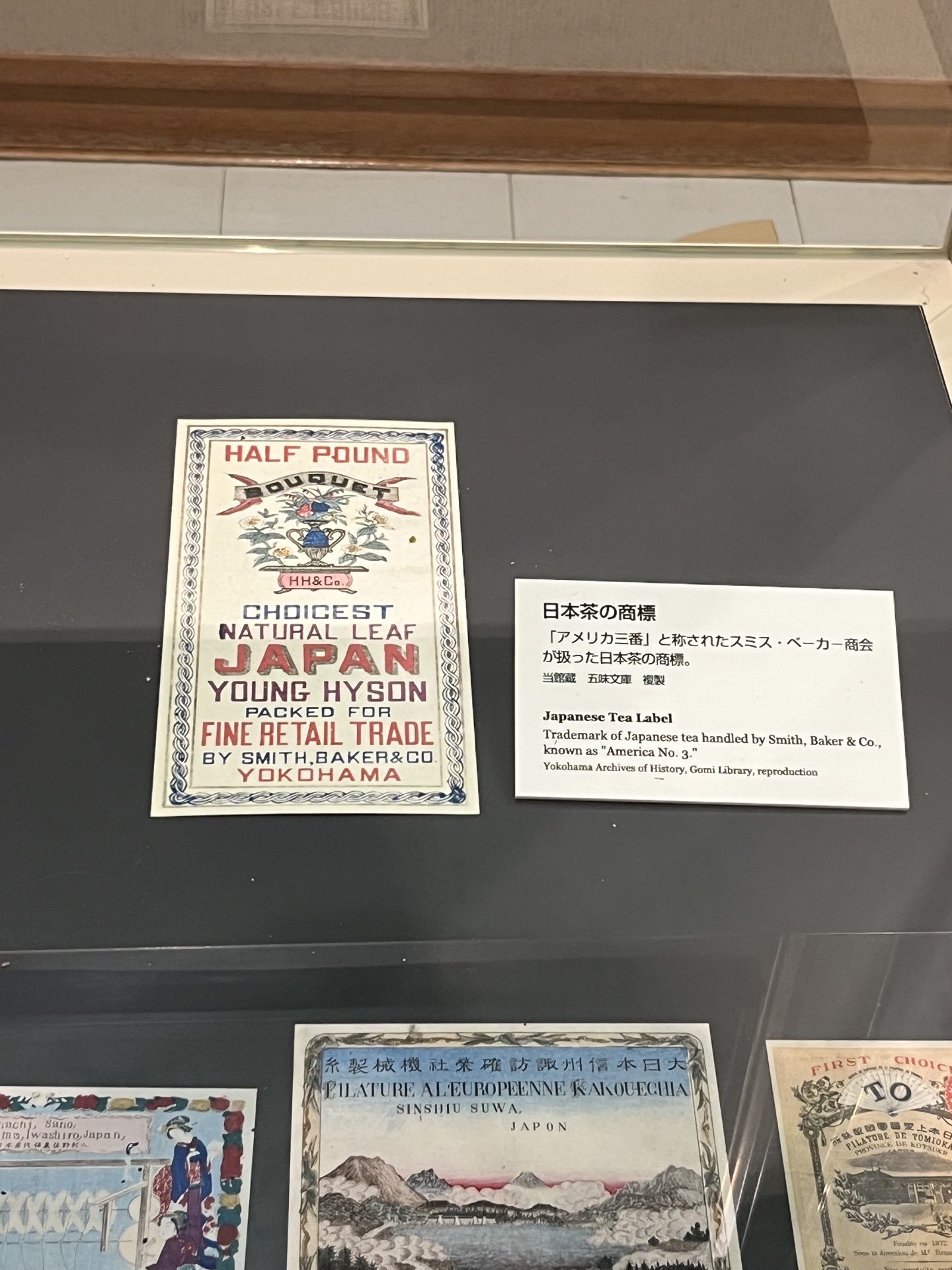
This Japanese Tea Label shows the iconography used to promote the selling of tea to international audiences.
Chinatown
When we toured Chinatown, it was interesting to see how Chinese culture had made it from China to the city of Yokohama. Lots of aspects of Chinese culture have made it over from China, such as some of the signs on the street that had both Japanese and Chinese characters. On the streets themselves, it was interesting to see how the lamp posts that were also present were Chinese. We picked up on the fact that people in the area were speaking Japanese, but were speaking it in a more Chinese manner. Other cultural aspects that had made it from China to Yokohama were food, clothing, and accessories, as it was common to find food stores that sold exclusively traditional Chinese food. They also had stores that sold Chinese clothing as well as Daoist religious accessories. Looking at Chinatowns in the United States, there are some similarities despite the fact that Chinatowns in the United States were significantly larger than the one in Yokohama. For one thing, in both cases, signs tend to be in both Chinese and the language of the country they are located in, so in this instance, both Japanese and English. This shows how Chinese culture had merged with the culture of the country it came to. Another aspect that made it from Chinatown to the host country was the architecture. At the end of the street, there was a massive building done with Chinese architectural features. One of the main aspects of Chinese culture that had migrated to other countries was that of religion.
Daoism in Yokohama
When doing the reading for today, we saw how Yokohama was a major city where foreign countries were allowed to interact with Japan during the Edo period. As a result of Yokohama being open to foreign countries, their culture migrated over as well. Because the cities of Nagasaki and Yokohama were open to foreigners, the Chinese religion of Daoism came over to both. We saw this in the case of Yokohama, with Daoist temples being largely present. When we went to the first temple, one of the aspects that struck us first was the burning of incense, as the smell was extremely overwhelming. We burned our own incense, courtesy of Professor Ng. We placed our incense in a specific pot for either health, wealth, or luck on exams. We observed lots of other people doing the same. At one point, there was so much incense being burned that it was hard to breathe. We also heard faint music playing that was Daoist. People were allowed inside the temples on the condition that they were praying to the gods that were present inside. At the entrance of the temples, there were large gates that could be found, such as in the United States at the entrance to Chinatowns. In the case of Yokohama, there were no gates at the entrance of the Chinatown itself. When entering the temple, you had to enter on the right side and leave on the left side. This was done as a sign of respect to the gods.
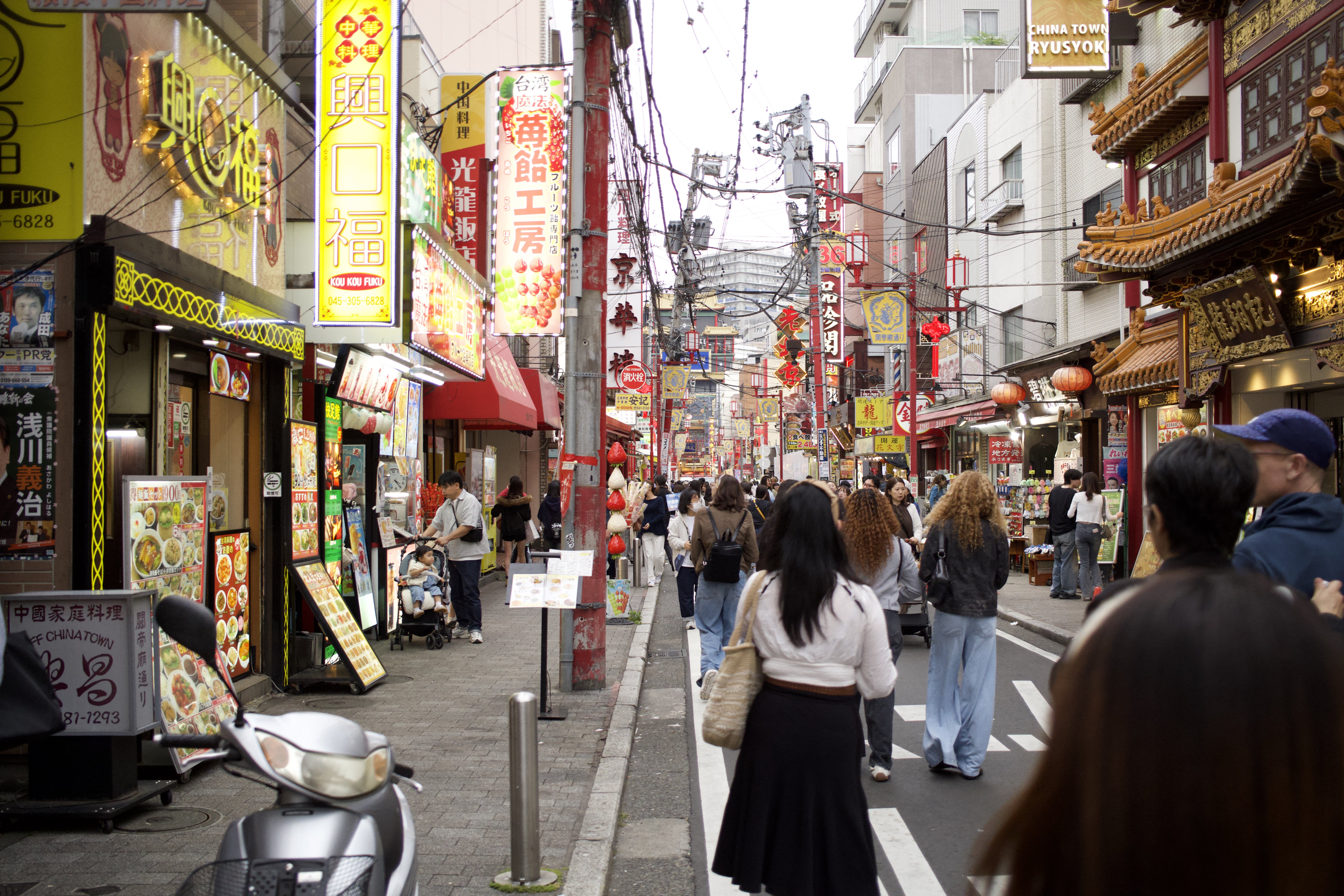
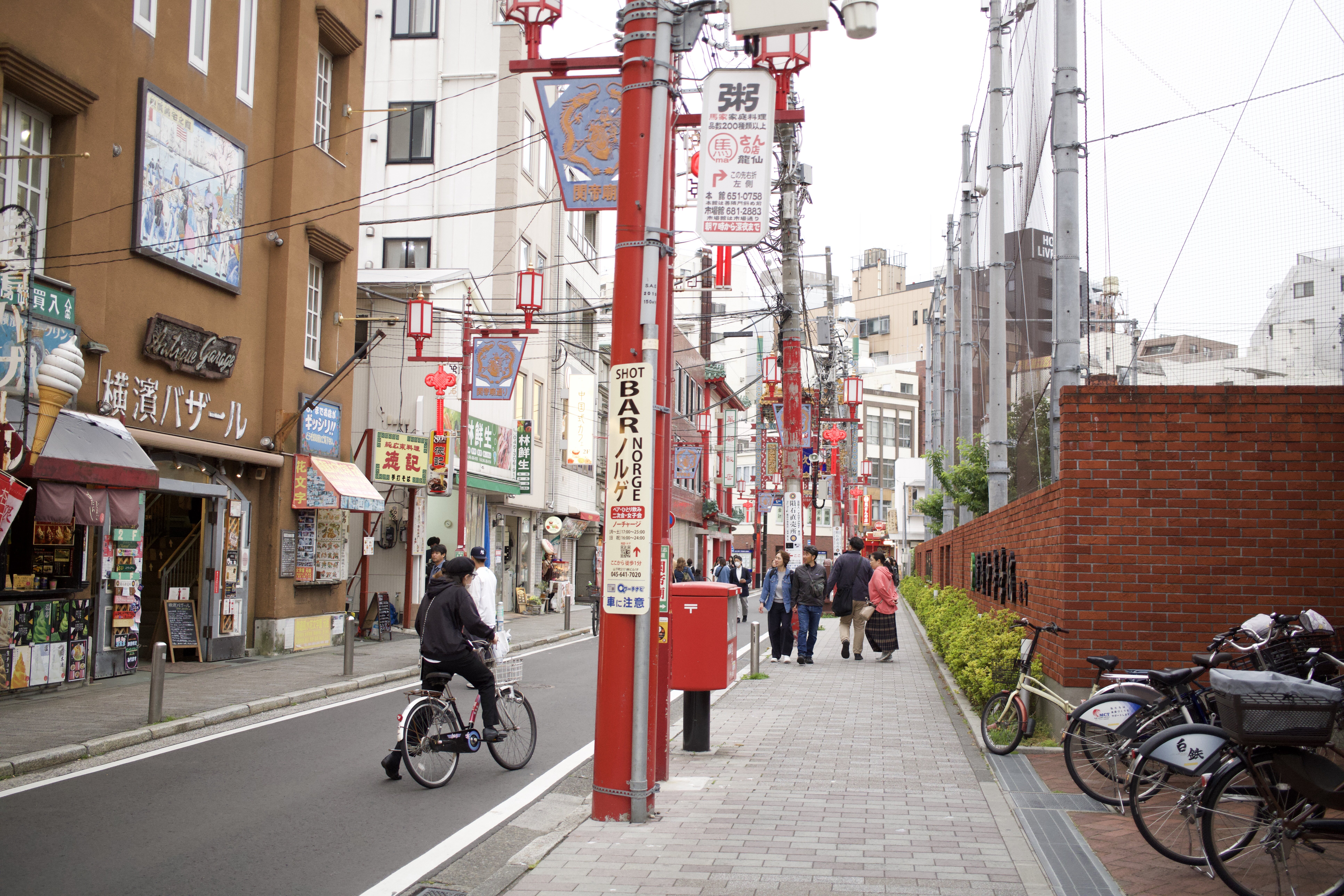
The streets of Chinatown in Yokohama
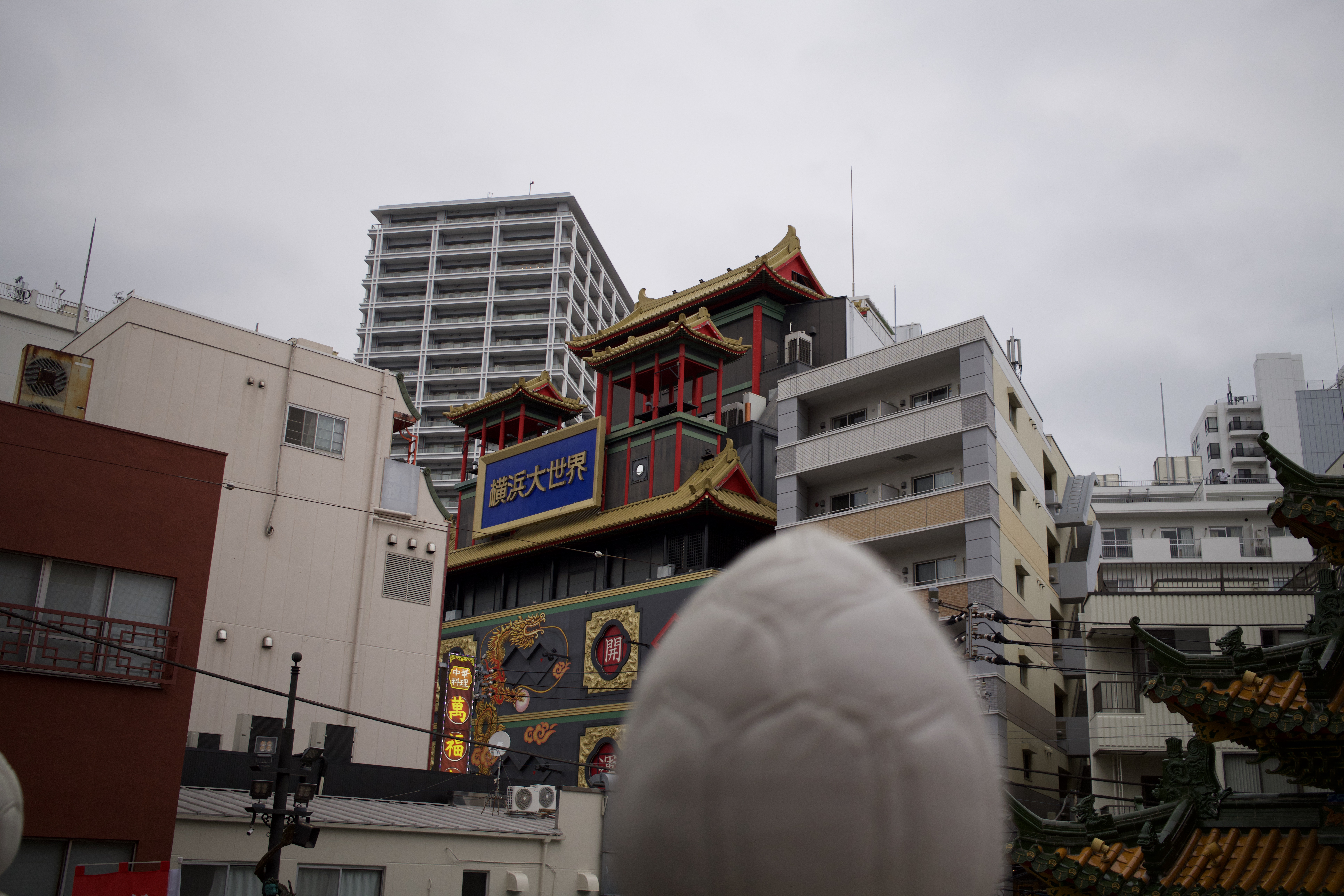
A building in Yokohama with Chinese architectural features
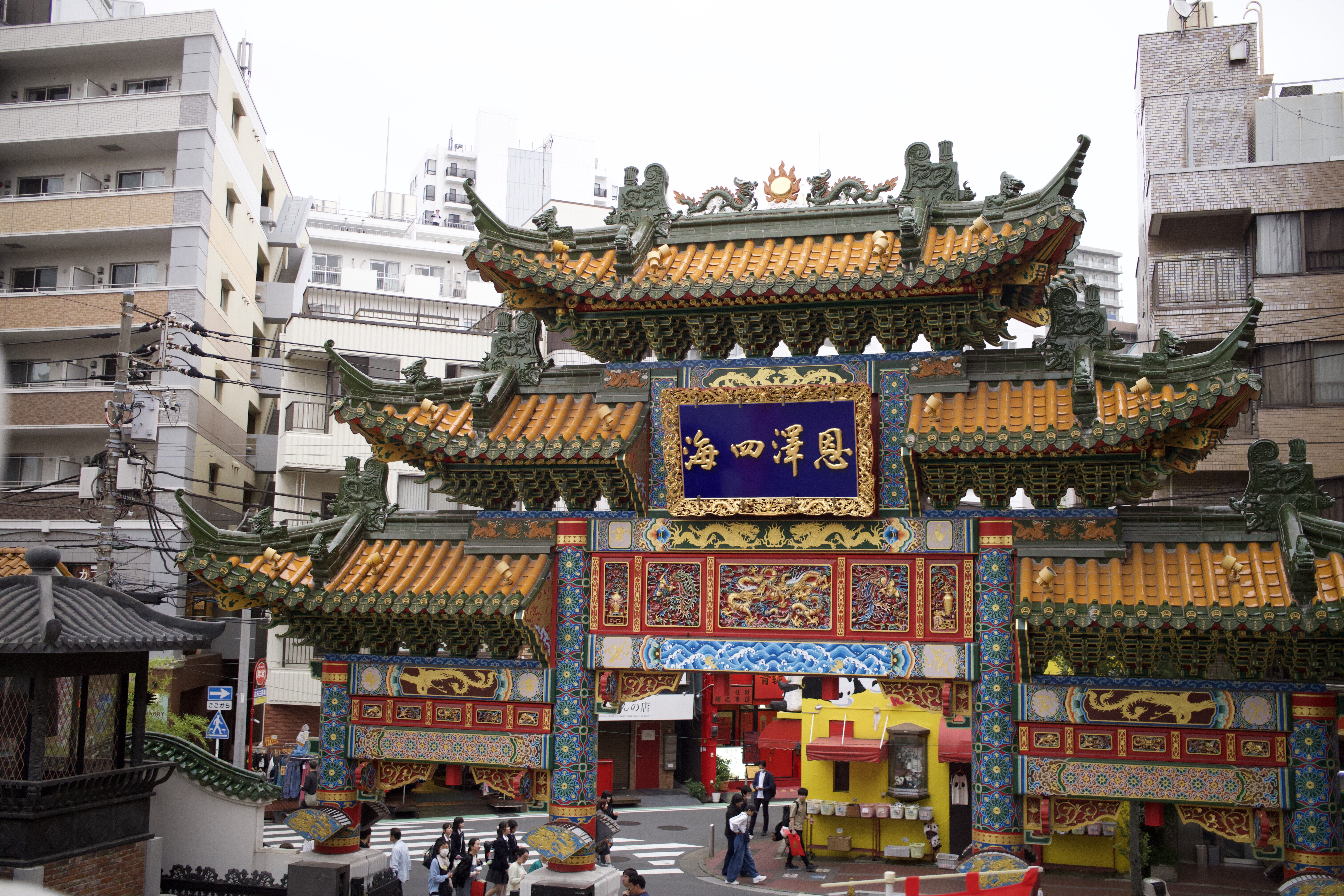
An entrance gate at a Daoist Temple, Yokohama
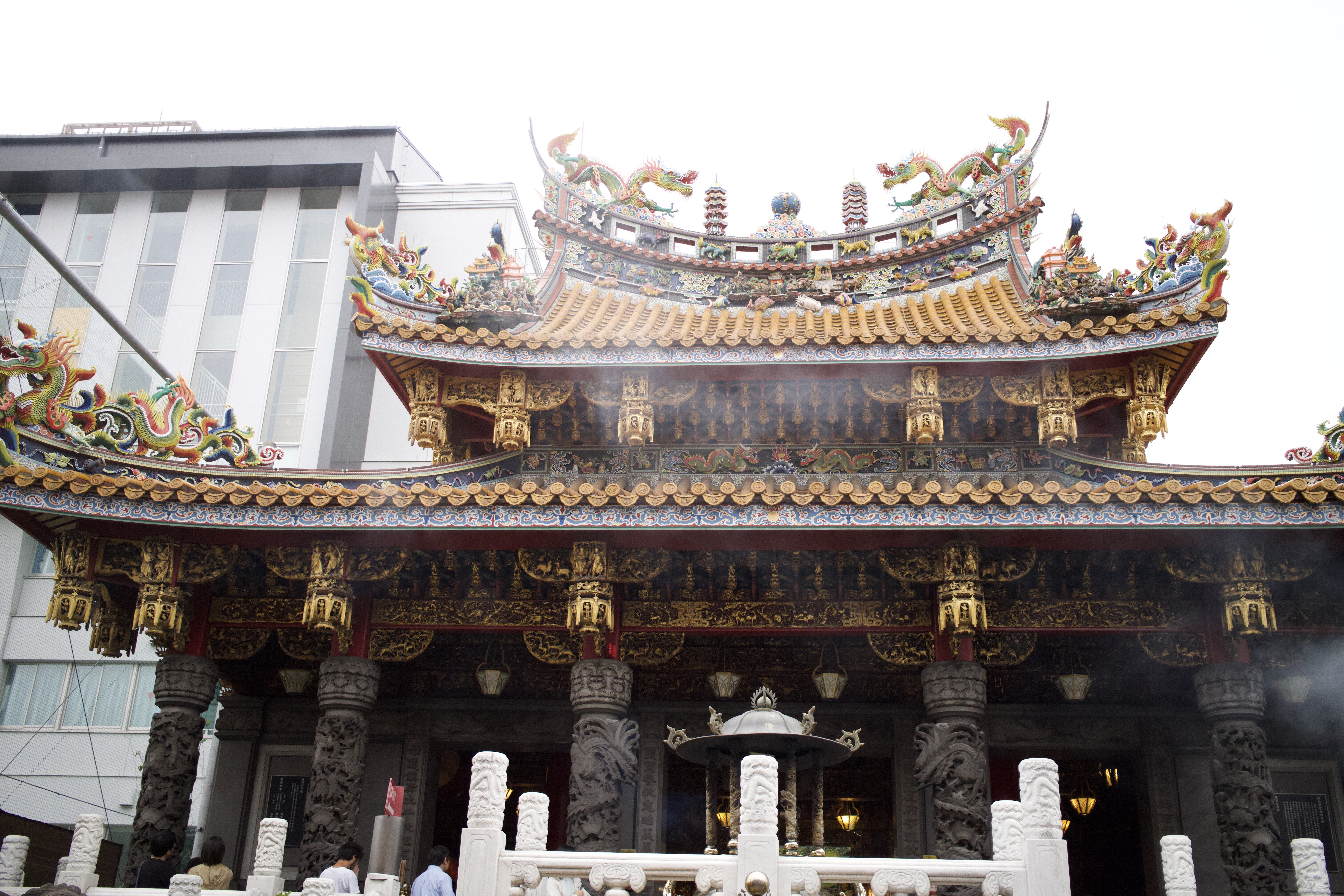
A Daoist temple, with Incense, Yokohama
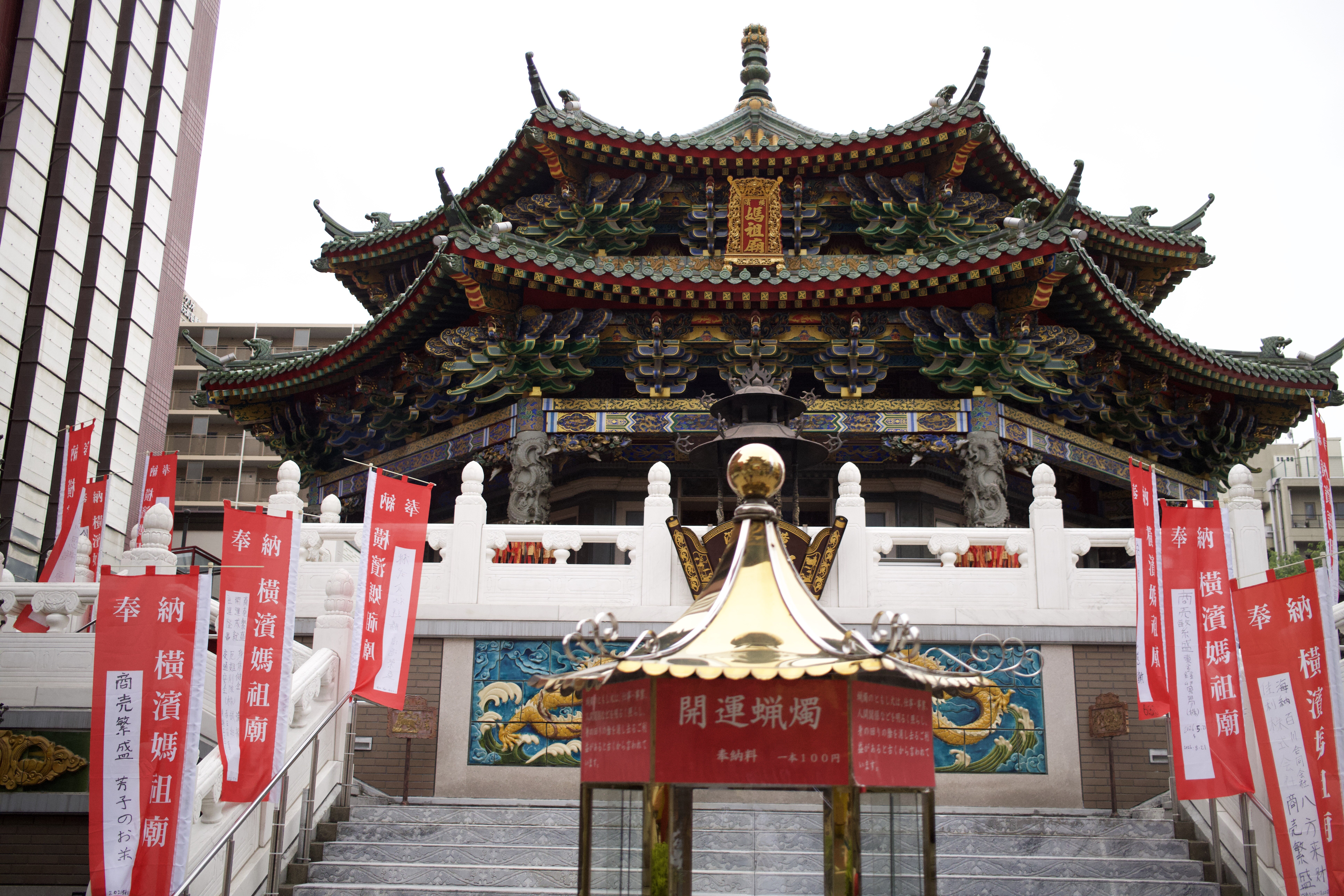
A Daoist Temple, Yokohama
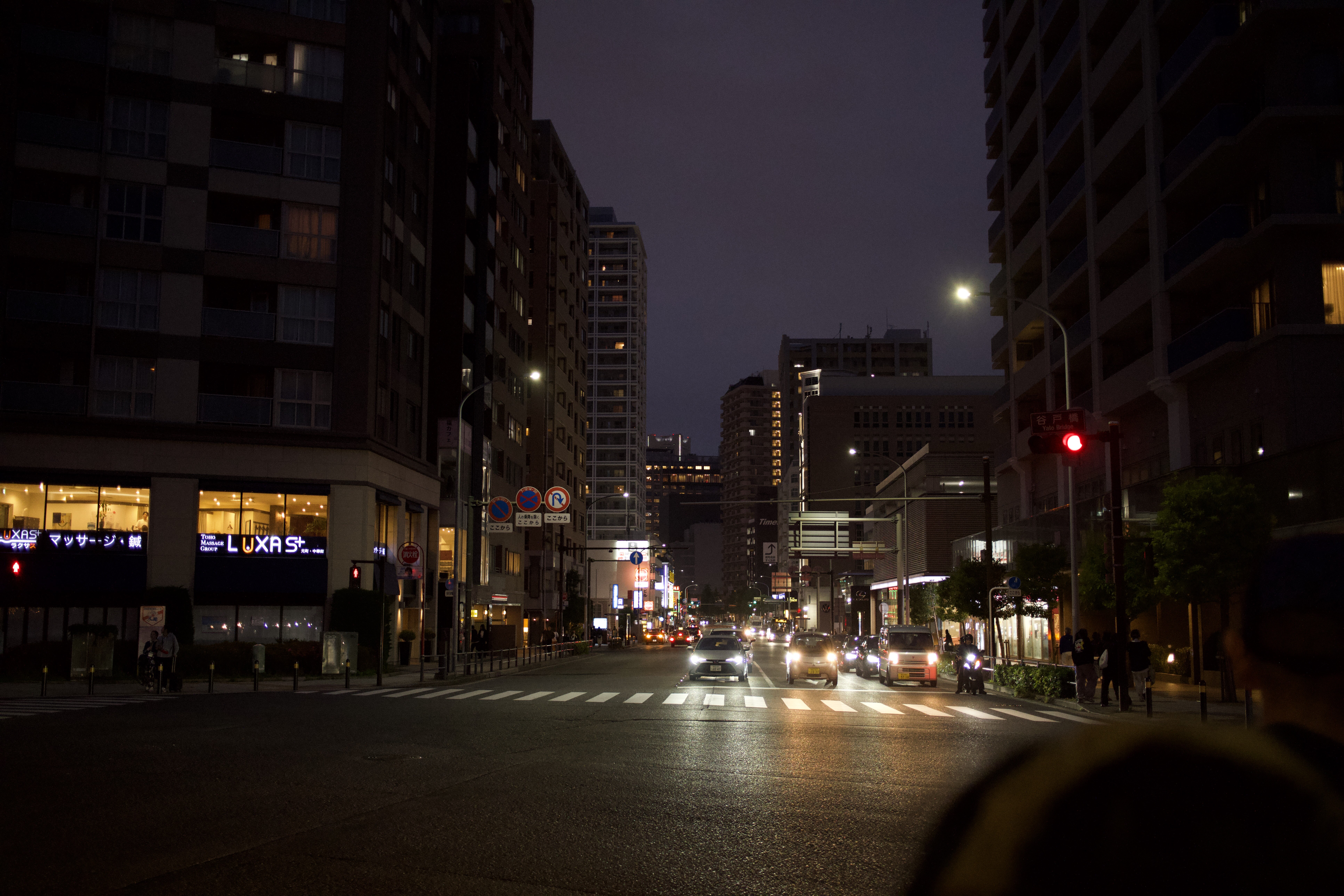
A street at night, Yokohama
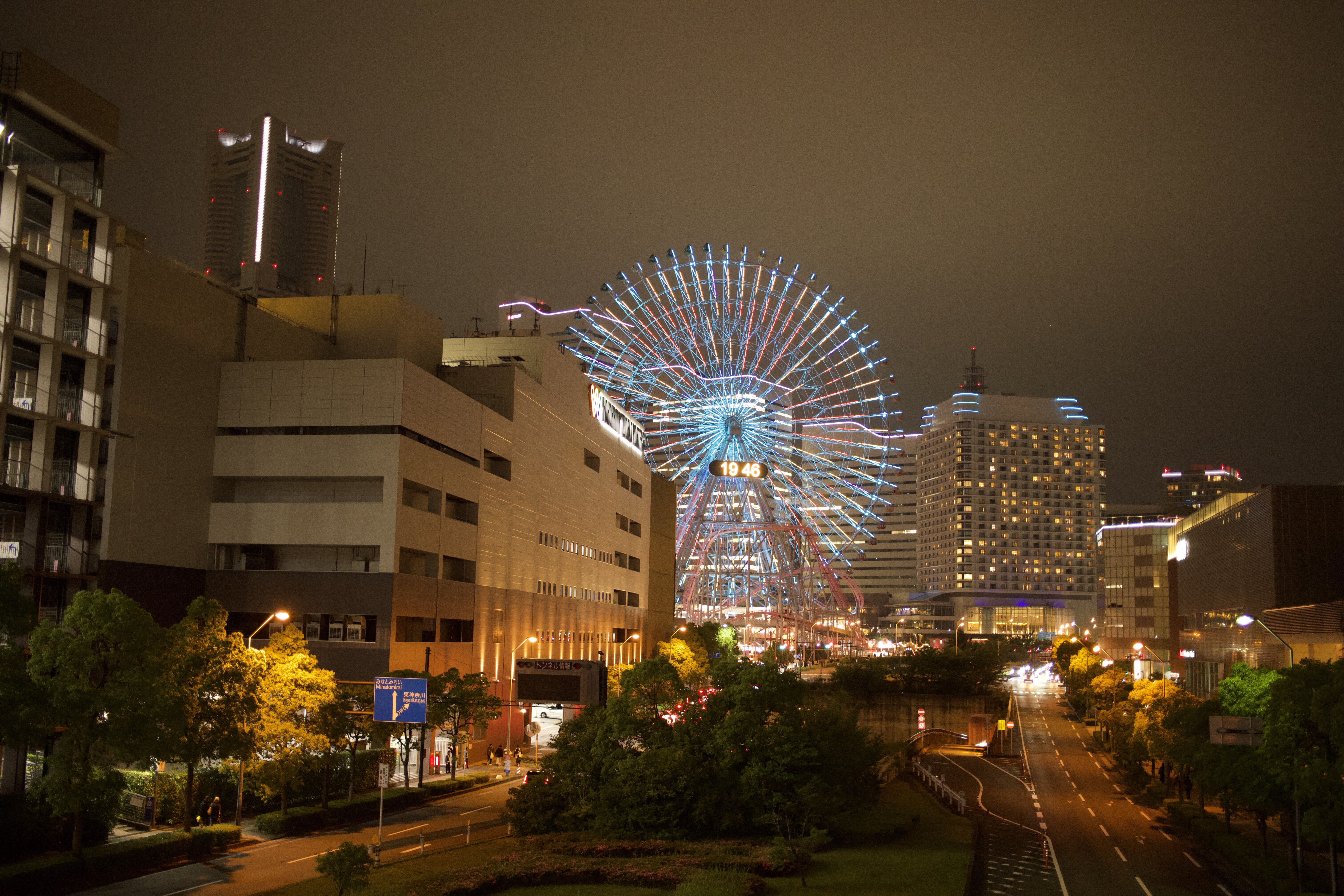
Yokohama at Night
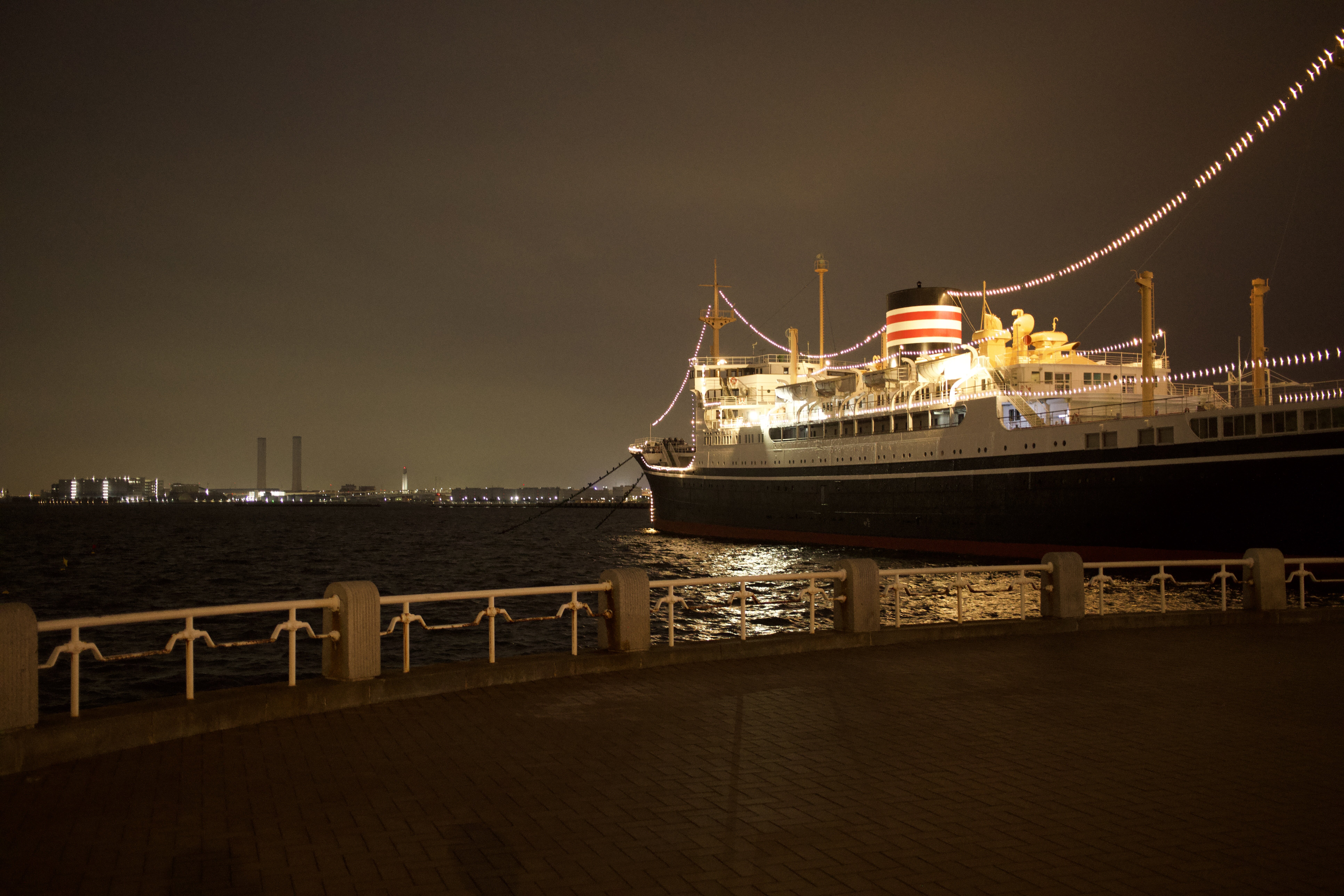
The NYK Hikawamaru at the Yokohama Pier at Night