Blog #17 The Utoro Peace Memorial Museum & Utoro

By: Nilay Ernst and Zach Joyal

History of the Zainichi and the Museum

The history of the Zainichi or Koreans living in Japan is incredibly complex. Originally, they came over to Japan from Korea to flee Japanese-occupied Korea. They fled so they would not get arrested by the Japanese or fined by them. Japan had occupied Korea previously, but most of the Zainichi had fled from Japanese-occupied Korea from 1910 to 1945. The main reason that they ended up in Utoro is that the construction of an airfield took place in 1940. This was a chance to take a job in Japan and to flee the Japanese Army in Korea. In 1945, the construction of the airfield came to a close as the Second World War had ended. The Zainichi remained in the area despite the war ending. Then, in 1987, Nissan ended up buying the land that the Zainichi were living on. This became a problem in 2000 when the Japanese Supreme Court ruled that they had no legal right to remain residents of Utoro. This forced many residents to return to Korea. In 2001, the UN demanded that Japan take corrective action for the mistreatment of the Zainichi. Despite all of these actions, the Zainichi still ended up living in poverty. So as a result, in 2005, fundraising efforts from Korea started, and in 2007, Korea sent 3 billion Korean Won over. In 2018, the poor housing conditions came to an end with the demolition of the houses in favor of better housing.

The Utoro Peace Memorial Museum opened its doors in 2022. It features three floors, with the first floor being a multi-purpose hall. The Second Floor features a permanent exhibition on the history of the residents of Utoro and the struggles that they faced. The third floor is a space that is reserved for special exhibitions. Currently, the museum features an exhibit about Koreans who survived the atomic bombings of Hiroshima and Nagasaki. The top floor features a rooftop observation of the neighborhood. Finally, the outdoor exhibit is a recreation of a Bunkhouse to show the living conditions of the Zainichi on the grounds of the airfield. Inside the bunkhouse are some of the remains of the buildings that were burned down in a hate crime by a Japanese man in 2021.

Hate Crimes & The Community Today

The museum was built in large part due to a disturbing set of hate crimes that occurred in 2021. Arimoto Shogo, a 22-year-old Japanese man, set fire to a damaged property that belonged to the Aichi Prefectural branch of the Korean residents in Japan as well as the Nagoya Korea School. The same man used a lighter to set fire to an unoccupied house in the Utoro district, and this damaged 40 historical signs and destroyed several buildings. This was known as the Utoro Arson Incident.  Arimoto Shogo felt that the Utoro represented land occupied by those who were not Japanese. Unfortunately, this isn’t an isolated incident as anti-Korean sentiment has been a prevailing issue for multiple decades. This can be seen online as several incidents of hate speech have been reported, with accusations against Koreans “being foreigners involved in domestic affairs.” 

The museum is a centerpiece of this community, with the first floor having a library for people to learn more about their culture, a kitchen space for people to share a meal, and even a basketball court outside. The main idea behind this is to get young people to learn more about their history, and this starts by drawing them in with a basketball court to go to after school. The Utoro community is shrinking, as many of the younger generations have left to find better economic opportunities. There was a new apartment complex built by the museum in recent years, but the lack of government representation makes it difficult to sustain a community. Even with all of these setbacks, however, many still try to put the best foot forward and be proud to be a part of this unique community. The difficult question that many members of the Utoro community face is whether to get Japanese citizenship or not. Although this would give them access to more opportunities and voting rights, many feel that they would lose a part of their Korean identity by applying for Japanese citizenship.  
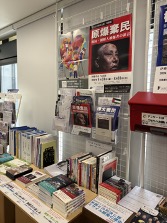
The Gift Shop on the Groud Floor
A Sign Outside the Museum
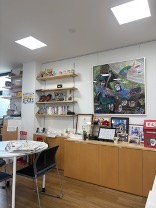
The Ground Floor of the Museum
Class Blog #9 Buddhist & Shinto Shrines

By: Nilay Ernst and Cristiana Land

Shinto Shrines

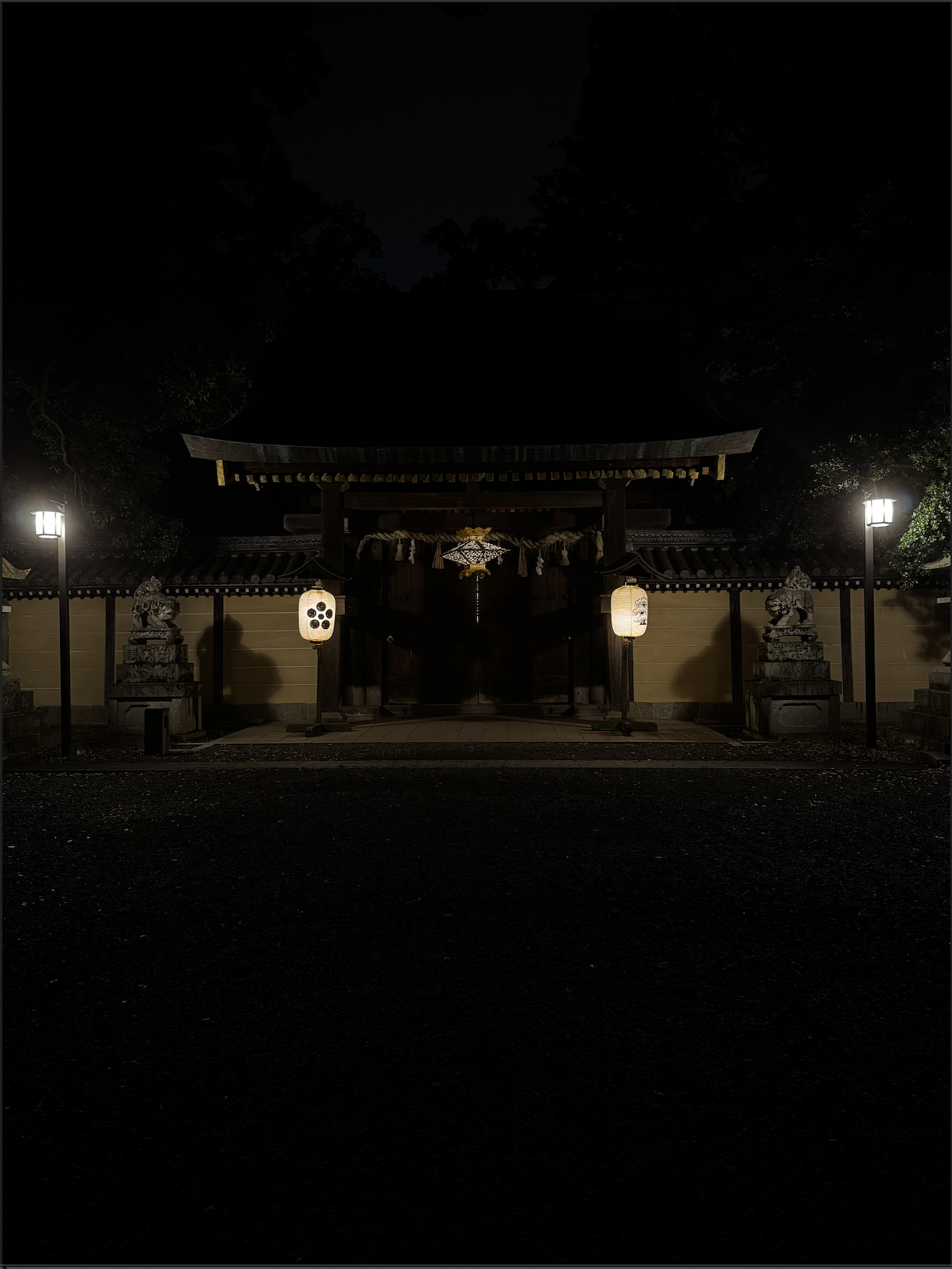
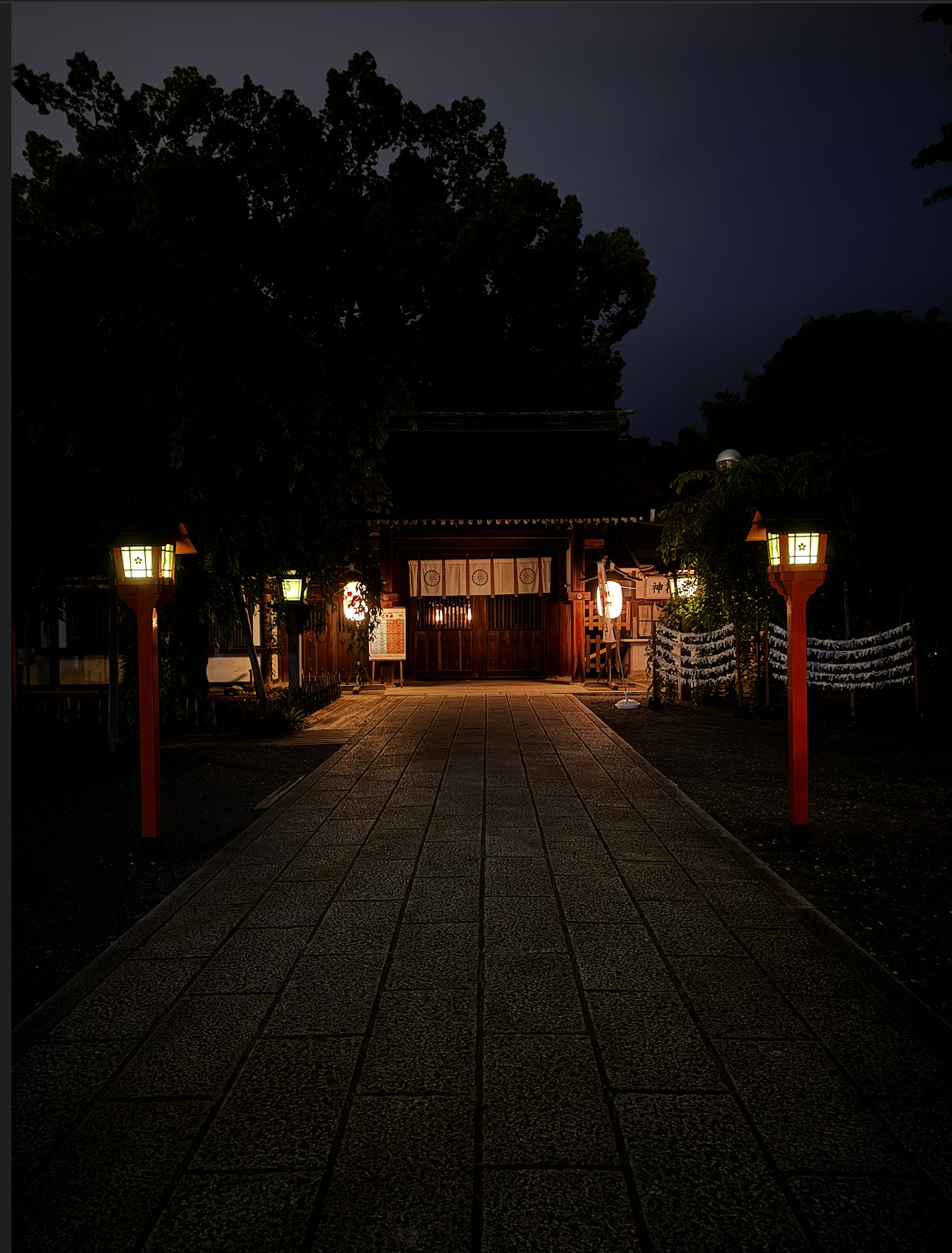
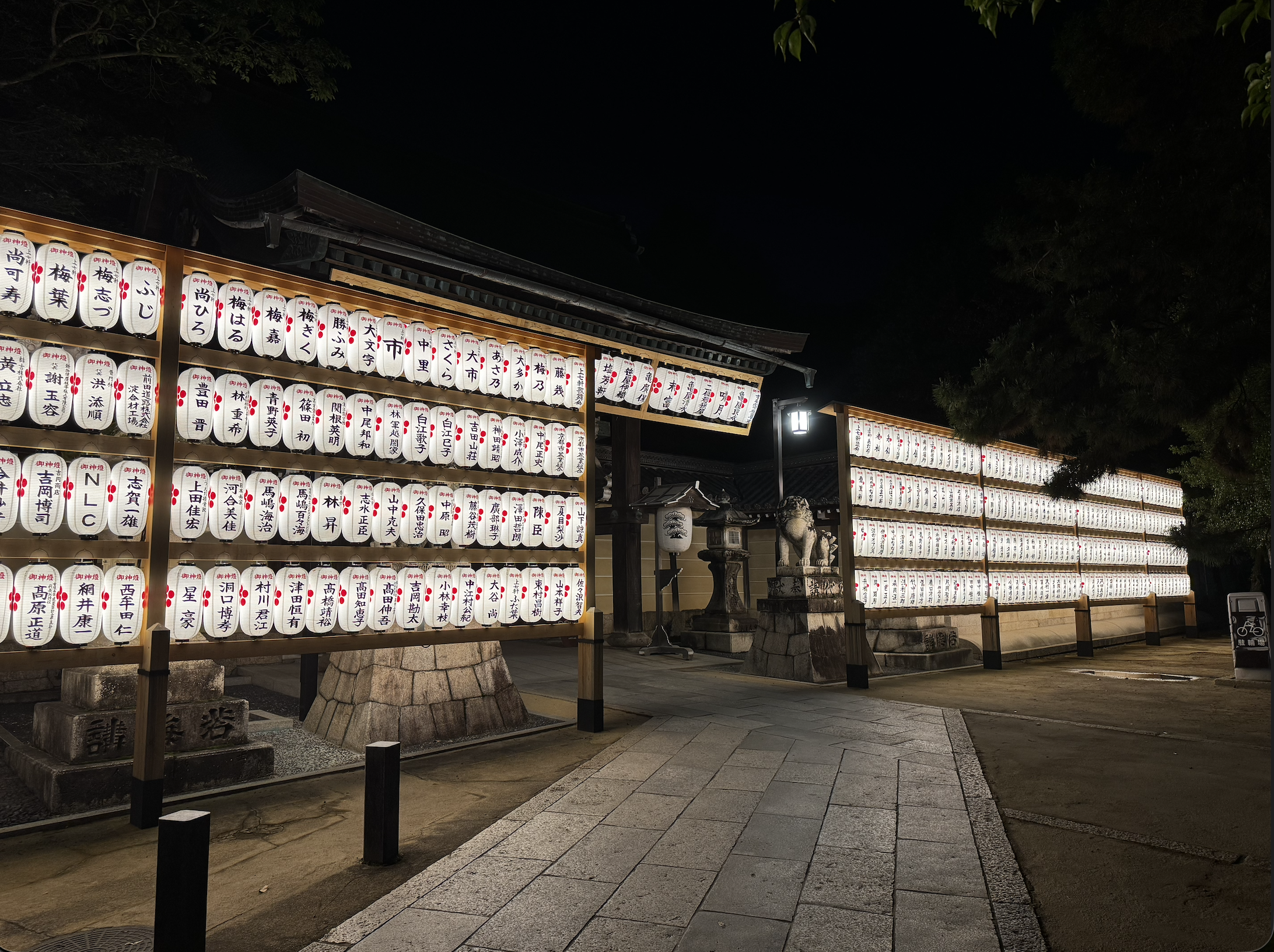
Today we finally got to enjoy our first full day in Kyoto. After spending time learning some Japanese, we went out to explore some parts of Buddhism and Shintoism around us. Luckily, there’s a Shinto shrine two minutes away from where we’re staying. It was interesting because this one looked a little different from the Meiji Shrine. The front gate was surrounded by lit up lanterns (I went at night which I think was great for this picture) called chōchin. These lanterns are often placed at the entrance of shrines and act as bridges between reality and the spiritual realm. I couldn’t go into the shrine at this time but I was able to walk over to another shrine that was more open.

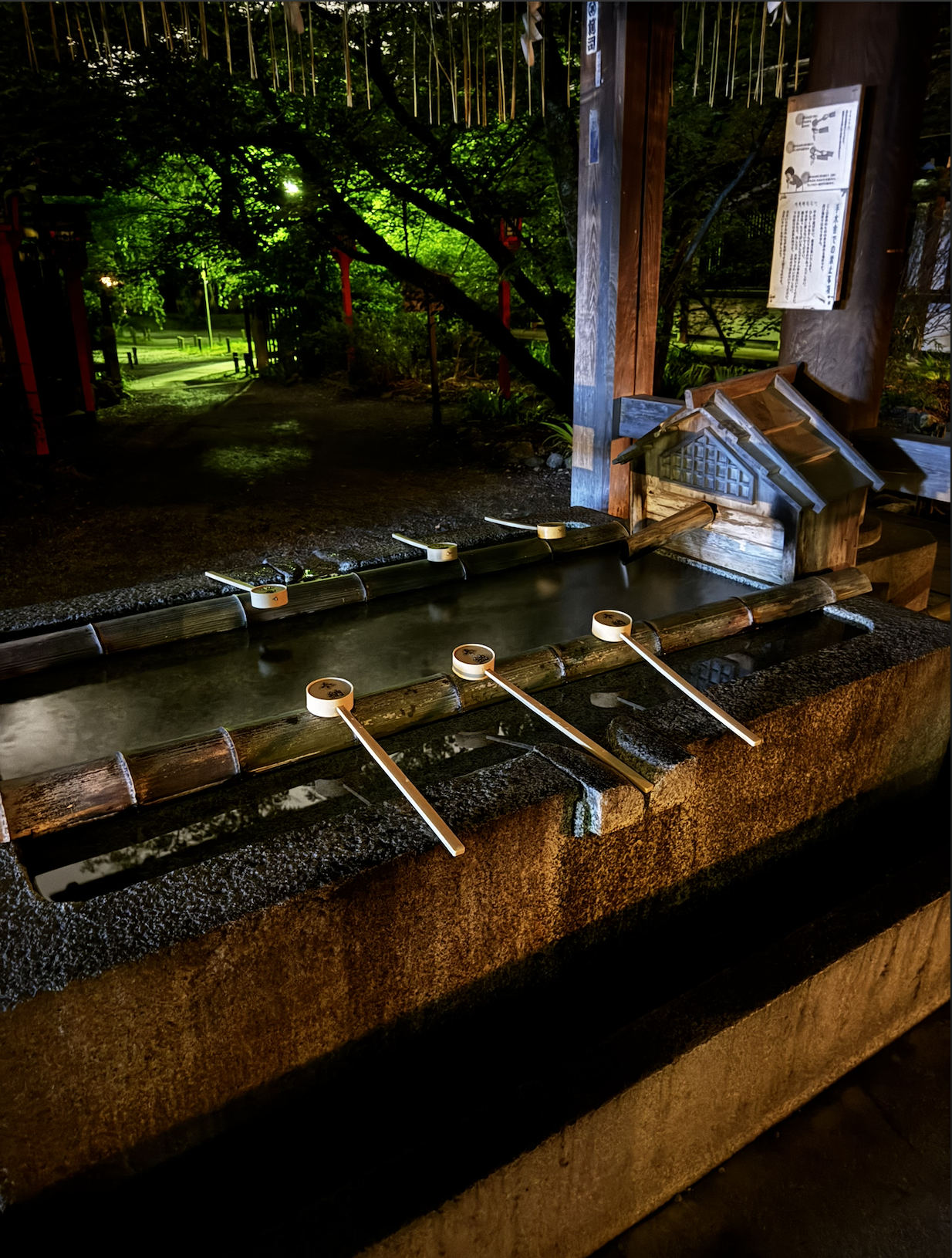
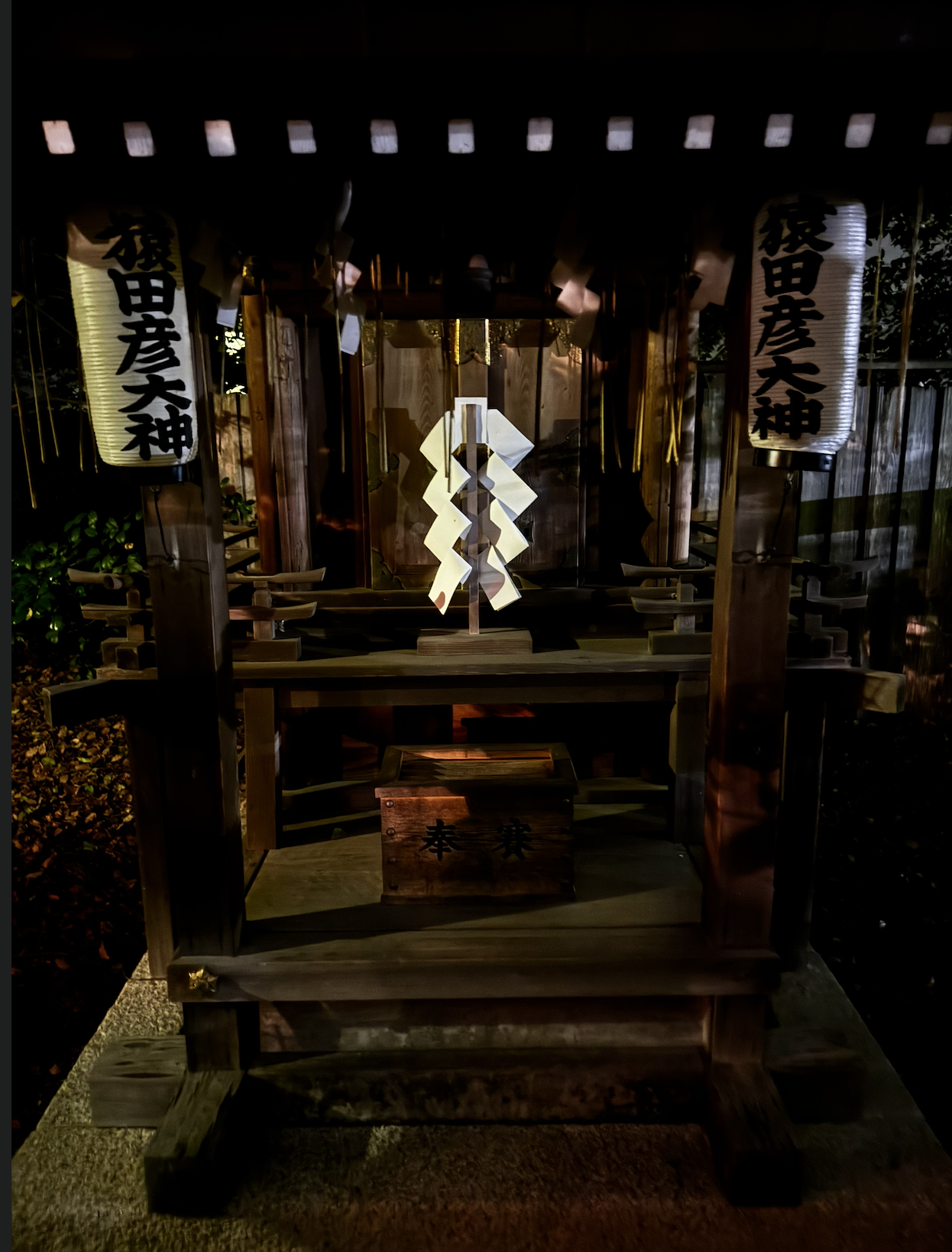
The second shrine was very close to the first one, but it had some different aesthetics from the first one. Most notably, there was a water purifying station different from the Meiji Shrine. This shrine had the ladles that one would use to pour water on their hands during the purification ritual in order to cleanse yourself from your sins and be able to present yourself to the kami (gods). Both shrines had similar vibes, but the second one had a stone by the front gate, which seems to symbolize a memorial. Lastly, we discovered a mini shrine by the memorial. These shrines don’t have a set look, coming in all different shapes and sizes. Even though there are differences, each shrine serves a purpose to guide those who pay respects to the kami.

Rokuon-ji Buddhist Temple

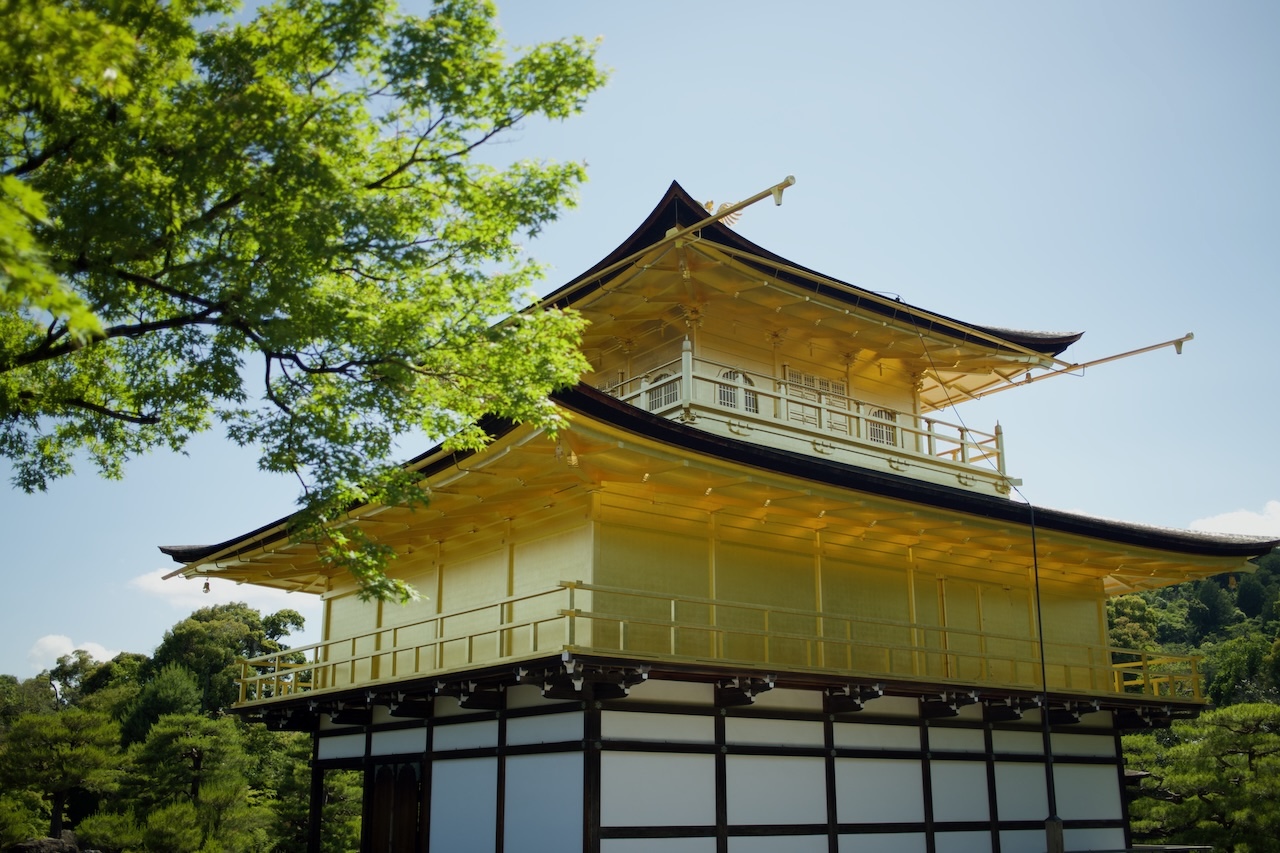
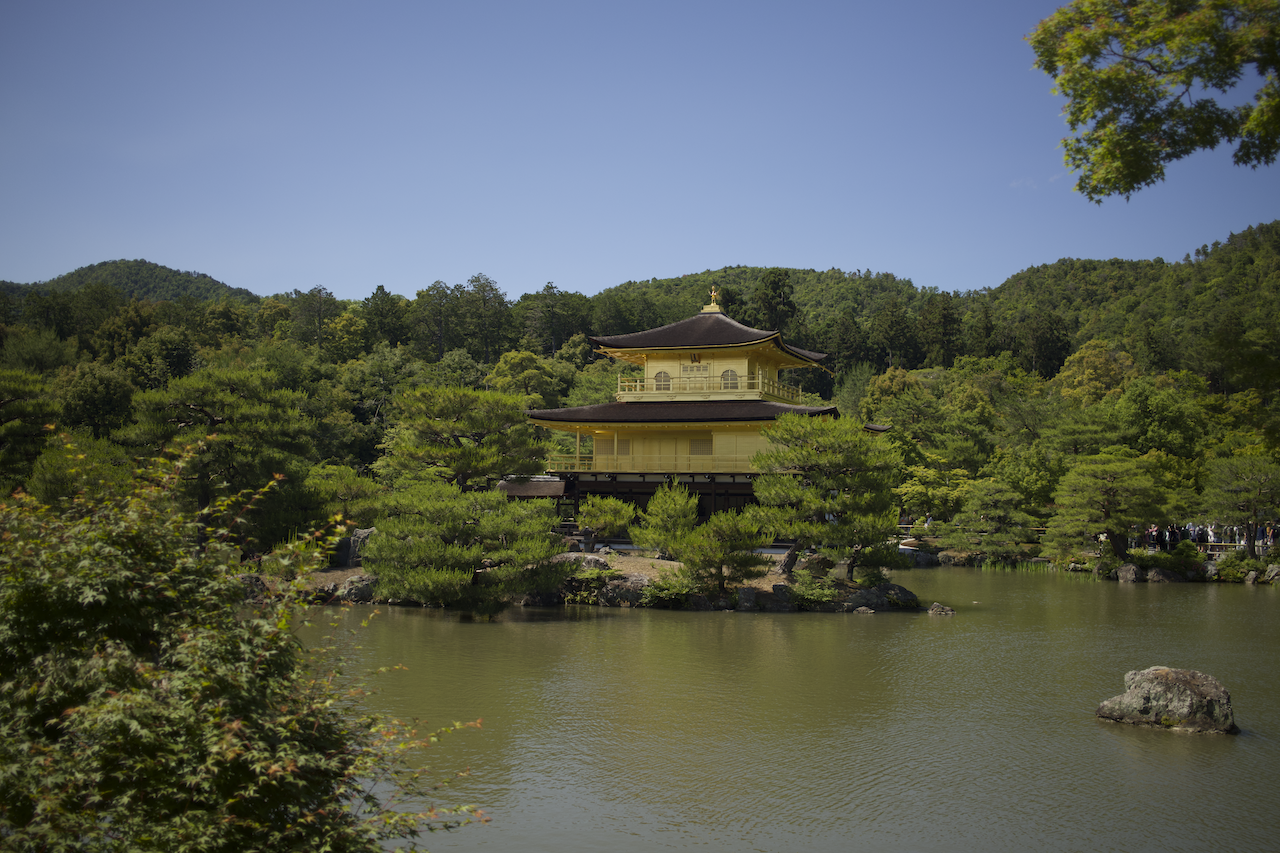
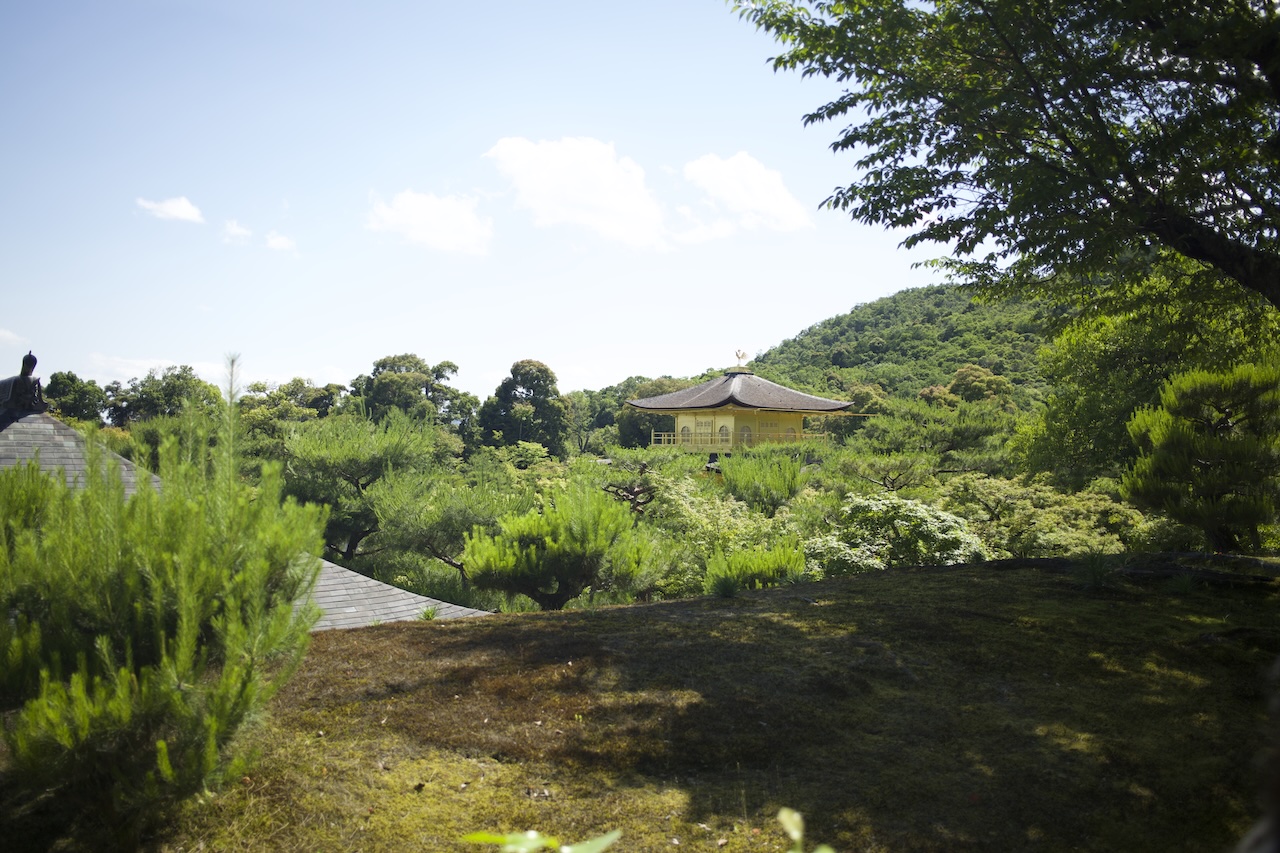
It was interesting to see the Rokuon-Ji Buddhist Temple, nicknamed The Golden Temple Pavilion. Unfortunately, the inside of the temple remained closed to visitors, so we were only able to get an understanding of what the inside looks like through pictures outside. It was really crowded with tourists, but the temple itself was incredibly pretty. It was interesting to see how the temple contrasted with the lesson we had today about Buddhism. Buddha strongly believed that desire would lead to suffering, but despite this, the temple was covered in gold. It was interesting how the temple charged a 500 yen fee in order to enter. This contrasts heavily with how most temples or similar locations in Japan are free to visitors, including even most Shinto shrines. The Phoenix on top of the temple symbolizes rebirth and transformation in Buddhist ideology. Outside of the temple itself, it was interesting to observe other aspects of Buddhism. For example, we were able to see the White Snake Pagoda outside as well as a waterfall. They represent a connection to nature in Buddhism and are often associated with meditation.

Pictures of Rokuon-Ji Buddhist Temple

Class Blog #3: Yokohama

By: Nilay Ernst and Jessica Latham

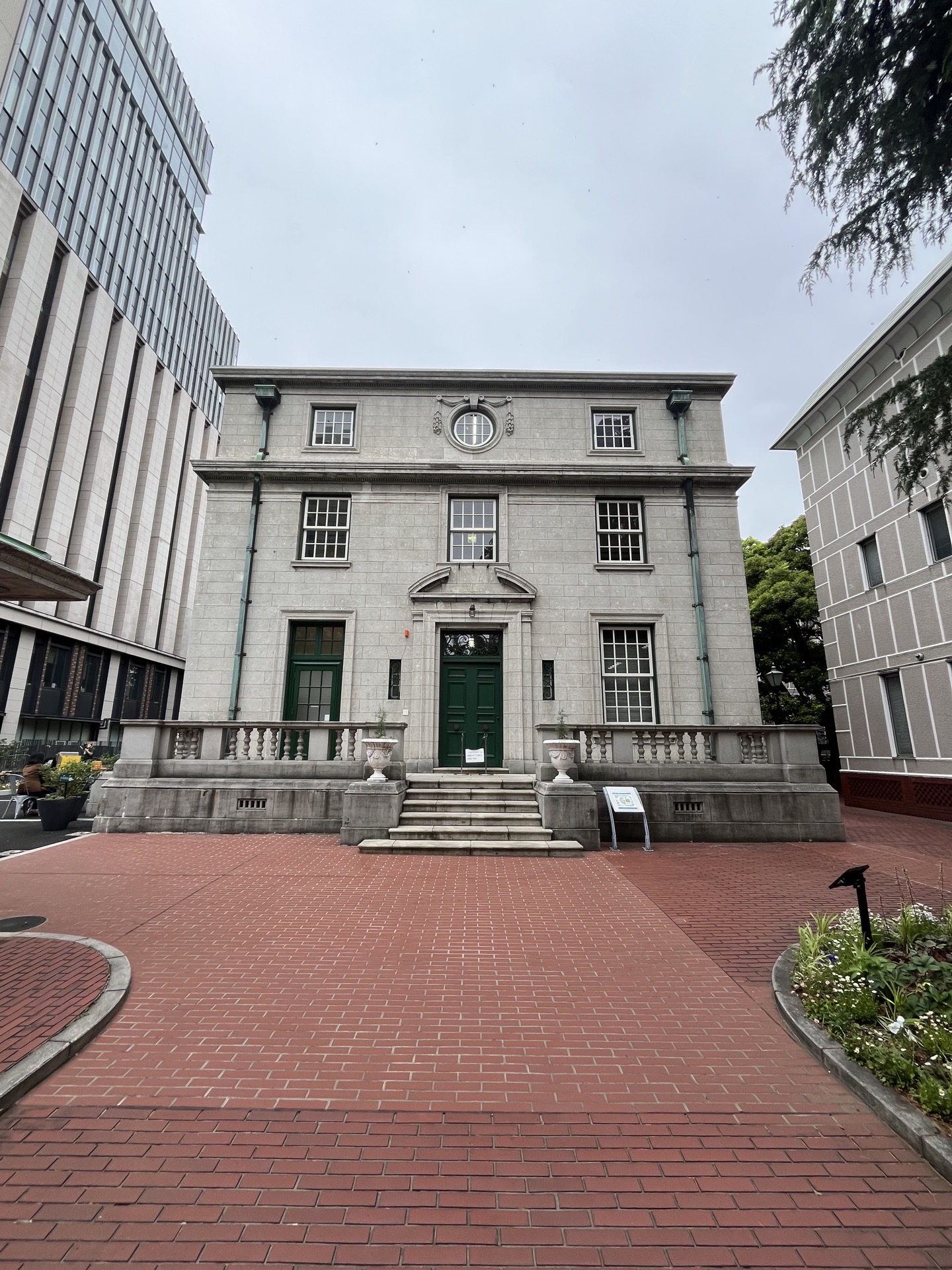
The Former British Consulate Yokoma Museum

The Former British Consulate General in Yokohama today stands as a museum to the public, displaying the city’s history after opening ports to international trade. While originally having closed ports since the early 17th century, under the samurai sakoku (“closed country”) policy, Japan later opened its ports under the treaties made in 1854 and 1858 with the arrival U.S. naval squadrons.

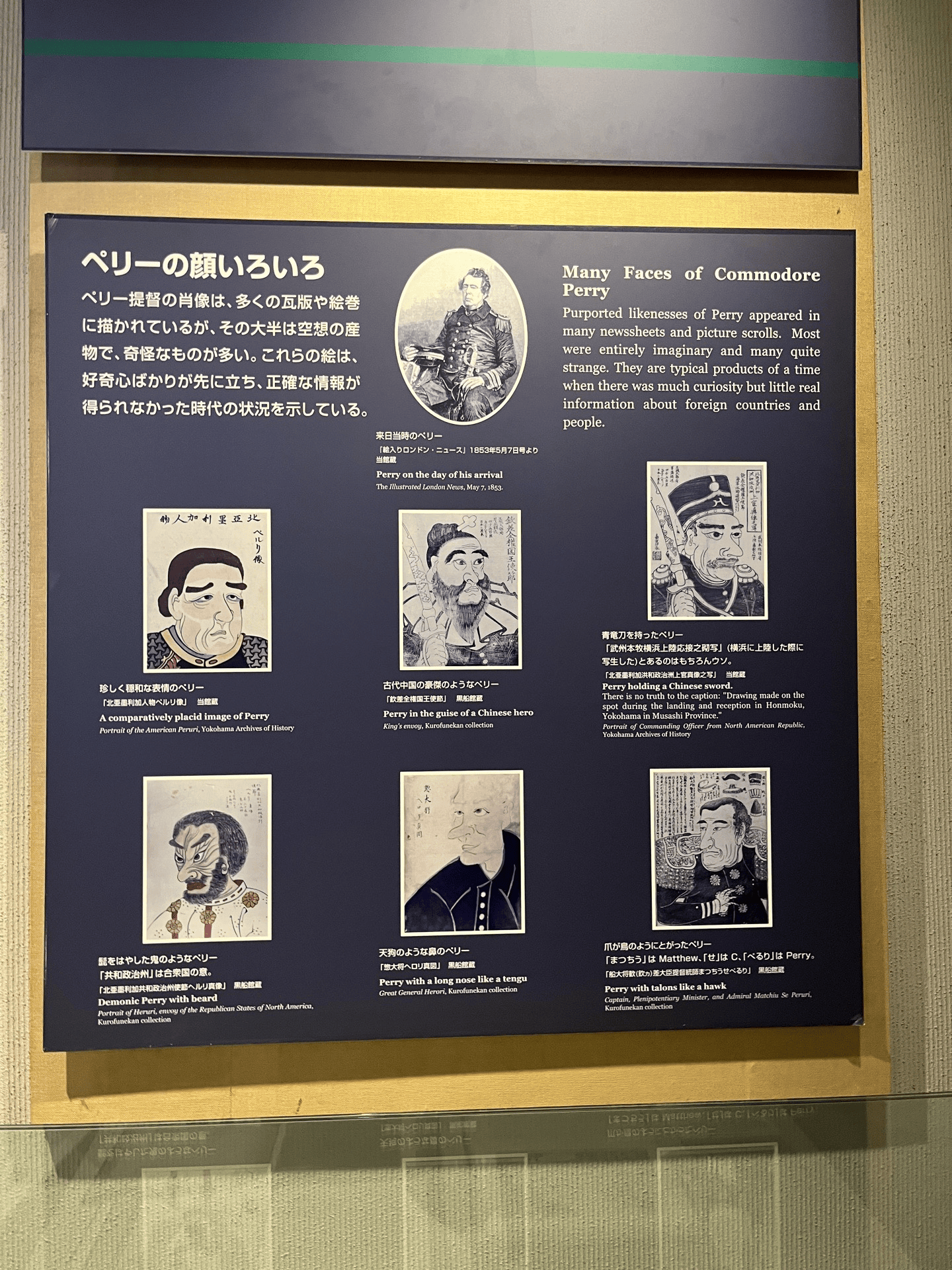
 The “Many Faces of Commodore Perry” display show the effect of having closed ports on people’s knowledge of foreign people. These portrayals of U.S. Commodore (leader of the U.S. naval expedition) show the different perspectives Japanese artists imagined foreigners to resemble. 

While the building had to be rebuilt in 1931 due to the Great Kanto Earthquake and Fire of 1923, the building still holds the western architecture that many buildings in Yokohama display due to the introduction of Western culture into Japan through newly opened borders.  Even in the main courtyard, the Tabunoki tree’s roots survived the Great Kanto Earthquake and Fire of 1923, allowing the tree to regrow and remain where it is today. 

The museum contains products throughout the periods of Yokohama development, displaying the influence of modernization, introduction of international relations, and the development of Yokohama markets. 

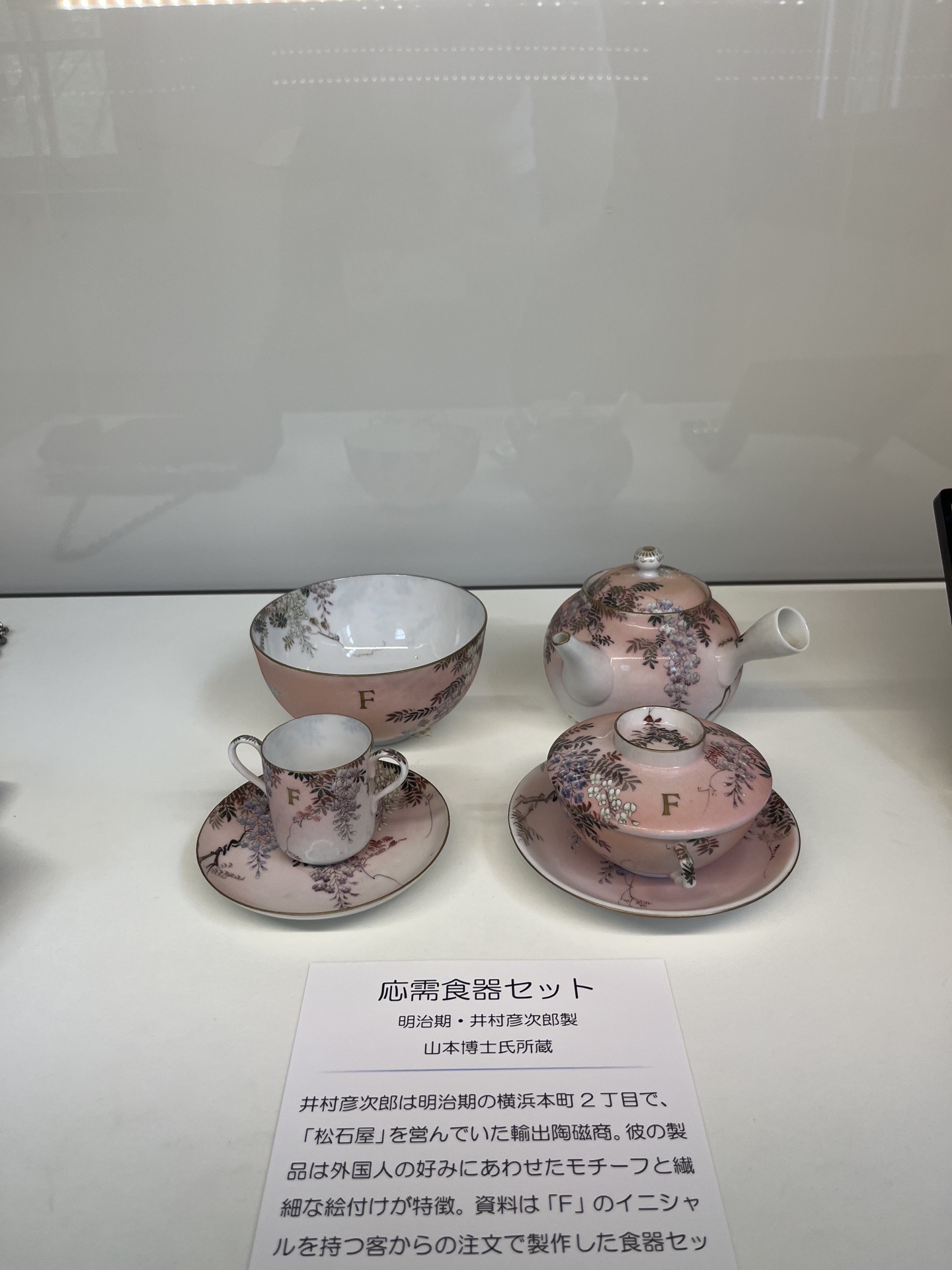
This ceramic set was made by artist Hikojiro Imura, who during the Meiji period, would export ceramics that included artwork popular to Western consumers. The customer, who went by the initial “F”, was included by the artist to personalize the products. 

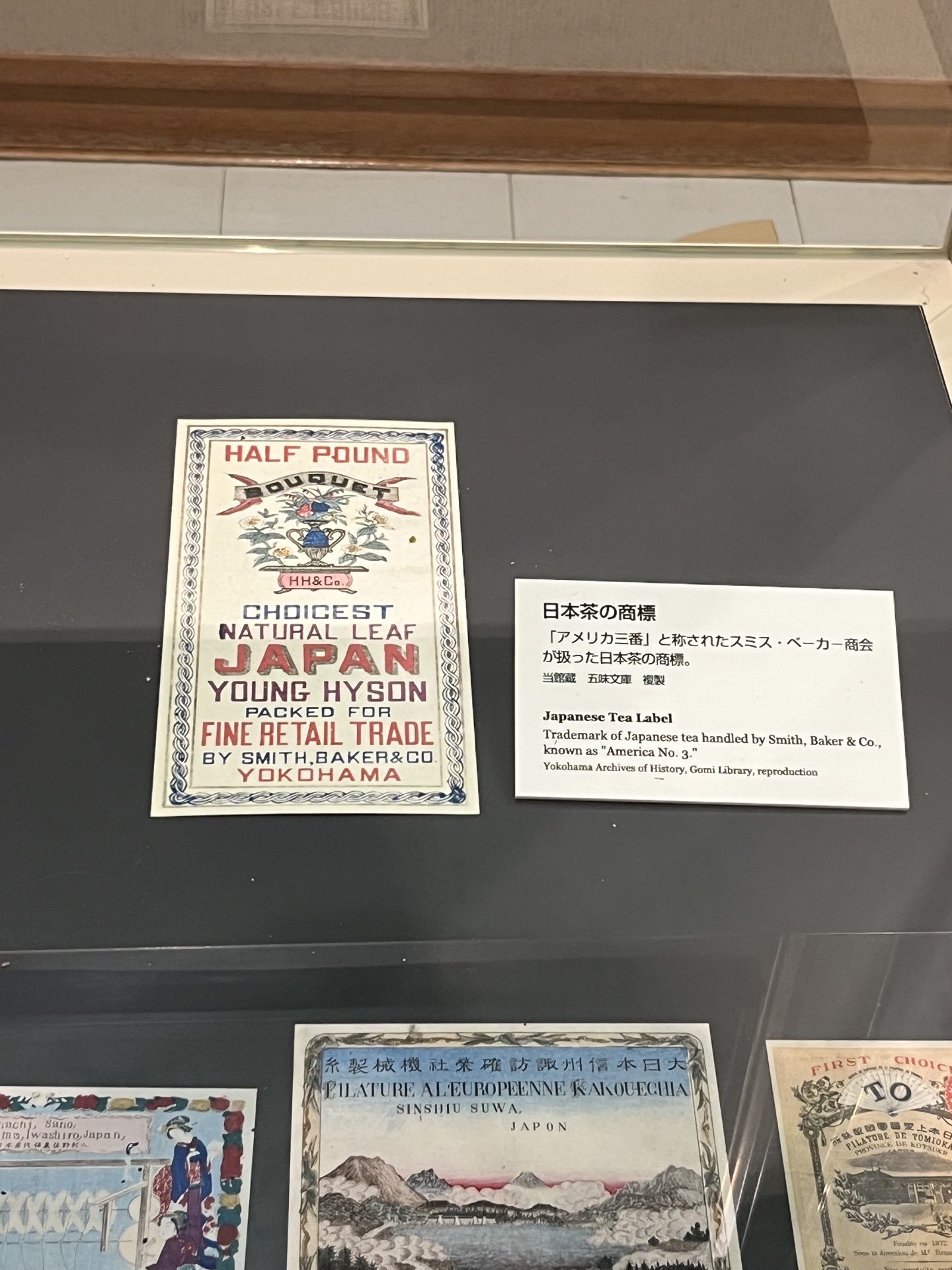
This Japanese Tea Label shows the iconography used to promote the selling of tea to international audiences. 

Chinatown

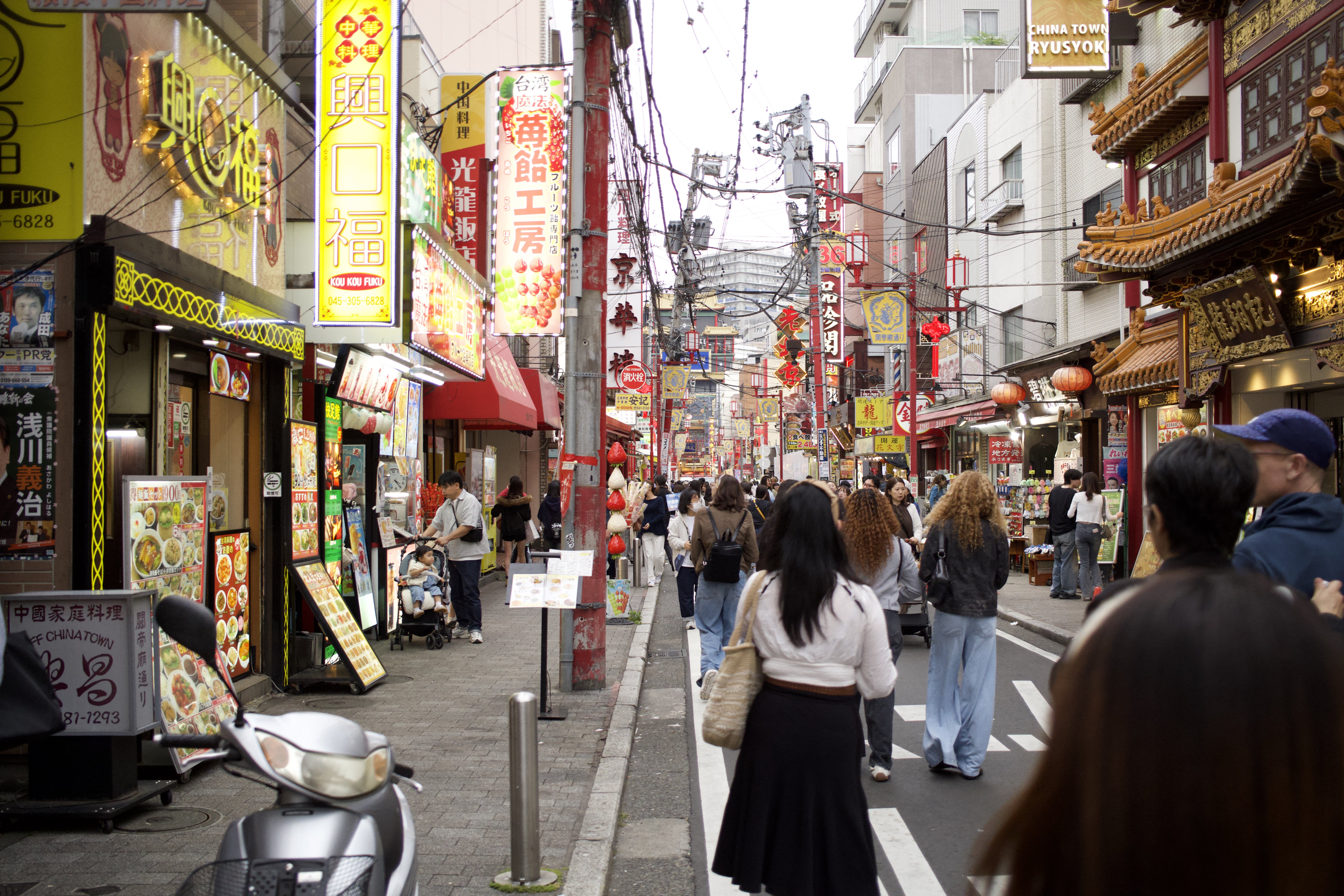
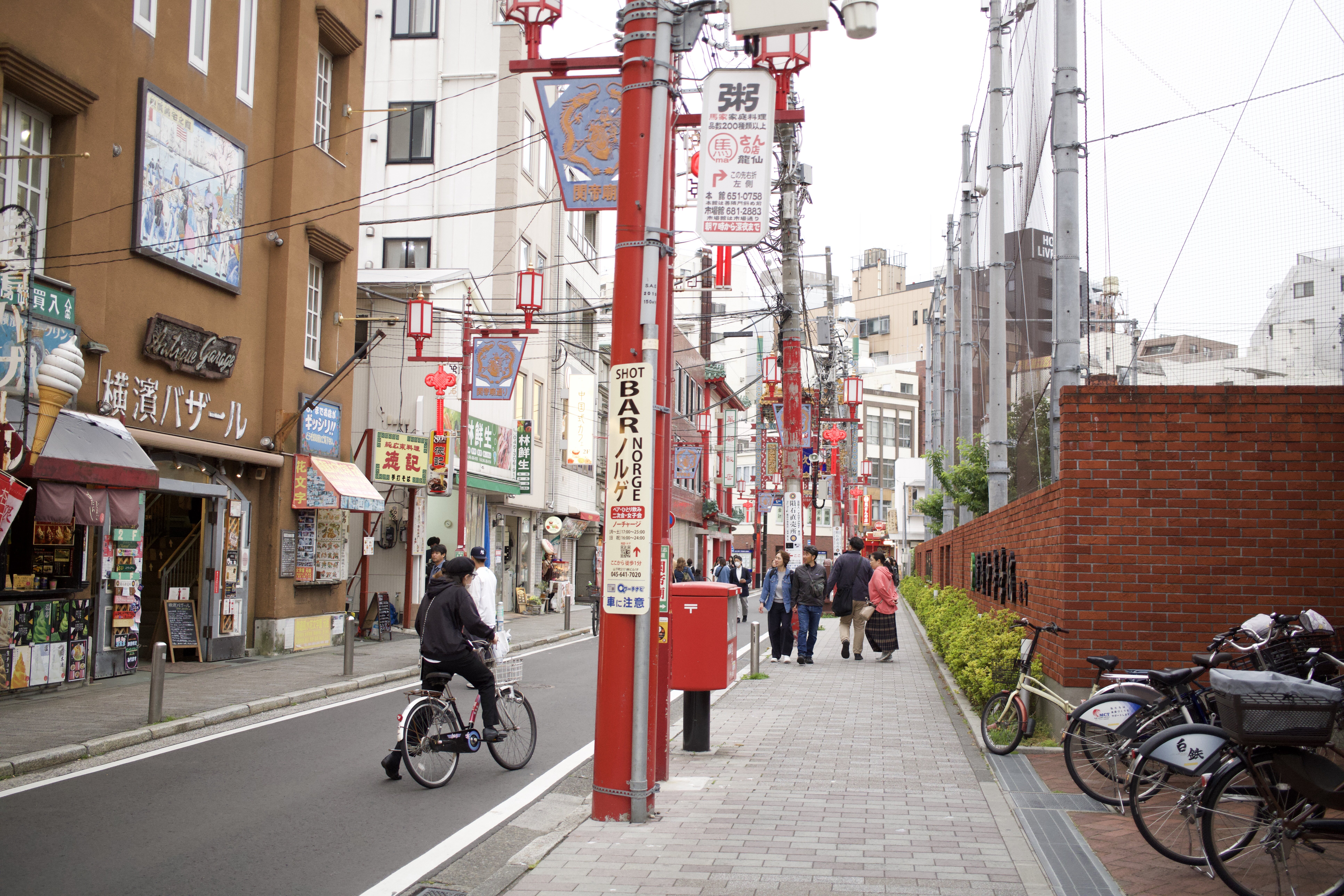
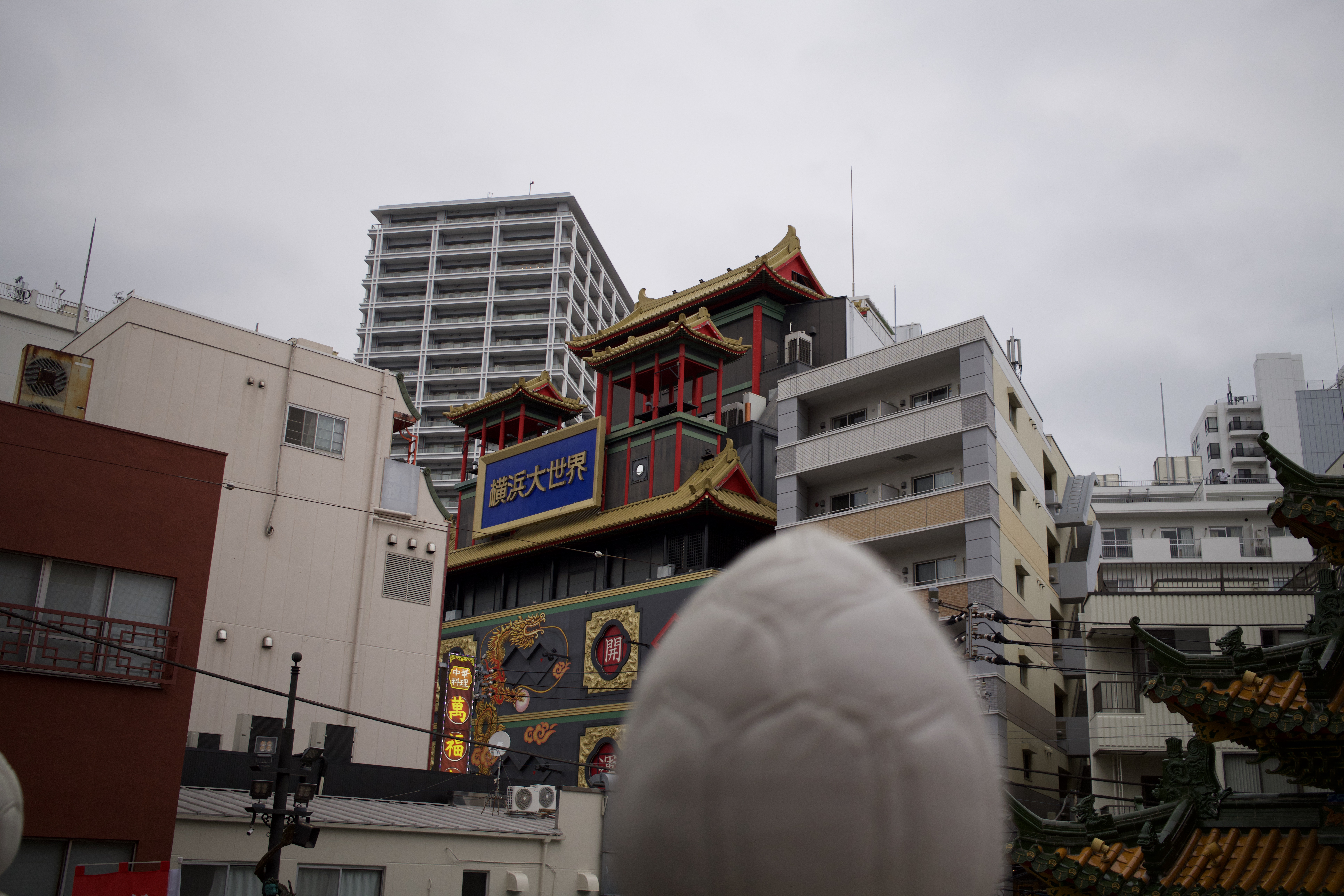
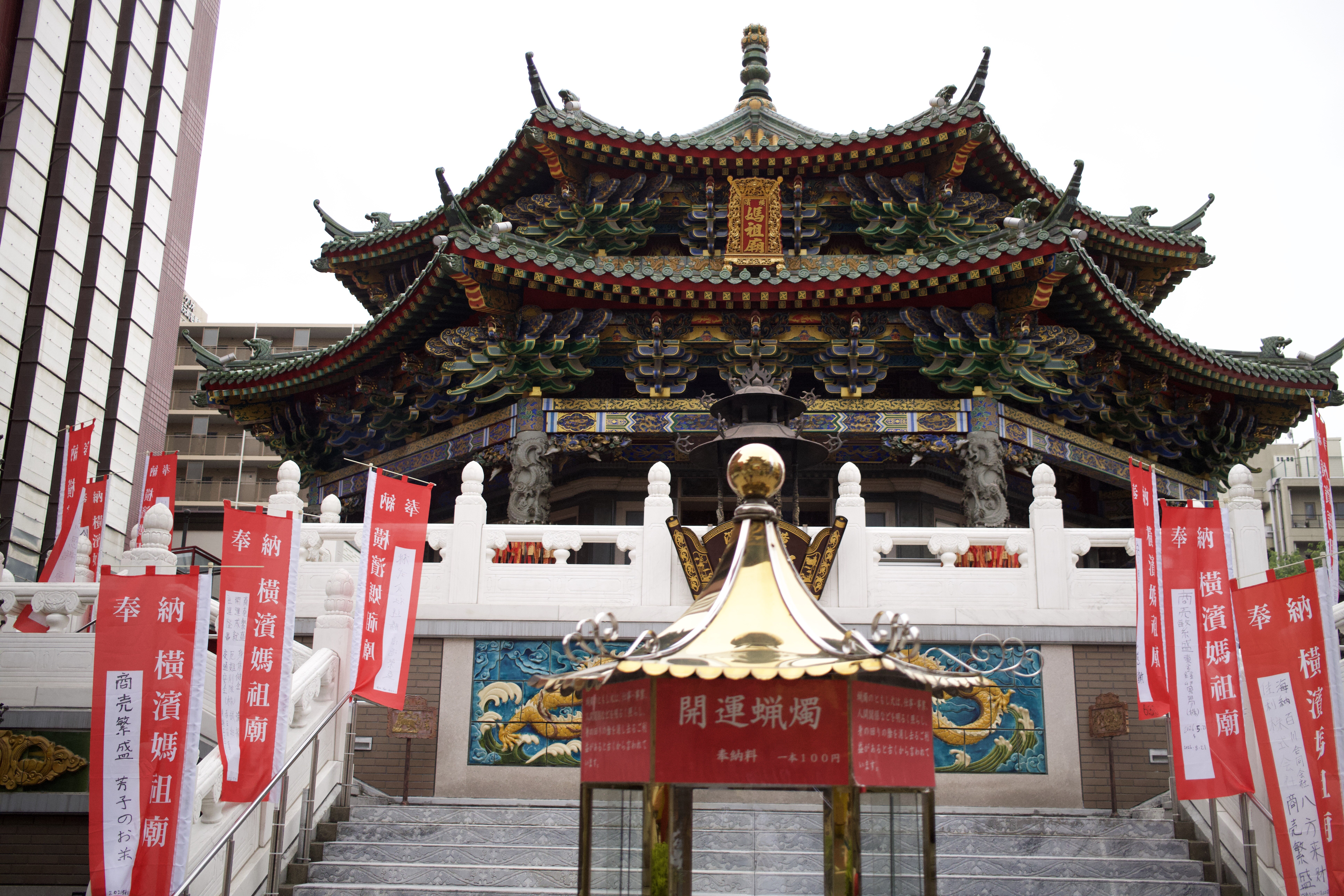
When we toured Chinatown, it was interesting to see how Chinese culture had made it from China to the city of Yokohama. Lots of aspects of Chinese culture have made it over from China, such as some of the signs on the street that had both Japanese and Chinese characters. On the streets themselves, it was interesting to see how the lamp posts that were also present were Chinese. We picked up on the fact that people in the area were speaking Japanese, but were speaking it in a more Chinese manner. Other cultural aspects that had made it from China to Yokohama were food, clothing, and accessories, as it was common to find food stores that sold exclusively traditional Chinese food. They also had stores that sold Chinese clothing as well as Daoist religious accessories. Looking at Chinatowns in the United States, there are some similarities despite the fact that Chinatowns in the United States were significantly larger than the one in Yokohama. For one thing, in both cases, signs tend to be in both Chinese and the language of the country they are located in, so in this instance, both Japanese and English. This shows how Chinese culture had merged with the culture of the country it came to. Another aspect that made it from Chinatown to the host country was the architecture. At the end of the street, there was a massive building done with Chinese architectural features. One of the main aspects of Chinese culture that had migrated to other countries was that of religion.

Daoism in Yokohama

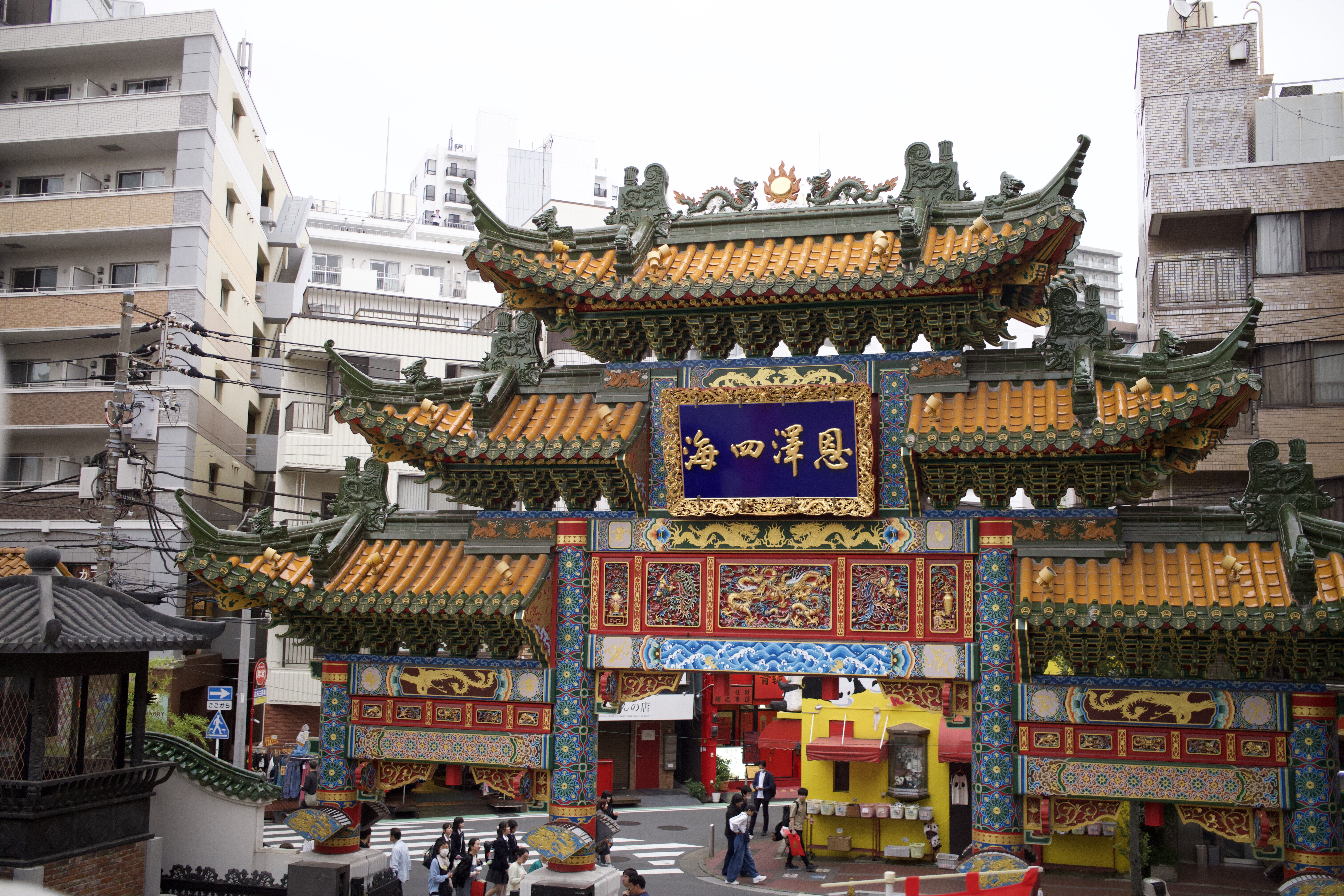
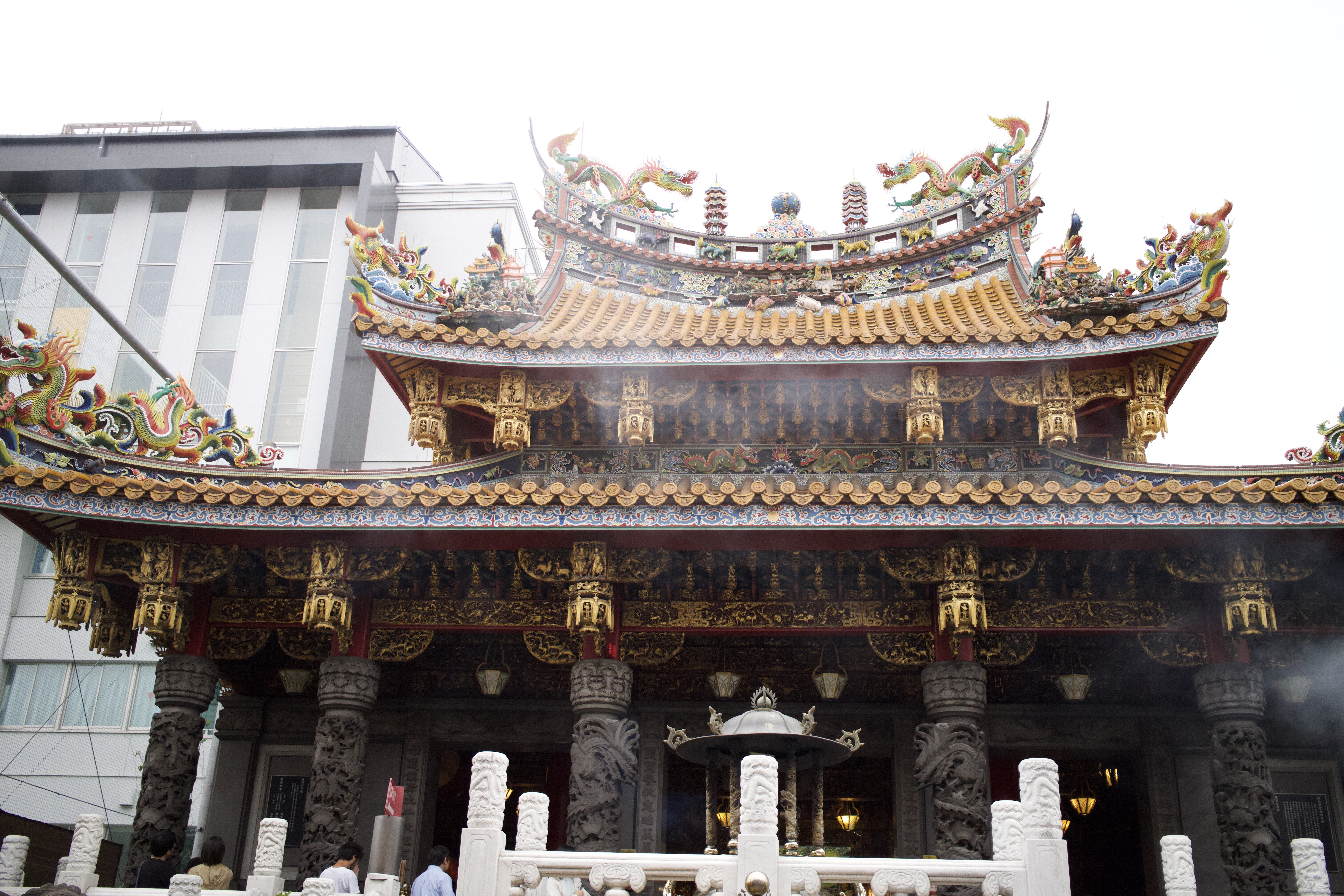
When doing the reading for today, we saw how Yokohama was a major city where foreign countries were allowed to interact with Japan during the Edo period. As a result of Yokohama being open to foreign countries, their culture migrated over as well. Because the cities of Nagasaki and Yokohama were open to foreigners, the Chinese religion of Daoism came over to both. We saw this in the case of Yokohama, with Daoist temples being largely present. When we went to the first temple, one of the aspects that struck us first was the burning of incense, as the smell was extremely overwhelming. We burned our own incense, courtesy of Professor Ng. We placed our incense in a specific pot for either health, wealth, or luck on exams. We observed lots of other people doing the same. At one point, there was so much incense being burned that it was hard to breathe.  We also heard faint music playing that was Daoist. People were allowed inside the temples on the condition that they were praying to the gods that were present inside.  At the entrance of the temples, there were large gates that could be found, such as in the United States at the entrance to Chinatowns. In the case of Yokohama, there were no gates at the entrance of the Chinatown itself. When entering the temple, you had to enter on the right side and leave on the left side. This was done as a sign of respect to the gods. 

The streets of Chinatown in Yokohama

A building in Yokohama with Chinese architectural features

An entrance gate at a Daoist Temple, Yokohama 

A Daoist temple, with Incense, Yokohama 

A Daoist Temple, Yokohama 

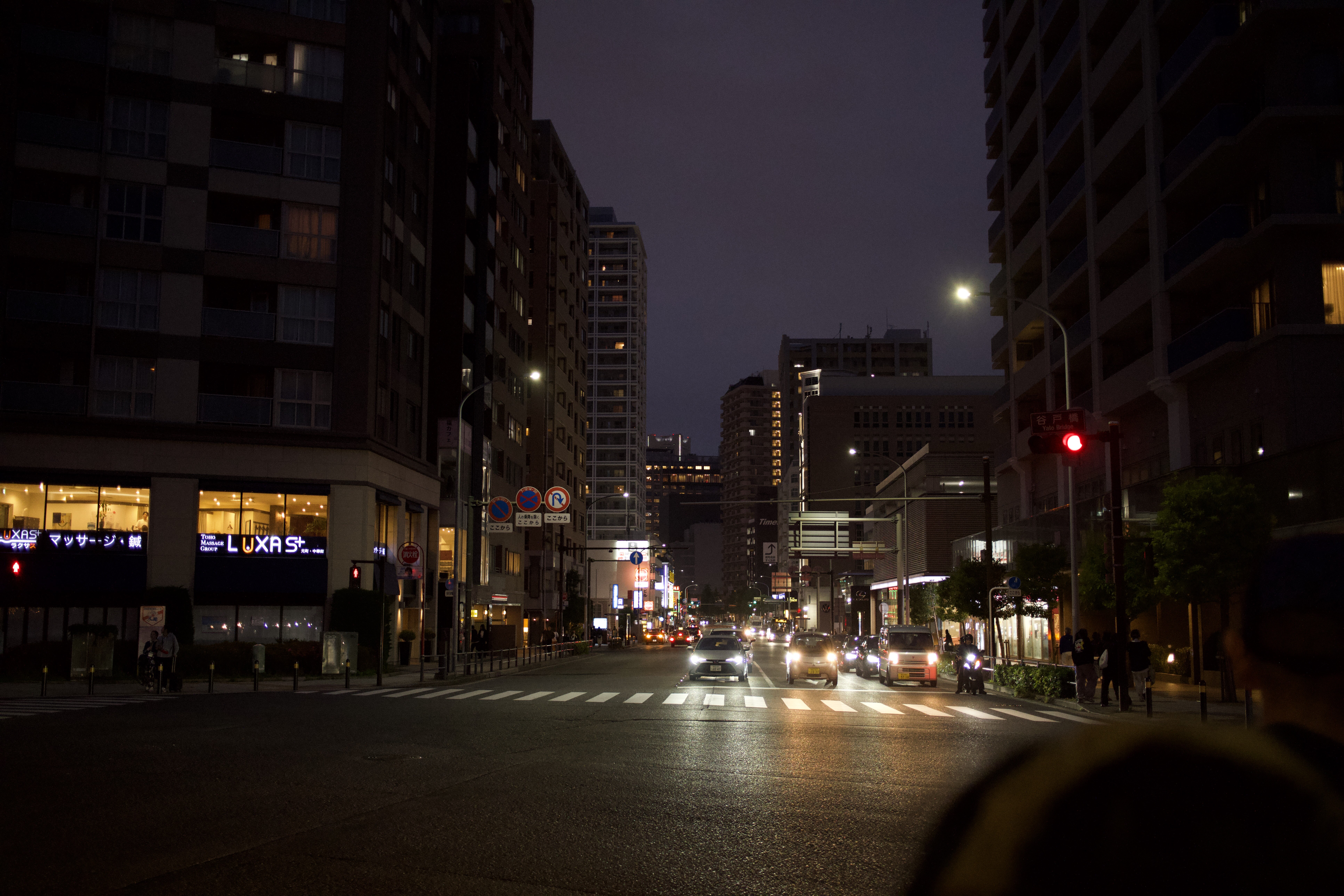
A street at night, Yokohama 

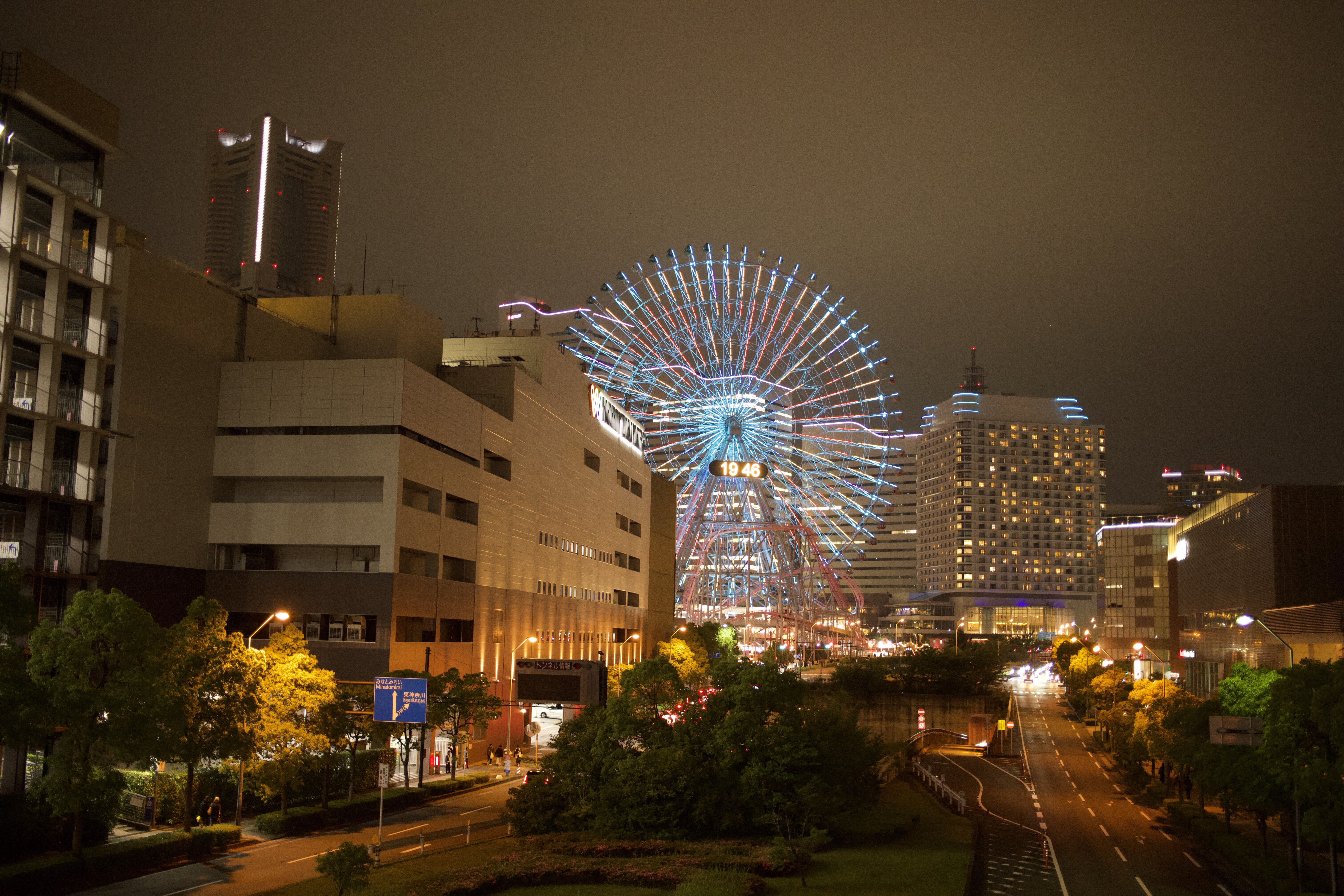
Yokohama at Night

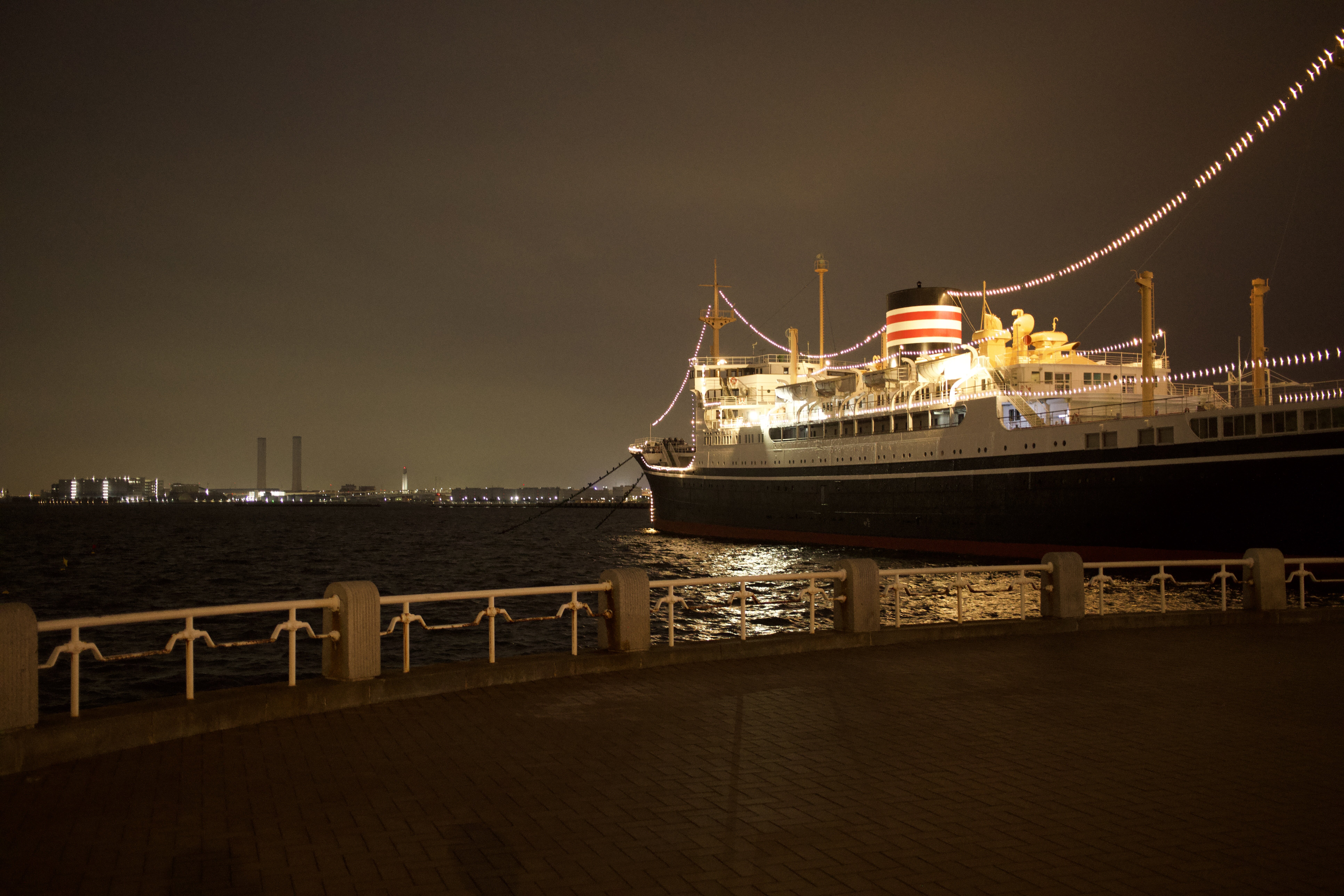
The NYK Hikawamaru at the Yokohama Pier at Night

Privacy Statement