Our very last blog.. (or is it?) Shinkansen + return to Tokyo

By Olivia and Cristiana

It’s kind of hard to believe that this is going to be the last blog post made on this site (we think)! Today, we came back to Tokyo on the shinkansen. Instead of rehashing the shinkansen experience, something that really struck us was the experience of returning to a place instead of going to a new one. When we took the train to Kyoto the first time, it felt very novel as we had never been on the bullet train before and because we were heading to a new area of Japan that was vastly different from Tokyo. Many of us had grown familiar with Tokyo, its sights, and how to navigate it, but Kyoto was much less urbanized (especially in the area we were staying) and the navigation system was much more confusing than the train system in Tokyo. Essentially, it was a little bit like relearning how to be a foreigner in Japan. 

One of the major differences between Tokyo and Kyoto, as previously mentioned, are the transportation systems. Tokyo and Kyoto have both bus and train systems, but each rely on one more than the other– in the case of Tokyo it is the former and in the case of Kyoto, it is the latter. When we all returned to Tokyo and reached the train platform, the Yamanote Line jingle played and the faces of almost all of us lit up almost instantly. We had been talking throughout Kyoto about how we all had missed the voice of the announcements and the train jingles, but I don’t think that anyone realized how much peace the sound of something that had become so familiar would bring all of us. The inflections of her voice and the tiny sound from the speakers was almost like a homecoming.

Another major difference was the effect that cultural nuances (Shintoism, Buddhism, arts, etc) had on us while in Kyoto. The fact is that a majority of our stay in Kyoto was surrounded by these nuances. But while we were in Tokyo, there wasn’t much of it to see unless we made the effort to see it ourselves. To me, these small defining characteristics made such an impact on our experience in Kyoto. We’ve talked about the idea of “Japaneseness” and I believe Kyoto as a whole is a great example of “Japaneseness”. It is a city of preserved art forms and culture, not completely feeding into the changes with western tones. There is a strong sense of preservation for centuries old traditions and arts that Tokyo has seemed to let its modernizing overshadow. Kyoto is where we saw the tea ceremony, nishijin textiles, kimono/cloth weaving, textile dying- all of these that make up the term “Japaneseness” all have a foundation within Kyoto.

These differences across both cities represent why it’s so important not to generalize Japan into a monolith of a singular history, aesthetic, and culture. Kyoto and Tokyo were two very different areas, despite both being important to Japan’s history and both being major Japanese cities. Thanks to this trip, and hopefully thanks to this blog for some of you who have been following along consistently, we have been able to really begin to reify Japan into something complicated and nuanced that goes beyond a superficial understanding. In coming back to Tokyo after so much time in Kyoto, it demonstrated the range of experience possible in Japan and solidified the belief that Japan is more than what we generalize it to be.

Akihabara and The Ad Museum

By Cristiana and Jessica

Akihabara

Today, we ventured into the world of ultimate consumerism. Not far from where we’re staying is Akihabara, the center of Japanese pop culture and the global capital of Otaku culture (Otaku meaning geek culture). Akihabara features stores ranging from collections of electronic, anime, and manga, catering to niche pop culture. Walking through it all was overstimulating to say the least, as each store was clustered around each other. Most stores were multi floored as well, serving as what I thought to be like a mini mall.

I happen to have a bit of knowledge on computer parts and with the ongoing RAM and graphics card shortages in America, I thought it would be interesting to see if the center of technology in Japan would have anything to offer. What I saw was everything I expected to see, marked up prices with a shortage of high-end RAM and graphics cards. I was surprised however because I expected there to be more stock along with cheaper prices with Japan being so close to China. Unfortunately, that was not the case. After that I made my way to the camera floor and after looking at the prices, I decided my phone camera was more than enough for me. I also saw this screen showing the quality of the camera video and decided to have some fun with it.

After looking at computer parts, I made my way over to an anime store. This store included 8 floors of anime items (figurines, CDs, basically anything you could think of branded in anime) and manga. I was amazed by how such a small building with such small pathways, asiles, and escalators was so functional.

While looking into Akihabara, I found some interesting points about its history. During the Edo Period, it was believed to be a place where lower class samurai were to live, along with being a connection from Edo to northern Japan. After World War II during the post war Showa Period, the Akihabara area became the black-market hub for radio parts. Due to Japan having a weakened government post war, Akihabara grew in popularity as the black market continued to thrive and officially become a market city. Onward into the bubble period of economic prosperity in Japan continued to show a busy and prosperous Akihabara, even when Japan’s economic bubble pops in the 90s. By then, radios were beginning to lose their dominance in the market, with computers beginning to take charge. With this change came a new look for Akihabara, one full of personal computers which had then begun to cater to the otaku community of “computer nerds”. Akihabara is a beautiful showcase of Japanese culture and I highly suggest anyone planning to come to Japan to make the trip and check it out.

Ad Museum

The Ad Museum Tokyo opened in 2002, a place that displays Japanese advertisement and marketing from the Edo period (beginning of the 17th century to the late 19th century) until the present day. Our tour guide began with a short summary of the museum, introduced some of the earliest models of ads, and showed our group examples of those early Edo ads within the museum. Advertisements and marketing in the museum promote goods like food, sweets, cosmetics, medicine, cultural events, movies, celebrities, cigarettes, alcohol, and technology. This museum also aims to show how everything around us promotes emotions or ideas; in the words of our tour guide, “…advertising can be a mirror to society”.

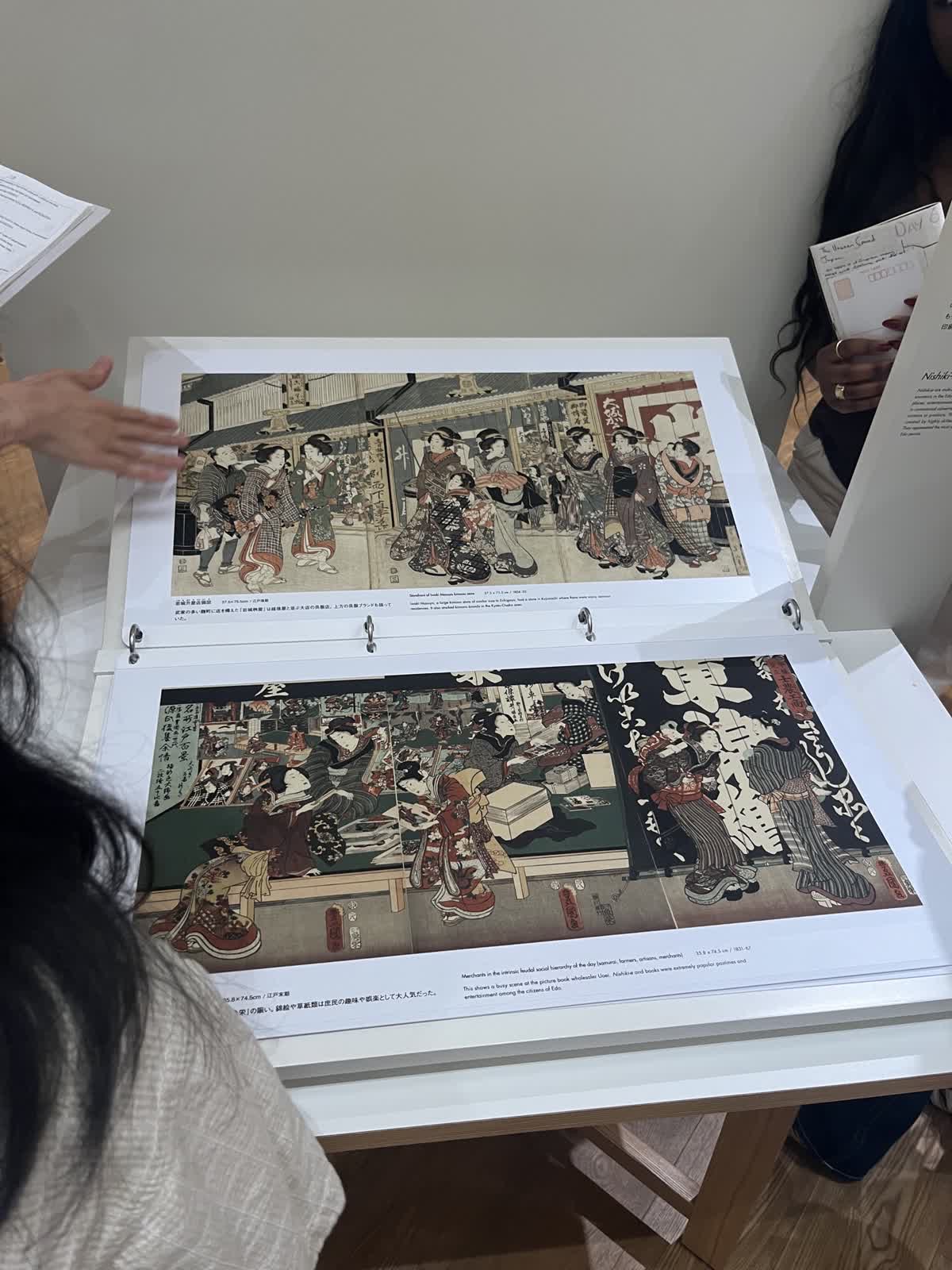
In the Edo period, main forms of advertisement and marketing include: Nishiki-e (graphic art works made by woodblock printing), Kabuki (marketing included into Japanese theatre, many actors commonly created Nishiki-e), and Kusazoshi (comic books). While in some forms of consumer culture, shared values and products come from marketing from the higher class into the lower class, but in the Edo period, the townspeople hold the influence into Japanese consumer culture. One indicator of that priority with Japanese common people was the accessibility of these advertisements: Nishiki-e were sold for very cheap with information covering almost the whole page, Kabuki promoted items both in performances and during intermissions, and Kusazoshi had color-coded covers to market the different subject matters.

Example of a Nishiki-e print from the Edo period. 

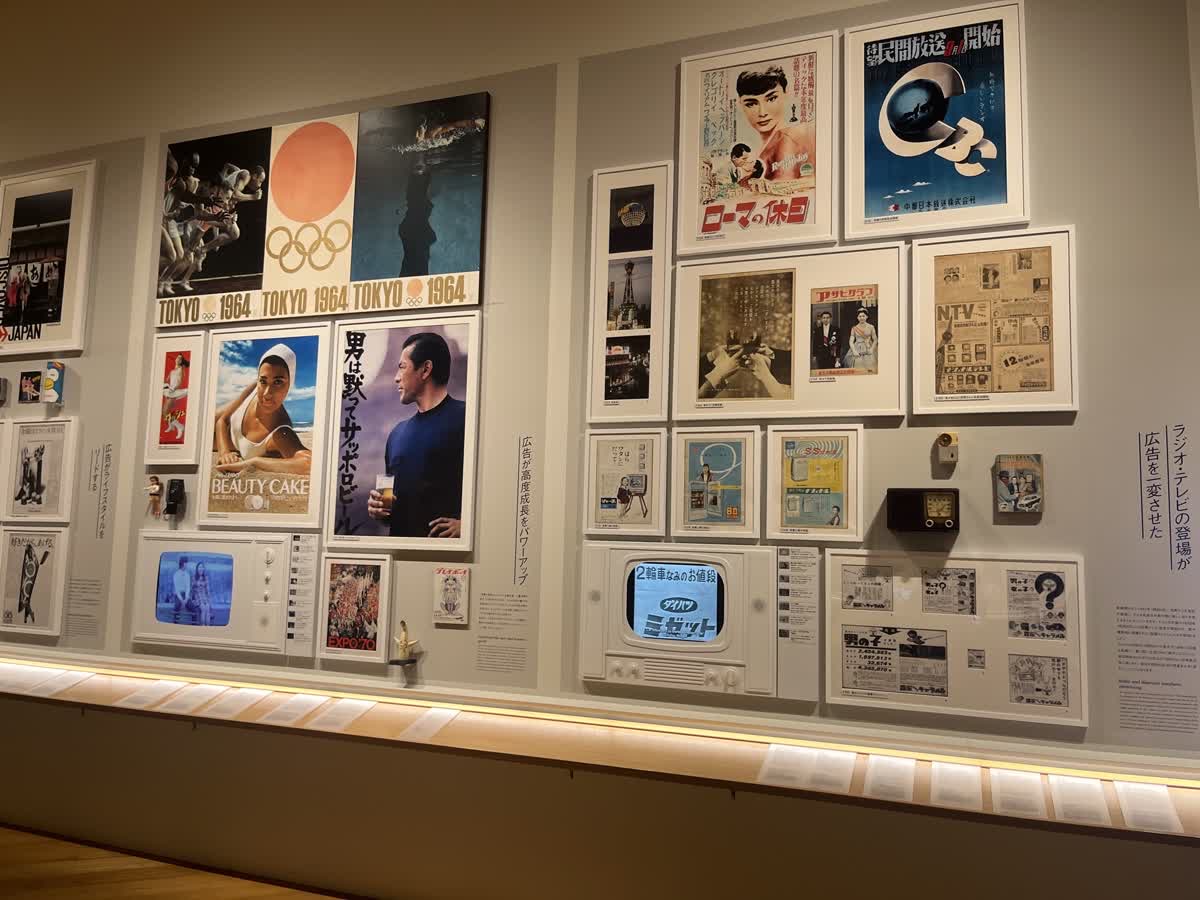
The curations and promotions of ideas throughout time not only are represented in the advertisements within the museum but are also reflected in the museum layout itself. The advertising history in chronological order moves along the wall on the museum, making an easy timeline for visitors to walk through.

Wall of Post-War Japanese Ads.

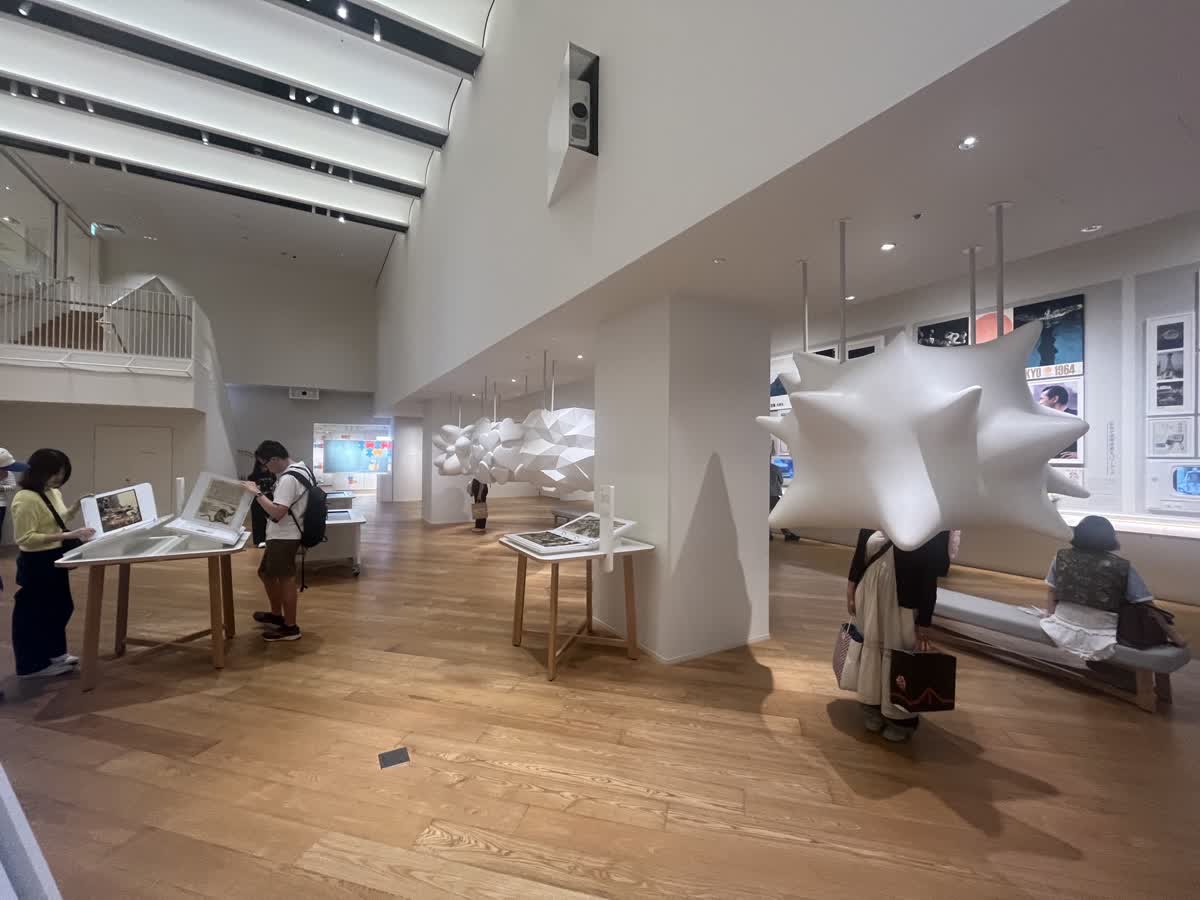
To convey the importance of mood in marketing, the museum includes individual audiovisual booths that each convey a particular emotion, allowing visitors to an enclosed space to examine their feelings in response to what they see in ads. 

The “Four Feelings” audiovisual displays visitors can walk inside of. Each shape represents the emotions the ads promote within.

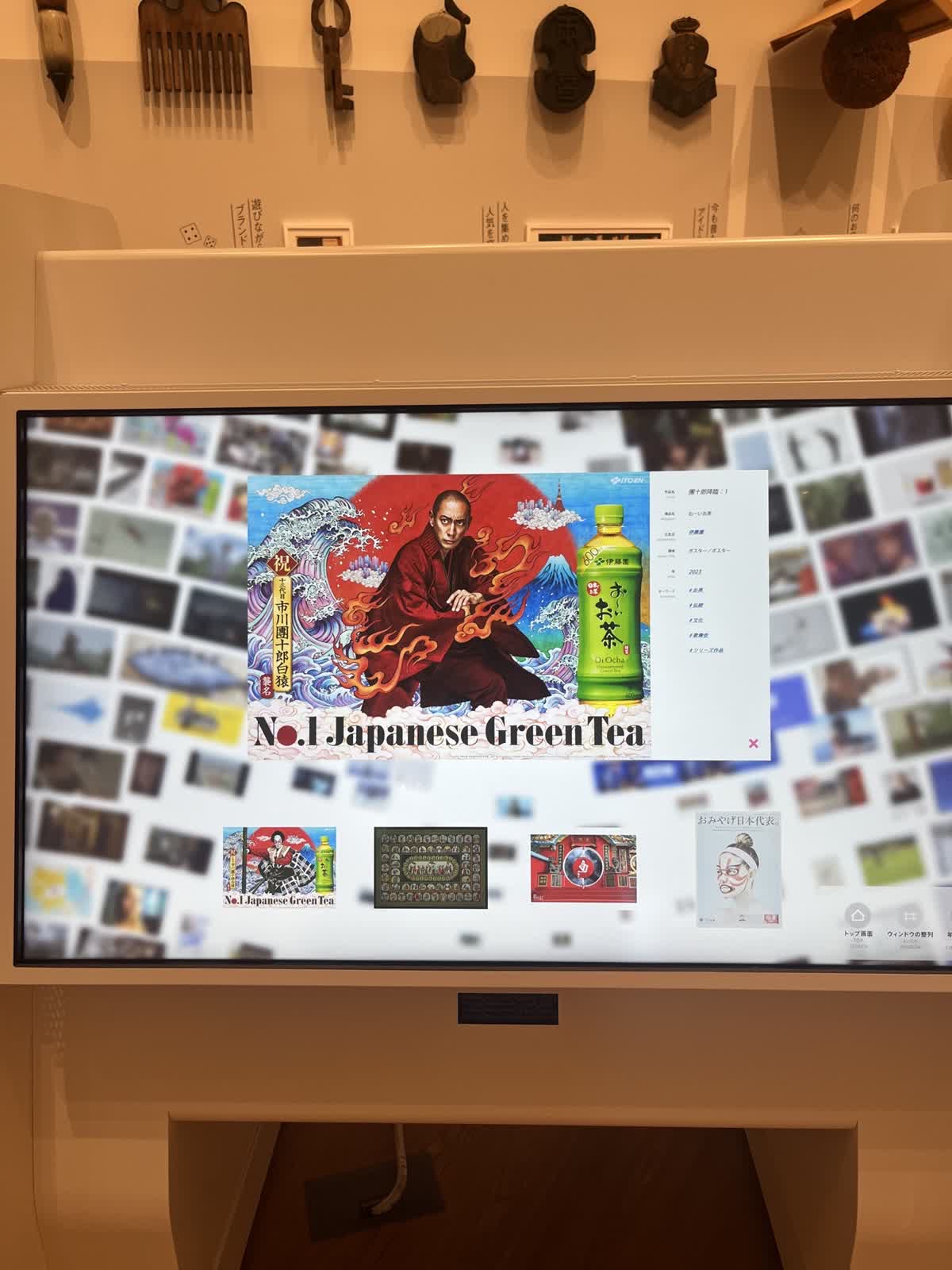
Along with interactive digital displays in the main chronological walls, there are also multiple collection tables, where people can scroll through endless contemporary ads.

Ad for Oi Ocha, a famous green tea brand in Japan, featured on one of the museum’s collection tables.

These features included in the building not only make the museum easy for visitors to follow along the history of ads but allow visitors to examine different social and emotional aspects included in the art of marketing. One mantra that reflects this notion in the Ad Museum Tokyo Guidebook: “Ads can be more than just ads.”

Privacy Statement