Experiencing Japanese Culture Through Takeda and the Tea Ceremony

By Farida and Nilay

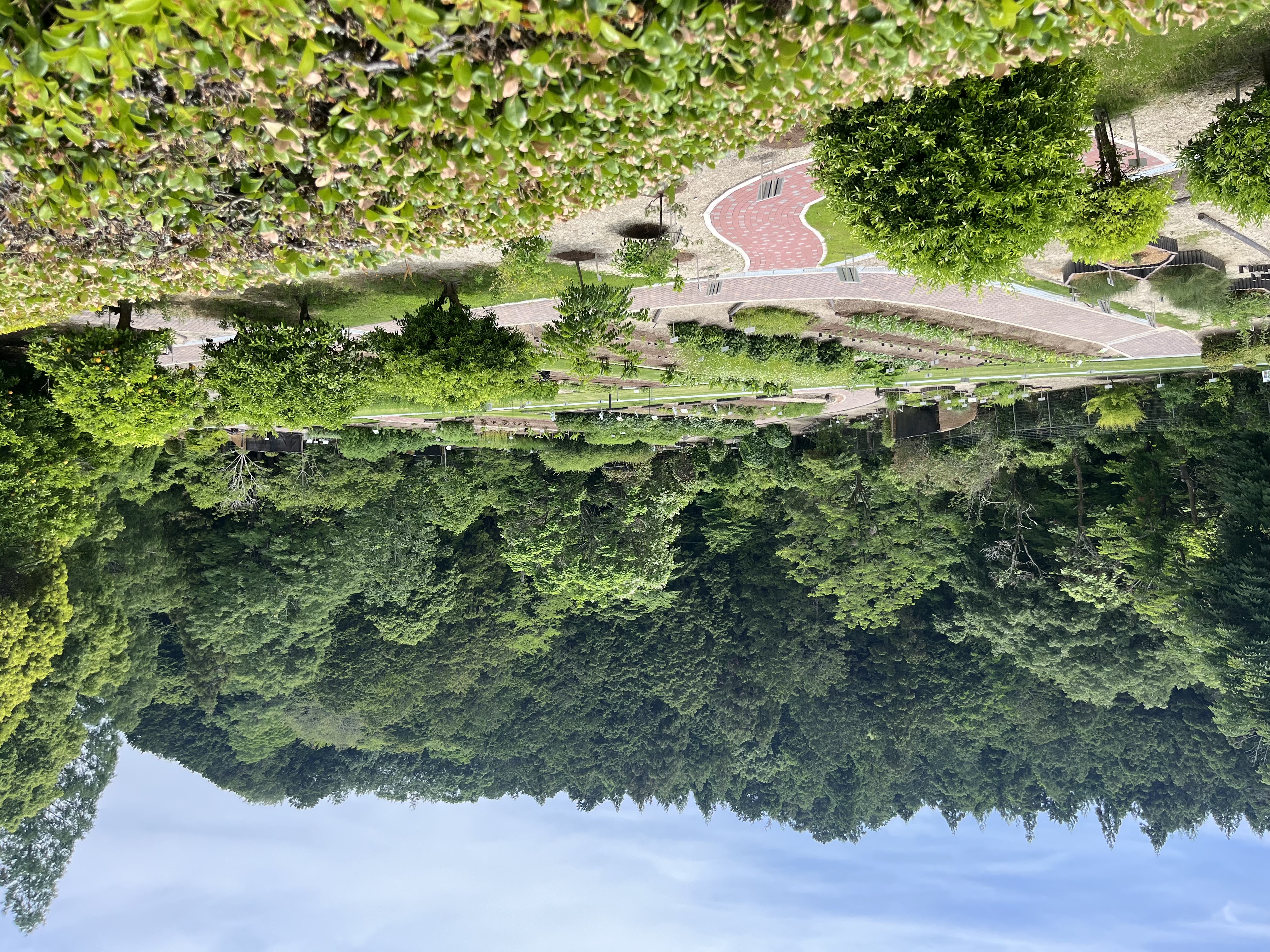
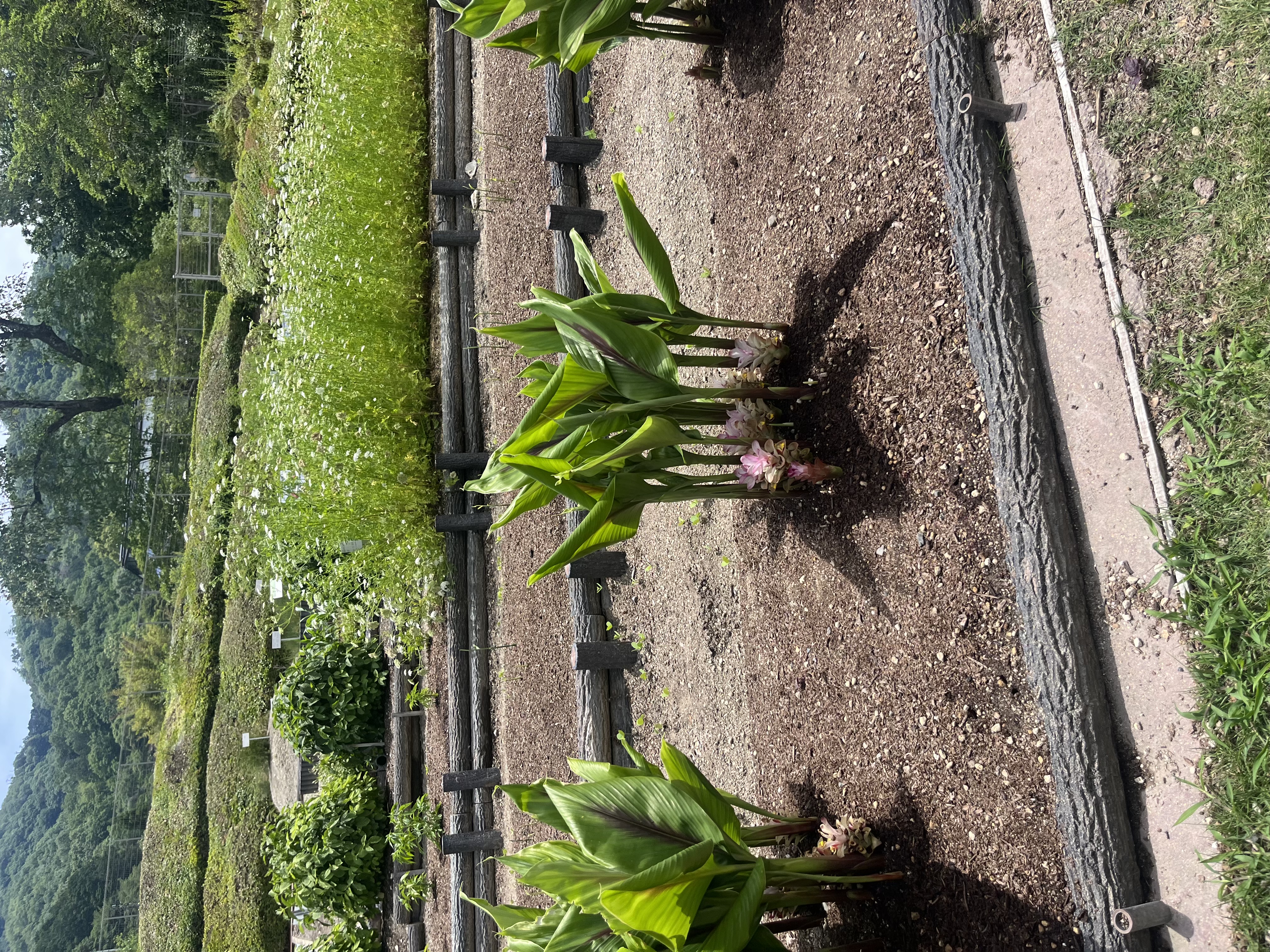
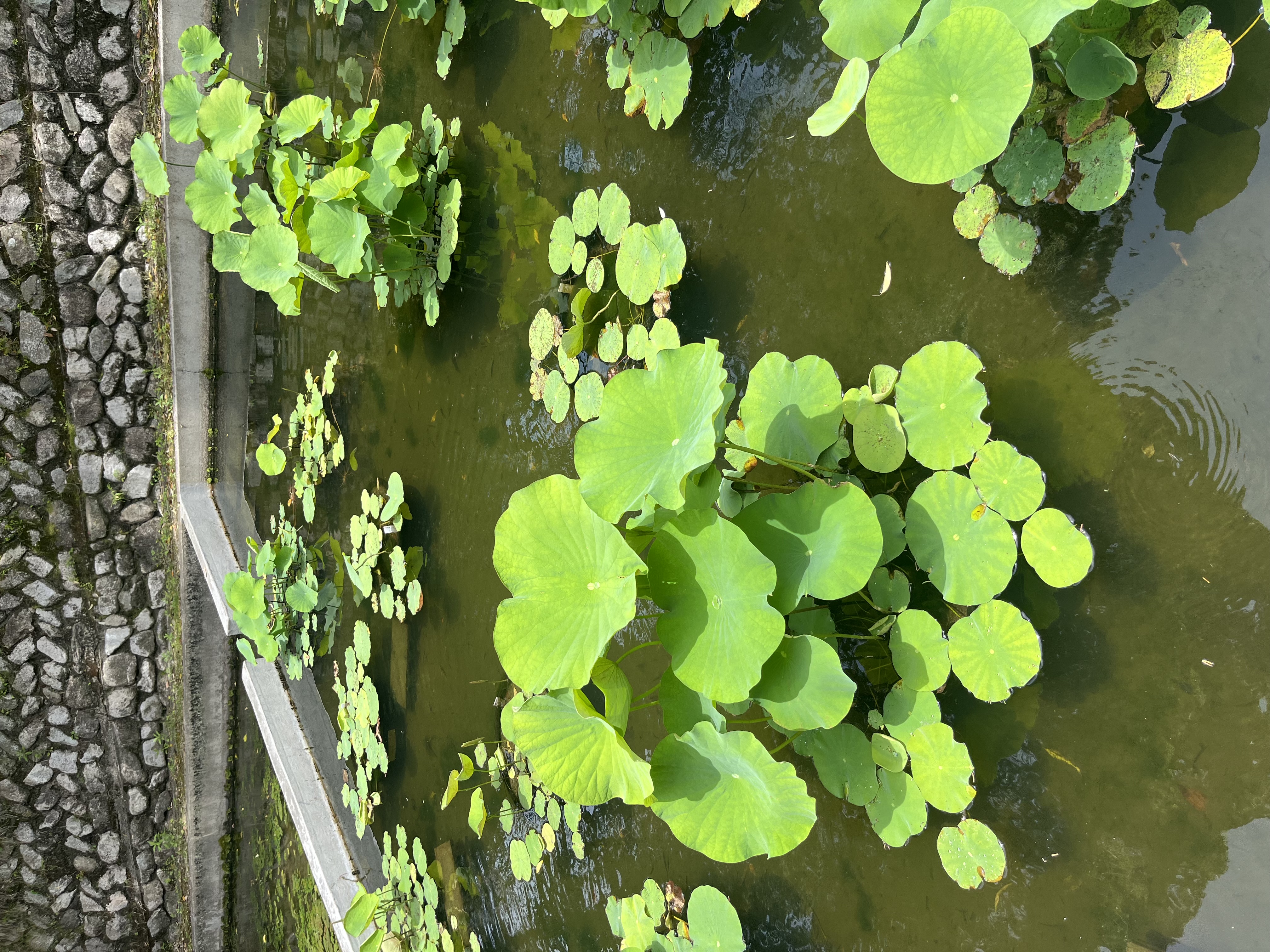
Today, we got a tour of the Takeda Medical Garden in Kyoto. As the garden was extremely large and would take 6 hours to tour the entire garden grounds, we only looked at certain parts of the garden. Out of the 7 different parts of the garden, we saw the Central Garden, the Kampo Garden, the Exhibition Hall, the Folk Medicine Garden, and the Spice Garden. We did see some of the plants that Professor Ng talked to us about in our lecture the previous day. For example, the plant Digitalis Purpura is primarily used for cardiotonic issues. A common surprise for the group was the intensity of the Japanese peppers. At first, it tasted as normal peppers do, but then it took an unexpected turn for the more intense. It really started to burn, and it got to the point where the tongue got numb. This feeling lasted for a while before it fully dissipated. On the more interesting side, we tried a plant that ended up removing the taste of sugar after consumption. We also saw the exhibition hall that housed harvested varieties of the plants that were growing outside. They had everything from cloves to agarwood. The main exhibition hall was built in Kobe City in 1908, but was destroyed by the Hanshin-Awaji earthquake in 1995. It was then moved and reconstructed to the location it stands at now in the Takeda Garden. One of the main purposes of the garden is to help the community, to preserve endangered species, and to raise awareness. For instance, the plant Hollyhock ended up being wiped out in Kyoto, but thanks to the preservation efforts from the Takeda Garden, the 1,500-year-old festival that celebrates the plant was able to continue going. The company also supports international work with collaborations with 80 different foreign countries. The global hub for the company isn’t even in Japan, but in Cambridge, Massachusetts. One of the main areas of focus for the company is gastrointestinal problems, as well as the treatment of rare diseases. The company also conducts trials of its products to help support its mission of treating diseases.  
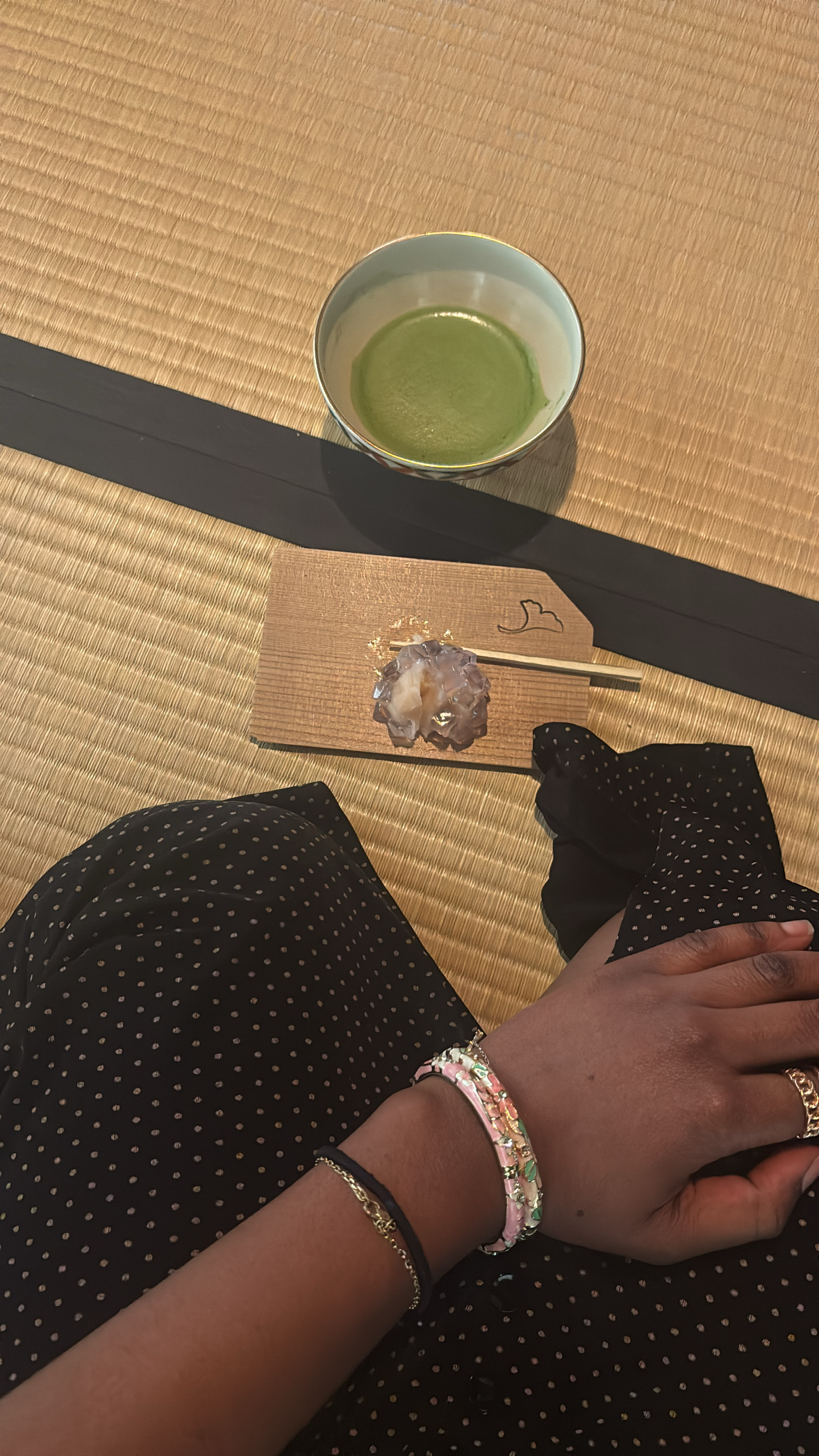
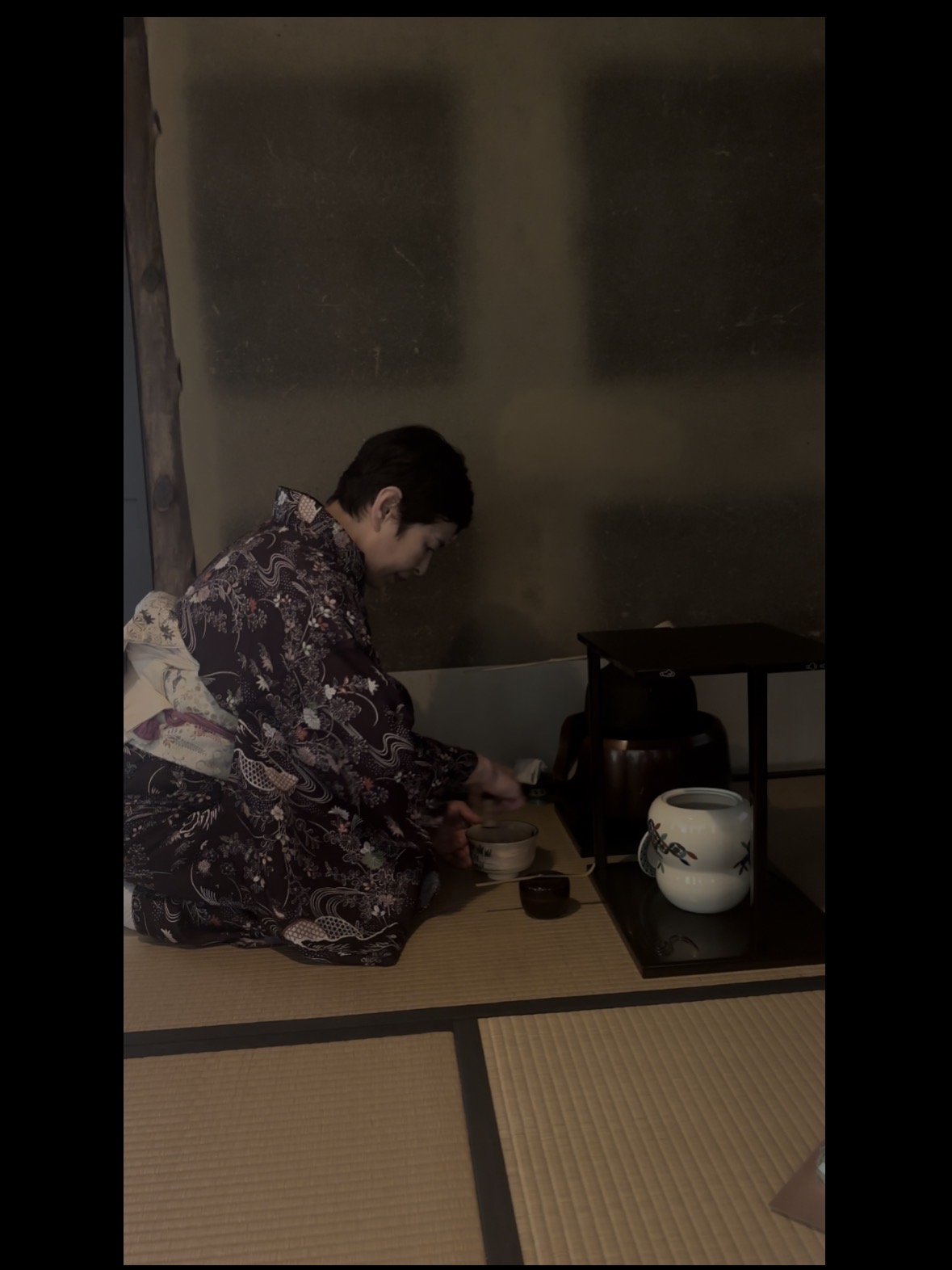
Later in the day, we participated in a traditional tea ceremony at Kansai Seminar House. Going into it, I expected the focus to be on drinking tea, but I quickly realized that the experience was about much more than that. The ceremony took place in a quiet tatami room. The tea master carefully prepared each utensil and performed every movement with precision. Before we drank the matcha, we were served a seasonal wagashi. The sweet was designed to look like a hydrangea flower. What surprised me was how much attention was paid to its appearance. Everyone spent a few moments looking at it before eating it. It felt less like a piece of candy and more like something that was meant to be appreciated first. Seeing the wagashi during the tea ceremony made me think back to Holtzman’s article, To Love Sugar One Does Not Have to Eat It. In the reading, he talks about how sweets in Japan are often appreciated for more than just their taste. The wagashi was made to reflect the season, and before I took a bite , I found myself taking time to look at all the beautiful details of this sweet. It did not feel like something that was meant to be eaten quickly. Also, the tea ceremony also made me think about the connection between tea and sugar. The wagashi was sweet, and the matcha was slightly bitter, and the two balanced each other really well. What stood out to me was that the sweet was small and carefully made. It was not about eating a lot of sugar. But it was about appreciating the the role it played in the ceremony. That made me think of  Holtzman’s argument that sweets in Japan are often valued and taken into moderation rather than overindulgence. Experiencing the tea ceremony gave me a new perspective on tea as a commodity. Like the many plants we saw at the Takeda Medical Garden, tea began as a natural product, but over time it became something bigger that is now closely tied to many Japanese traditions and values.  
Exploring Rikkyo University

By Farida and Caitlyn

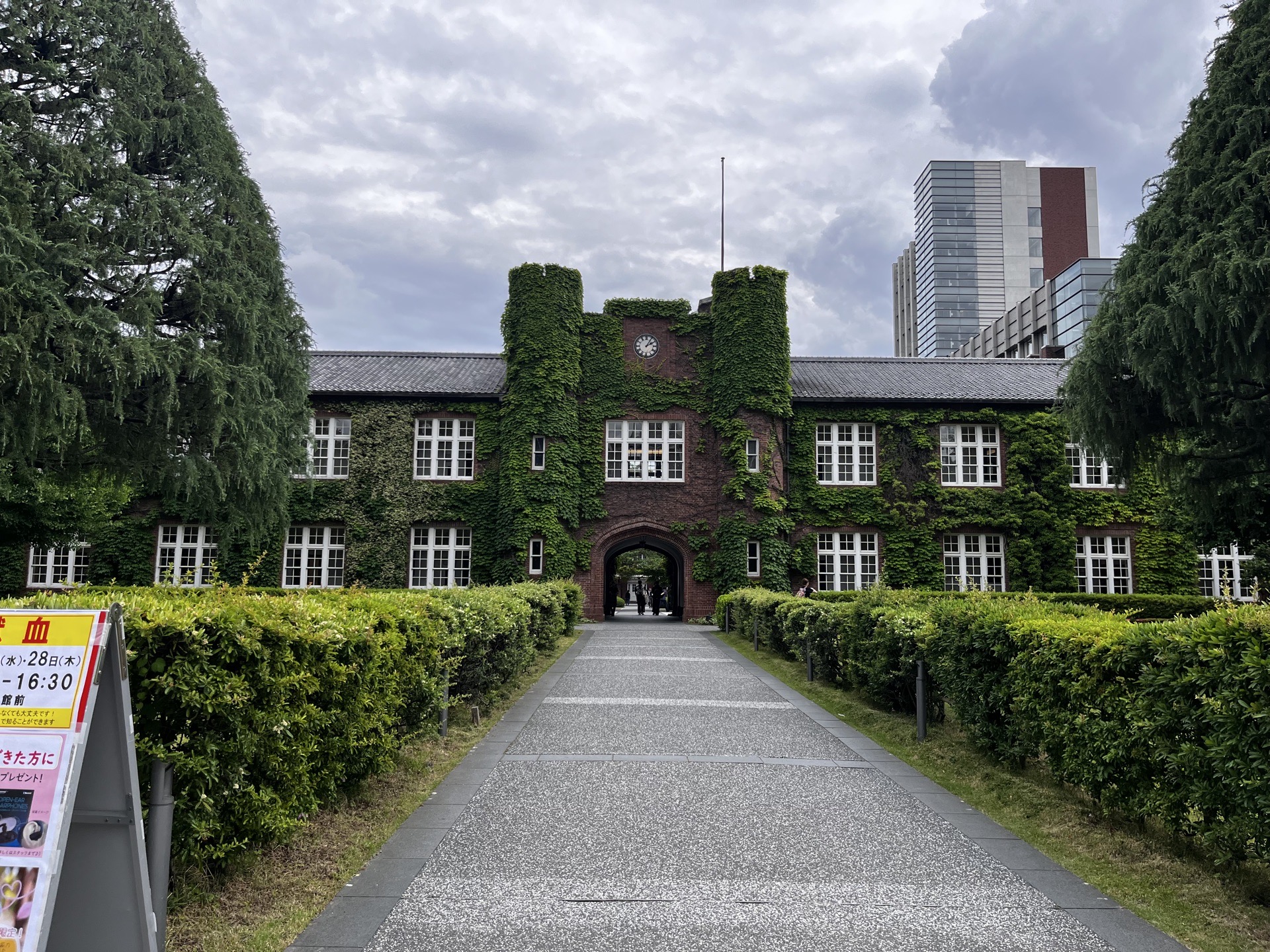
Our Japan Trek group visited Rikkyo University in Ikebukuro, and it was one of the calmest places we have been to so far. Even though the university is in the middle of Tokyo, the campus felt quiet and green. There were huge trees everywhere, plants covering old brick buildings, and students sitting outside. It did not really feel like being in a huge city. We were guided by Dr. Meg Itoh, who is also an alumna of The College of Wooster, which made the visit feel more personal. It was nice hearing someone connected to Wooster talk about life and history at Rikkyo. 

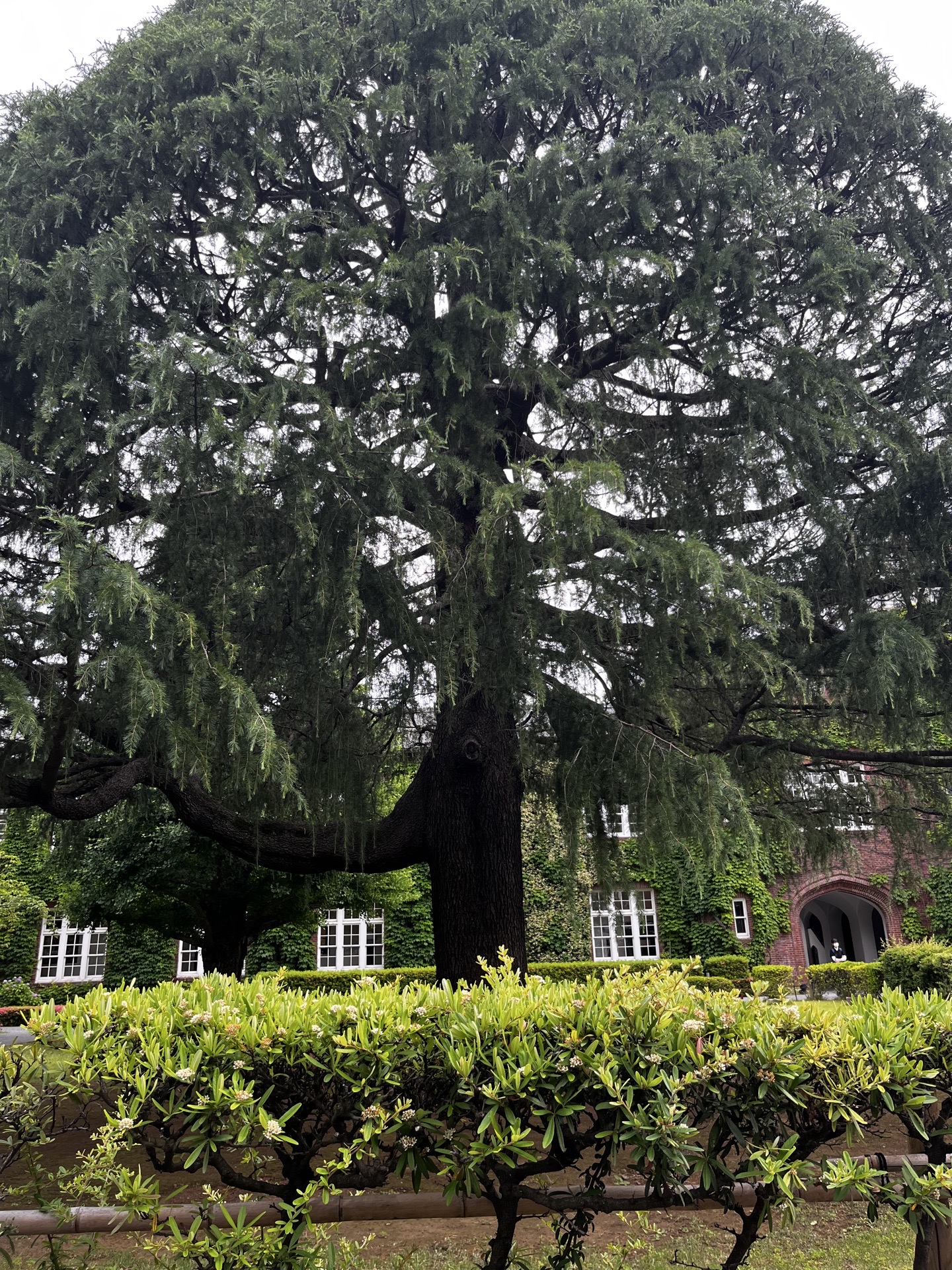
One thing that stood out to me the whole time was how connected the campus felt to nature. The giant green trees near the main building were beautiful. They are known as the  “Twin Giants,” and in winter they become the center of the university’s Christmas lights display. Looking at those trees it made me think about Shinto beliefs and the idea of kami, or spirits living within nature. Throughout Japan we have been seeing how nature is respected instead of separated from daily life.

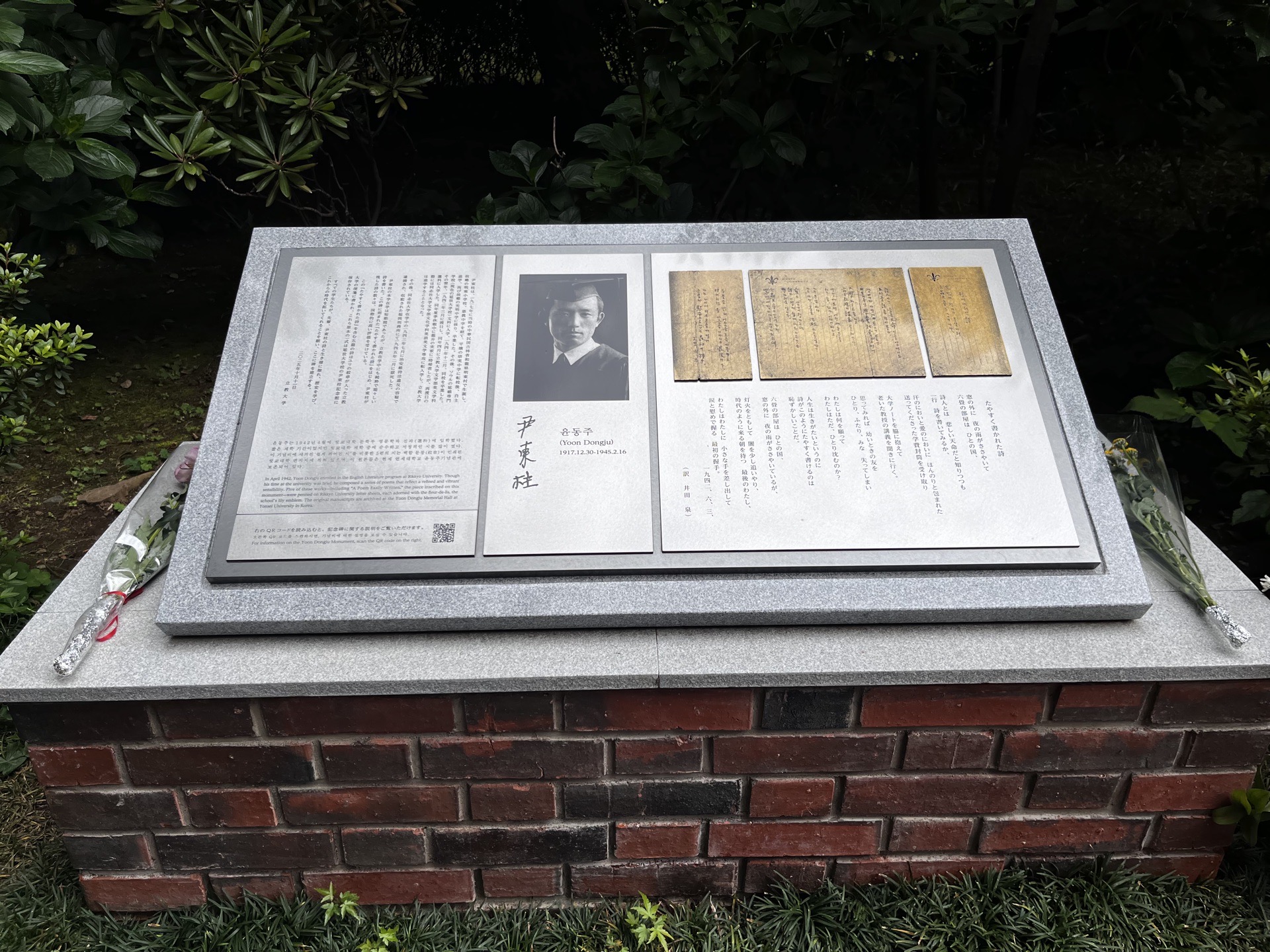
The campus also had a lot of history. We learned that red brick Morris Hall survived both the Great Kanto Earthquake and World War II air raids, which is fascinating to think about. We also saw the chapel and the old dining hall that students compare to Harry Potter. One of the most meaningful parts of the visit was learning about Yoon Dong-ju, a Korean poet who studied at Rikkyo during Japanese colonial rule over Korea. He continued writing in Korean even while the language was being suppressed, and later he was arrested and died in prison. There is now a monument for him on campus. His story connected to our textiles theme in a way I didn’t expect. Textiles reflect culture and identity, and his poetry felt the same way because he used writing to keep hold of his identity at a time when people were being pushed to let go of it.

There were also other connections to our other themes. Rikkyo was founded at a time when Western education and ideas, including medicine, were becoming more common in Japan, and the school still shows that mix of Japanese tradition and Western influence. It also made me think about sugar because the campus felt very centered around community. The cafes, dining halls, and traditions like the winter illuminations give students places to come together.

Overall, it was fascinating to witness the contrast between college life in the States and Japan – from the tranquility of the “Twin Giants,” the Harry Potter-like dining hall, and learning about Yoon Dong-ju’s story, Rikkyo University represents a striking intersection between what we typically perceive as “Western” culture and “Japanese” culture. At the end of the day, the thing that moved me the most was witnessing just how similar we all are.

(5/21) Commodities and Rituals in Shintoism

by Olivia and Farida

Shintoism, the most practiced “religion” in Japan along with Buddhism, fits into the daily life of its citizens almost perfectly. We use the quotation marks around religion tentatively, and ultimately at the preference of most Japanese citizens. Despite the existence of over 80,000 Shinto shrines in all of Japan and around 83 million citizens who participate in its daily rituals, you would be hard pressed to find any Japanese citizens who openly admit to practicing a religion. During our first day in Japan, we had to confront our Western conceptions of religion as we engaged with this core part of Japanese culture. 

Upon arriving at Meiji Shrine (or Meiji Jingu, if you’d prefer the romanization of the Kanji), we met with Moriyasu-sama, a classmate of Professor Ng from undergrad who went on to become a Shinto Priest at the Meiji Shrine. He’s wearing pure white undergarments, called shitagi, representing purity; hakama, the pants of a Shinto Priest’s vestments, whose deep, royal purple color signify both his rank and seniority; and traditional split-toed socks known as tabi with traditional Japanese clogs called geta to complete the look. Normally, these vestments would be made of an expensive material such as silk for higher-up priests or cotton, but due to the rain of the day, we got the less luxurious experience of seeing a Shinto Priest in polyester. 

Shintoism as a whole is essentially a reverent belief and honor of kami, which is translated literally as “spirits” in English, although that translation lacks much of the nuance that belongs to Shintoism as a whole. Kami, while most understood to us as deities, are more so non-personified feats of nature. There is a kami of the sun, a kami of the Earth, a kami of the sea, and so much more. Shintoism is rooted in both gratitude and awe of the incandescent feats of nature and the power of all beings’ life force. While the Meiji Shrine was built to honor Emperor Meiji after his death in absence of a tomb, it doesn’t necessarily mean that the people of Japan worship him or his wife– rather, they honor their deified spirits. Shintoism isn’t about belief or worship; it is about ritualistic practice. 

We had the opportunity to engage in this practice as we stepped into the sacred grounds– before entering the area of the shrine, we cleansed our hands and mouths, purifying ourselves both literally and spiritually. We bowed at the base of each torii gate, before finally participating in a purification ritual, also known as harae

This ritual commenced with the banging of the drums, or taiko, before Shinto liturgies were recited in a pitchless, rhythmic manner. We bowed as an onusa, a purified paper shaker, was passed over us. More Shinto liturgies were recited to the tune played on a traditional Japanese flute known as a kagurabue, when Shinto shrine maidens known as Miko danced with flowers. At the end of the ritual, we walked out and received a sugary sweet chrysanthemum candy. The chrysanthemum is in honor of the imperial family as it appears on their crest, and the sugar acts as a preservative. Oftentimes, sugar is used in Shintoism as an offering to the kami through foods (shinsen). 

Overall, Shintoism reinforces cultural ideas of the ways in which spiritual and bodily health are intertwined. There was initially a lot of pushback against Buddhism in Japan in favor of Shintoism before realizing that it was a necessity as Shintoism tends to focus on the importance of life and doesn’t dabble much in thoughts of death, as it is seen as “unclean.” Because Shinto Priests often refused to perform death rituals, the job then fell to Buddhist monastics, making them a necessity in Japanese society. As we continue to look into how commodities such as sugar and textiles are used culturally in Japan, the Meiji Shrine and Shinto practices acted as a friendly entry point for us to recognize the different ways in which things as basic as cloth and sugar becomes something with meaning in different cultural contexts.

Privacy Statement