By Farida and Caitlyn
Our Japan Trek group visited Rikkyo University in Ikebukuro, and it was one of the calmest places we have been to so far. Even though the university is in the middle of Tokyo, the campus felt quiet and green. There were huge trees everywhere, plants covering old brick buildings, and students sitting outside. It did not really feel like being in a huge city. We were guided by Dr. Meg Itoh, who is also an alumna of The College of Wooster, which made the visit feel more personal. It was nice hearing someone connected to Wooster talk about life and history at Rikkyo.
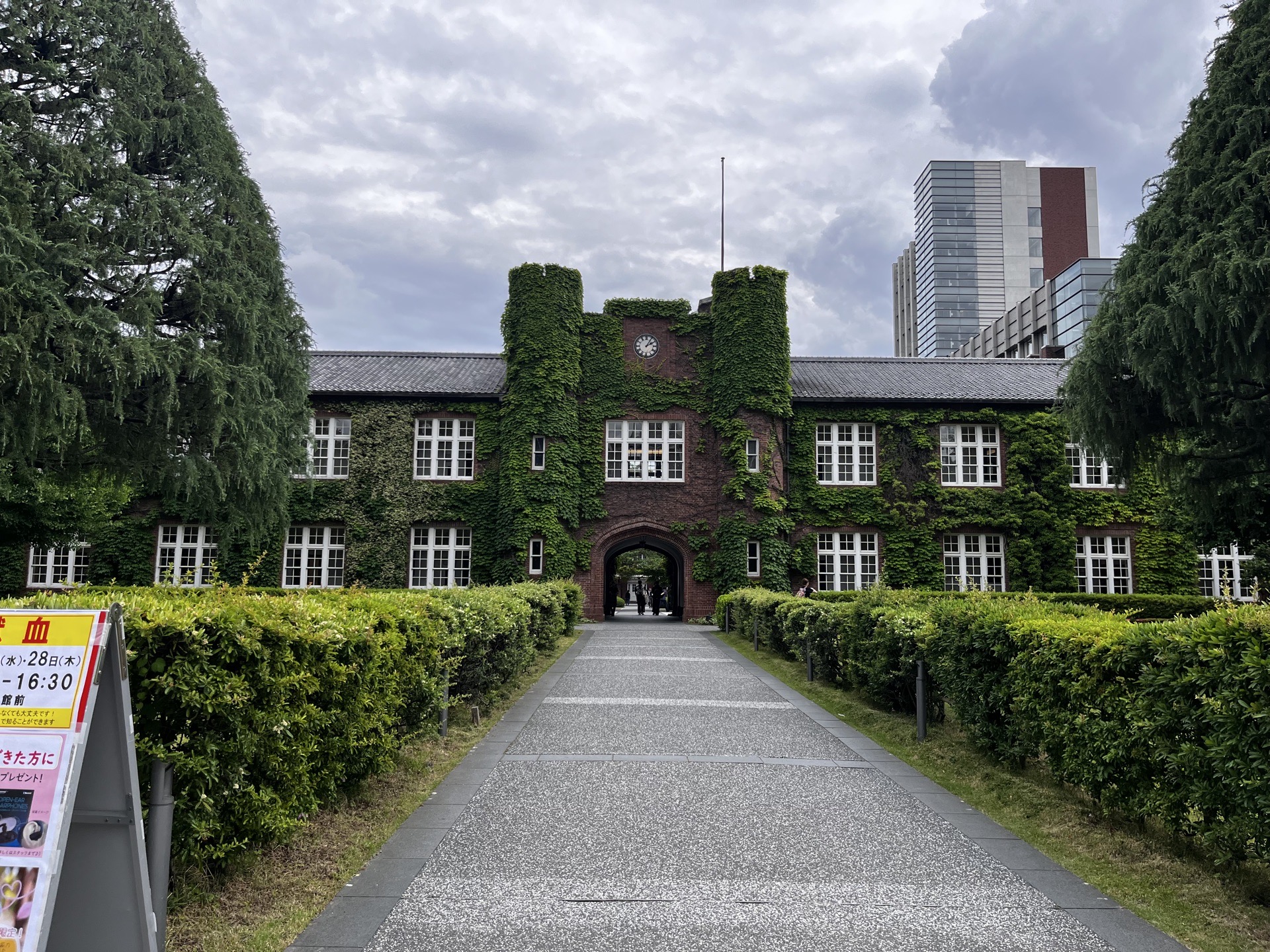
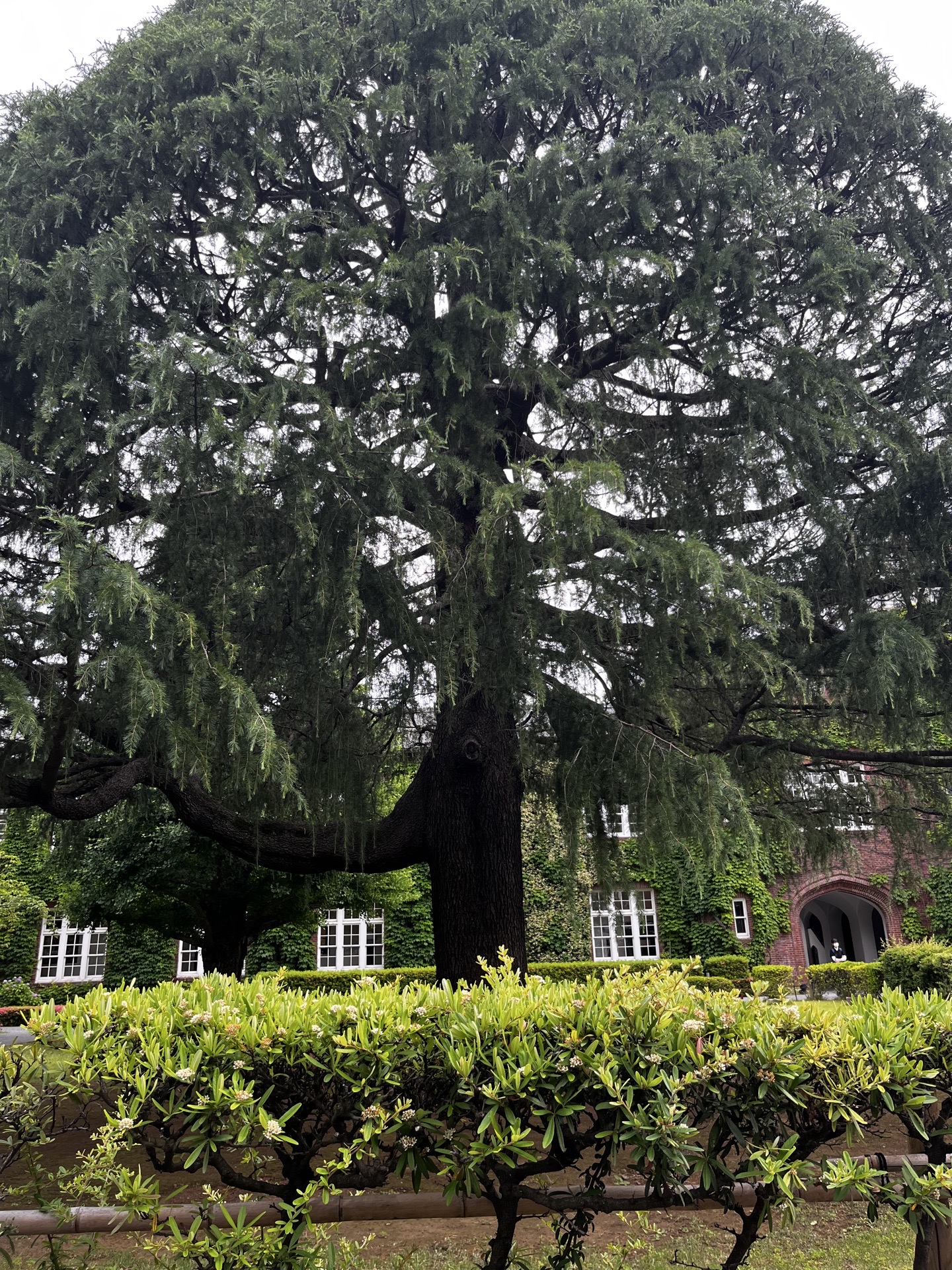
One thing that stood out to me the whole time was how connected the campus felt to nature. The giant green trees near the main building were beautiful. They are known as the “Twin Giants,” and in winter they become the center of the university’s Christmas lights display. Looking at those trees it made me think about Shinto beliefs and the idea of kami, or spirits living within nature. Throughout Japan we have been seeing how nature is respected instead of separated from daily life.
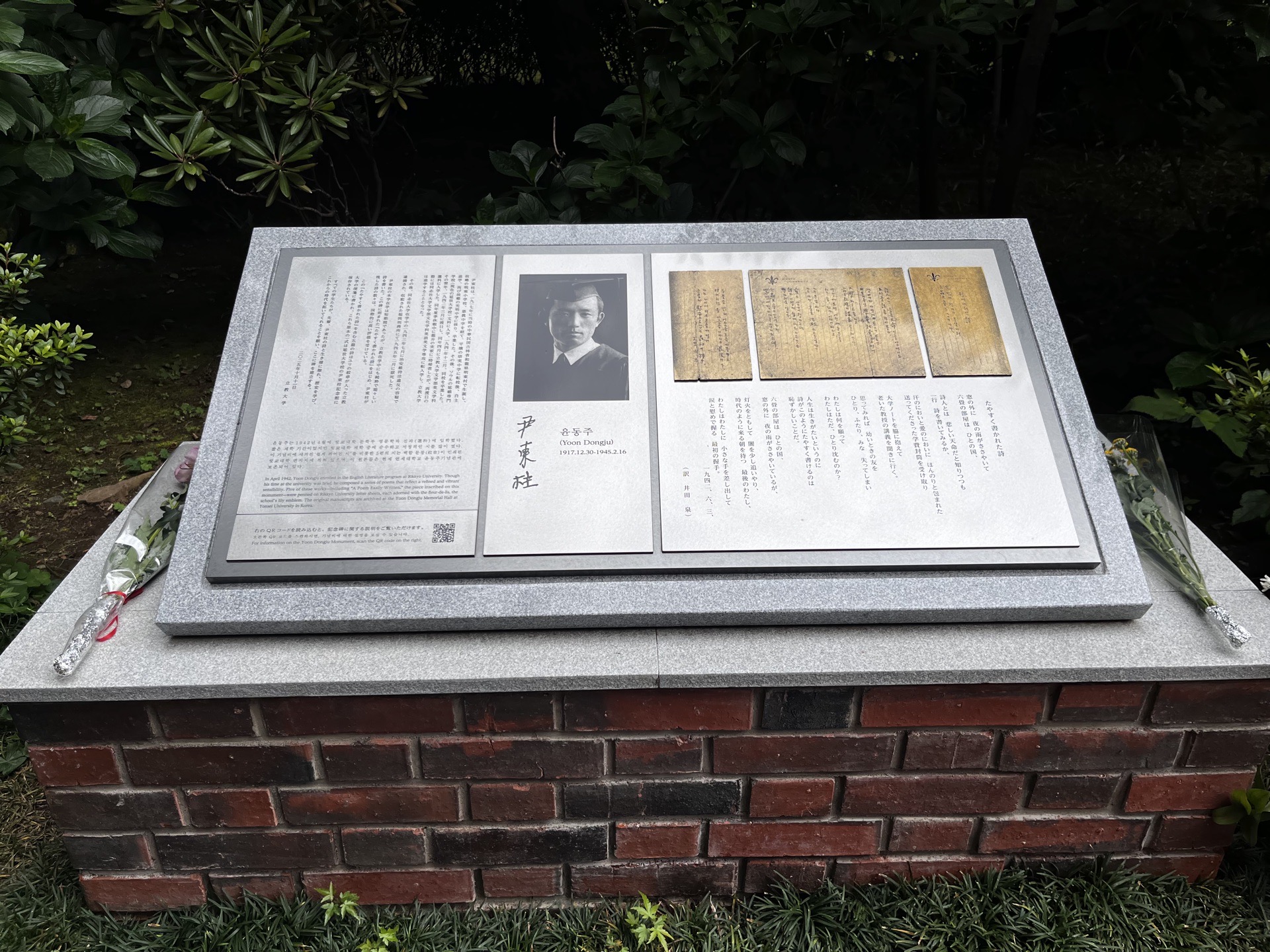
The campus also had a lot of history. We learned that red brick Morris Hall survived both the Great Kanto Earthquake and World War II air raids, which is fascinating to think about. We also saw the chapel and the old dining hall that students compare to Harry Potter. One of the most meaningful parts of the visit was learning about Yoon Dong-ju, a Korean poet who studied at Rikkyo during Japanese colonial rule over Korea. He continued writing in Korean even while the language was being suppressed, and later he was arrested and died in prison. There is now a monument for him on campus. His story connected to our textiles theme in a way I didn’t expect. Textiles reflect culture and identity, and his poetry felt the same way because he used writing to keep hold of his identity at a time when people were being pushed to let go of it.
There were also other connections to our other themes. Rikkyo was founded at a time when Western education and ideas, including medicine, were becoming more common in Japan, and the school still shows that mix of Japanese tradition and Western influence. It also made me think about sugar because the campus felt very centered around community. The cafes, dining halls, and traditions like the winter illuminations give students places to come together.
Overall, it was fascinating to witness the contrast between college life in the States and Japan – from the tranquility of the “Twin Giants,” the Harry Potter-like dining hall, and learning about Yoon Dong-ju’s story, Rikkyo University represents a striking intersection between what we typically perceive as “Western” culture and “Japanese” culture. At the end of the day, the thing that moved me the most was witnessing just how similar we all are.