By: Akua and Caitlyn
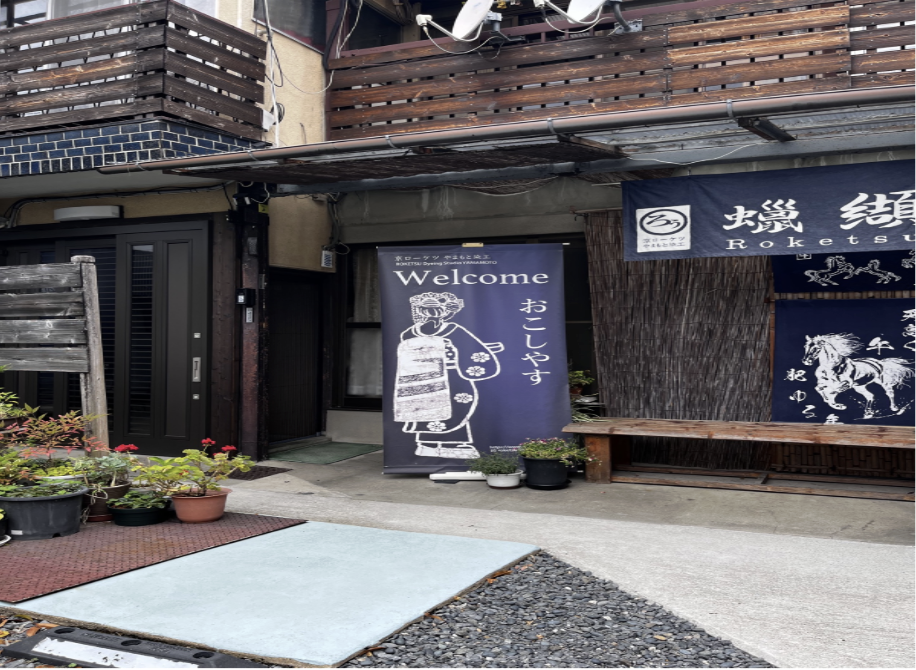
Roketsu Dyeing studio
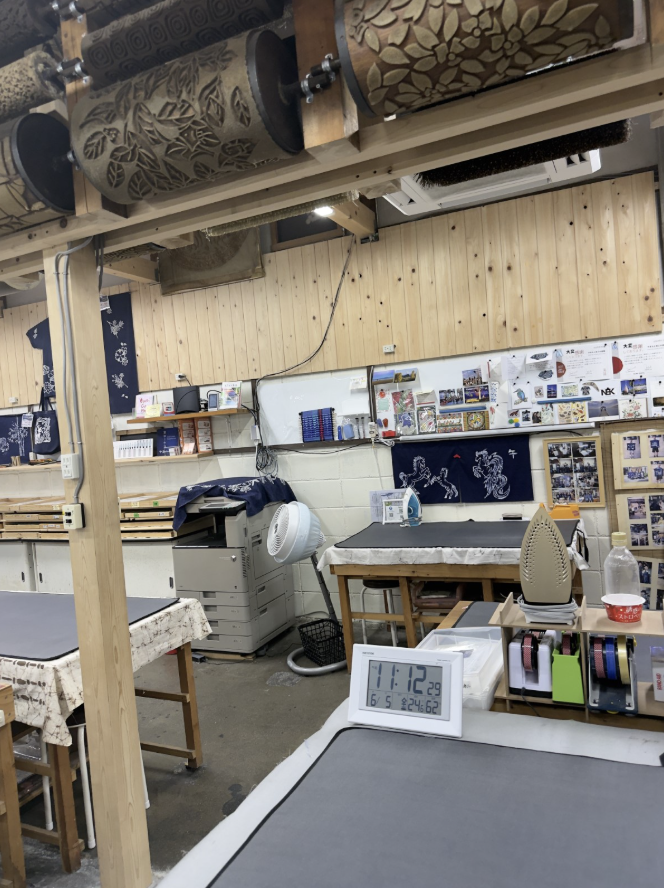
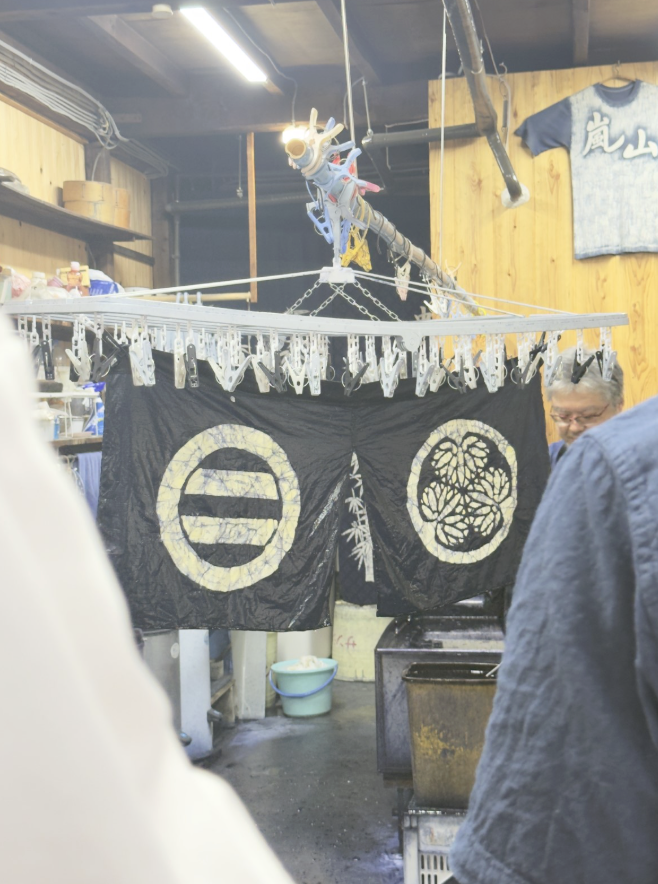
On this day, we visited Roketsu Dyeing Studio in Kyoto to experience a traditional textile dyeing method known as wax-resisting dyeing. This method involves the application of wax onto a cotton fabric to make a design. We used different templates to trace designs onto tote bags, t-shirts and norens (a fabric divider used to separate spaces in Japanese households).
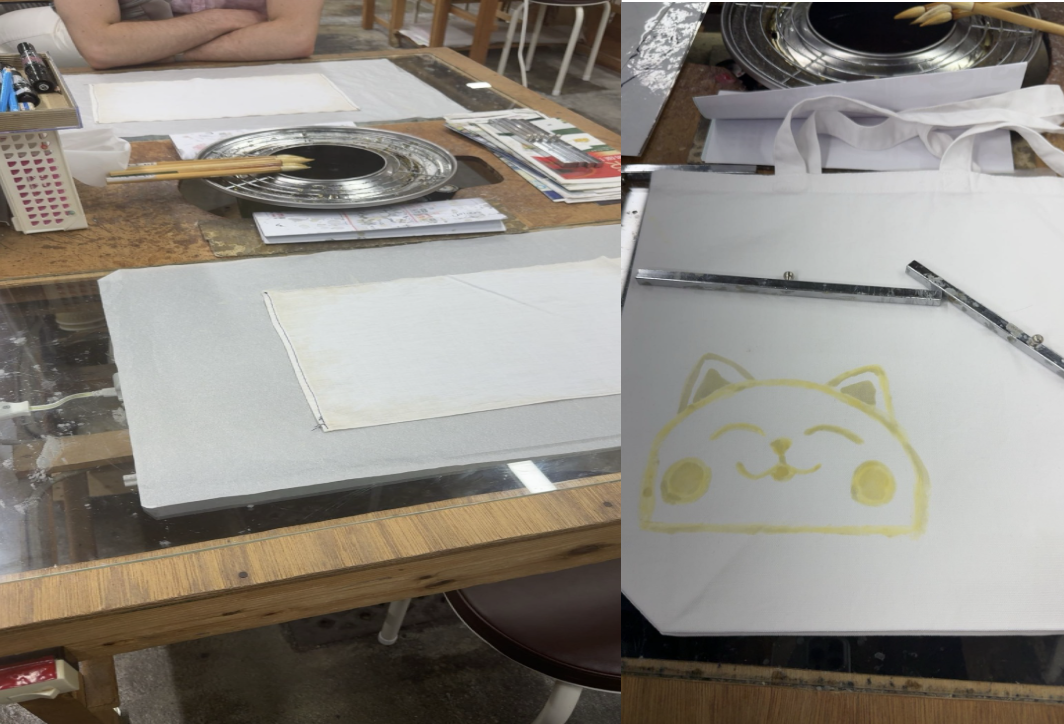
A dyeing station
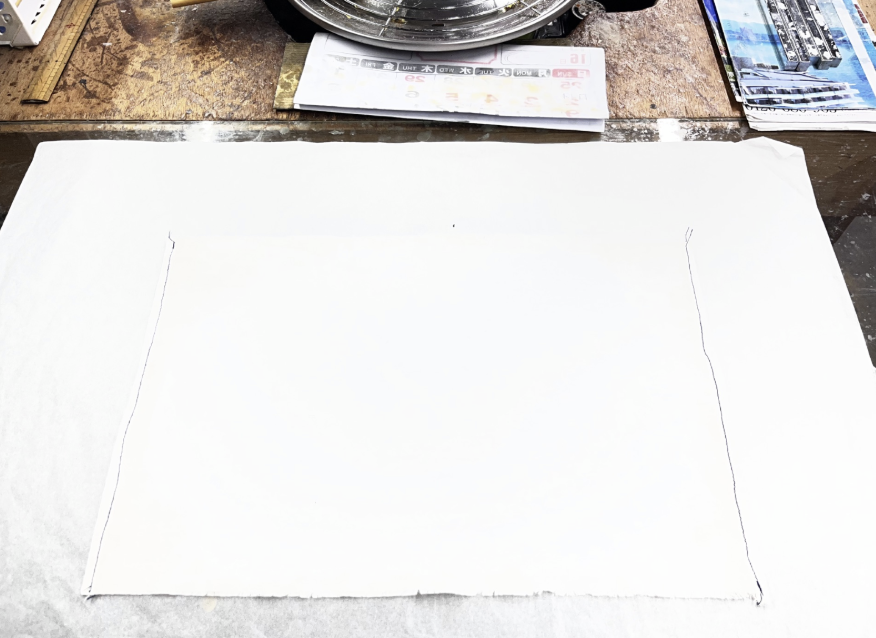
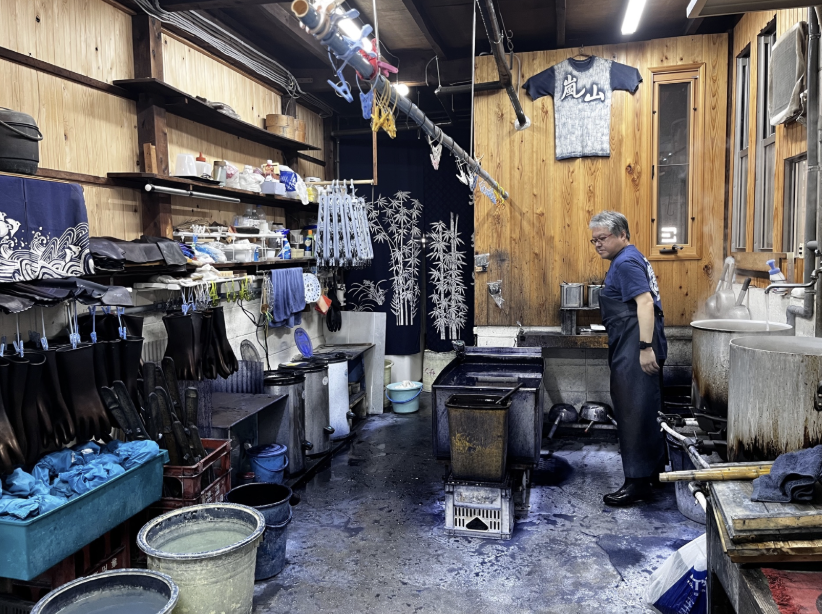
Roketsu is a family business that has been working in kimono dyeing for over 50 years and going in there, we learned about the process of this dyeing method and the antibacterial properties of indigo. We were seated at wax stations and checked out our lights, brushes and wax before we went on to do a practice round on a piece of cloth. After the practice round, we picked out our designs and then we traced them twice on our product of choice (bag, t shirt or noren) with hot wax. After that, we started the dyeing process. This involved dipping the tote bag into a tub of indigo solution and then swishing and pushing it down the tub to get the wax out (for 8 minutes). The bag is then submerged into a cylinder of water (90 degrees Celsius), then put into boiling soap and then rinsed in water once more. Finally, you wring it out and hang it to dry before ironing it. In doing all this, we wore thick rubber gloves, aprons, and boots.
We all appreciate the time, effort, and care that goes into dyeing these products. Again, this TREK has shown us the importance of textiles (just like the lessons from Maruwa Textiles or Nishijin Textiles Center) and it goes beyond textiles and encompasses the values of patience and discipline. Being exposed to these behind-the-scenes crafts and invisible labor really put us out of the tourist gaze and into a state of reflecting and experiencing the value of what we wear, eat and consume in general.
Another thing that was eye-opening about this experience was the sheer amount of intentionality needed for each step, from tracing with the hot wax to the dyeing process. This especially applied to something that seemed deceivingly simple, which was holding the brush to trace our designs onto our product of choice. Each movement required careful and deliberate thought; the amount of pressure applied, the angle of the brush, the steadiness of the hand, and the speed of each stroke. A simple trace required an immense amount of concentration and precision. If not, one single mishap could impact the final product, which made each action purposeful. With all these factors in mind, one trait truly determined the outcome of the product: patience. In our daily lives, we are accustomed to seeing products ready for consumption without thinking about the labor behind them – and this workshop revealed the time, discipline, and craftsmanship required in not only creating textiles, but in various other art forms as well.
In a sense, this type of labor is connected to our visit to Maruwa Textiles, too. At Maruwa, we learned about the textile industry and the production of fabrics on a larger scale. Participating in the dyeing workshop, however, allowed us to experience firsthand labor, skill, and expertise behind a different type of textile production. The intentionality needed for each brushstroke and each step of the dyeing process showed us that textiles go beyond simple manufactured goods and are products that are shaped by skilled hands and generations of knowledge. They remind us that the value of textiles comes from both the material and the care and tradition that is invested in its creation.
Enjoy these photos!: