Roketsu Dyeing Studio

By: Akua and Caitlyn
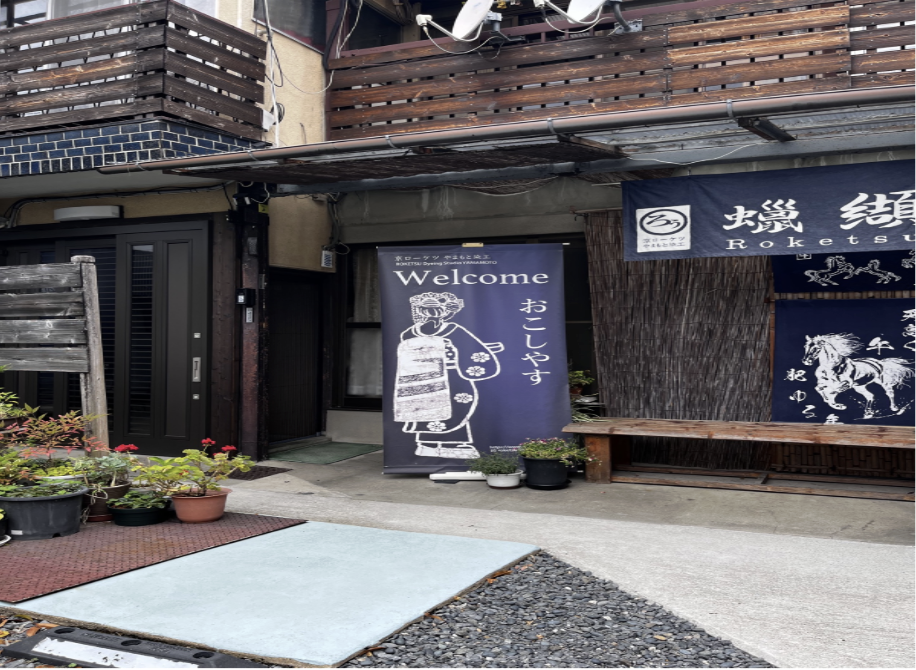
Roketsu Dyeing studio

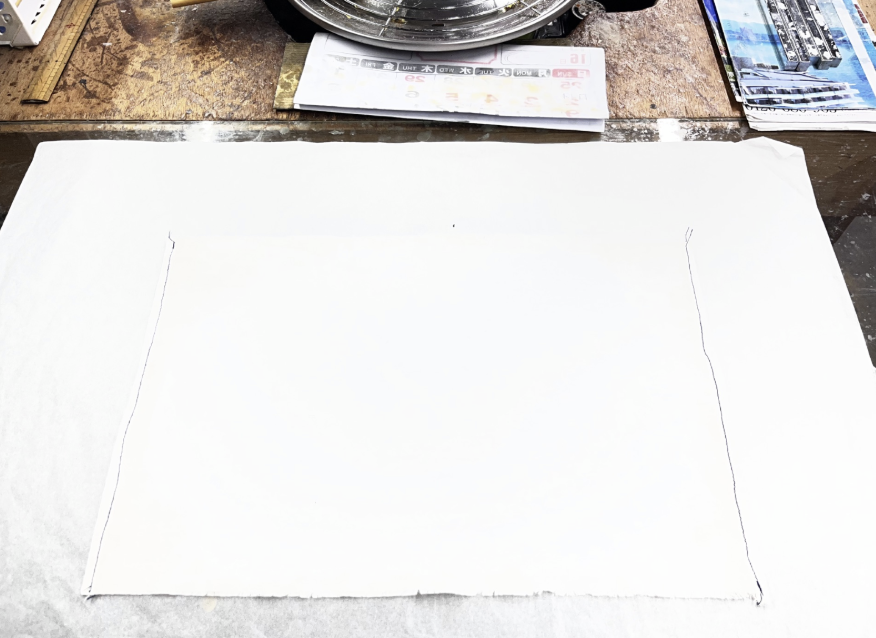
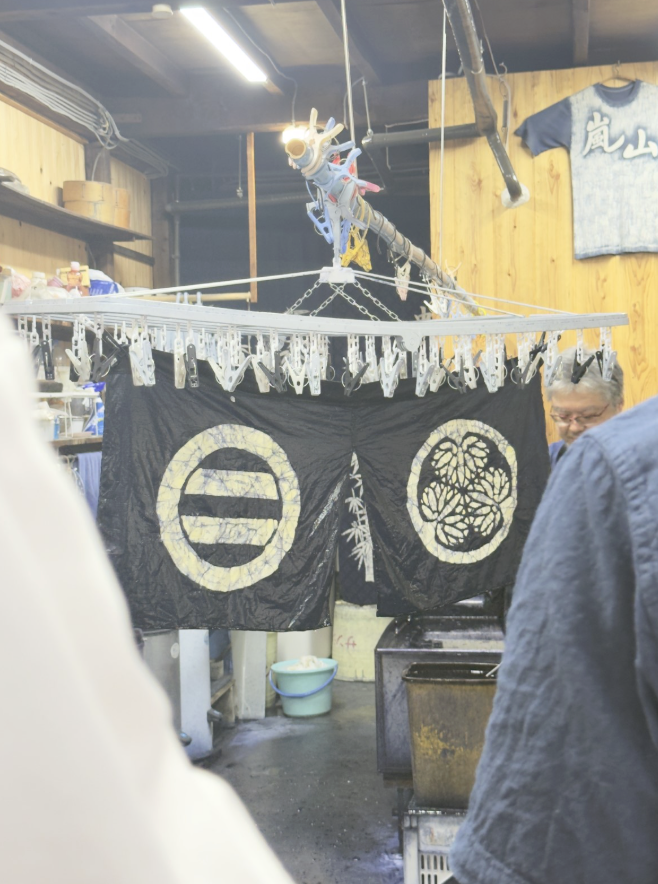
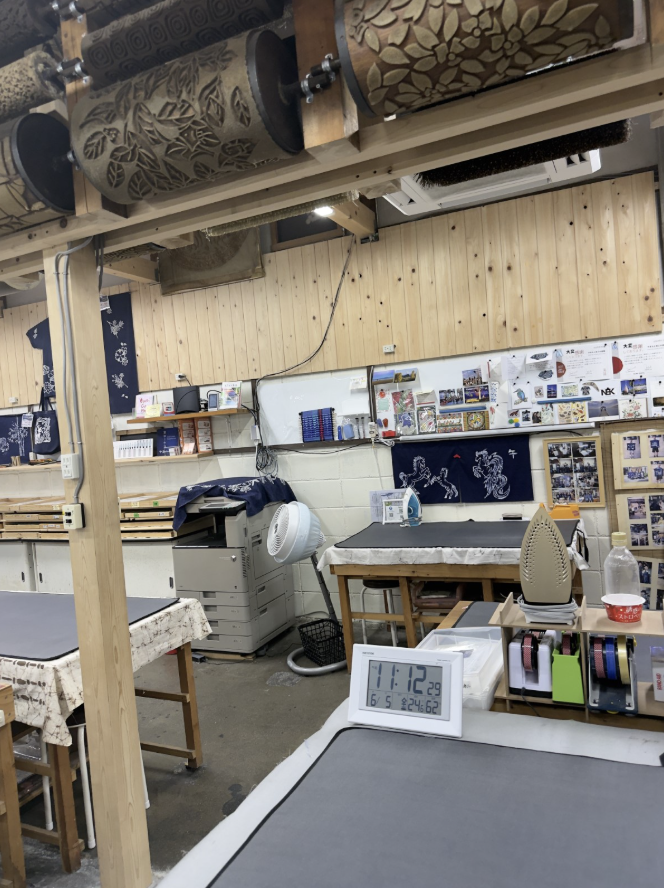
On this day, we visited Roketsu Dyeing Studio in Kyoto to experience a traditional textile dyeing method known as wax-resisting dyeing. This method involves the application of wax onto a cotton fabric to make a design. We used different templates to trace designs onto tote bags, t-shirts and norens (a fabric divider used to separate spaces in Japanese households). 
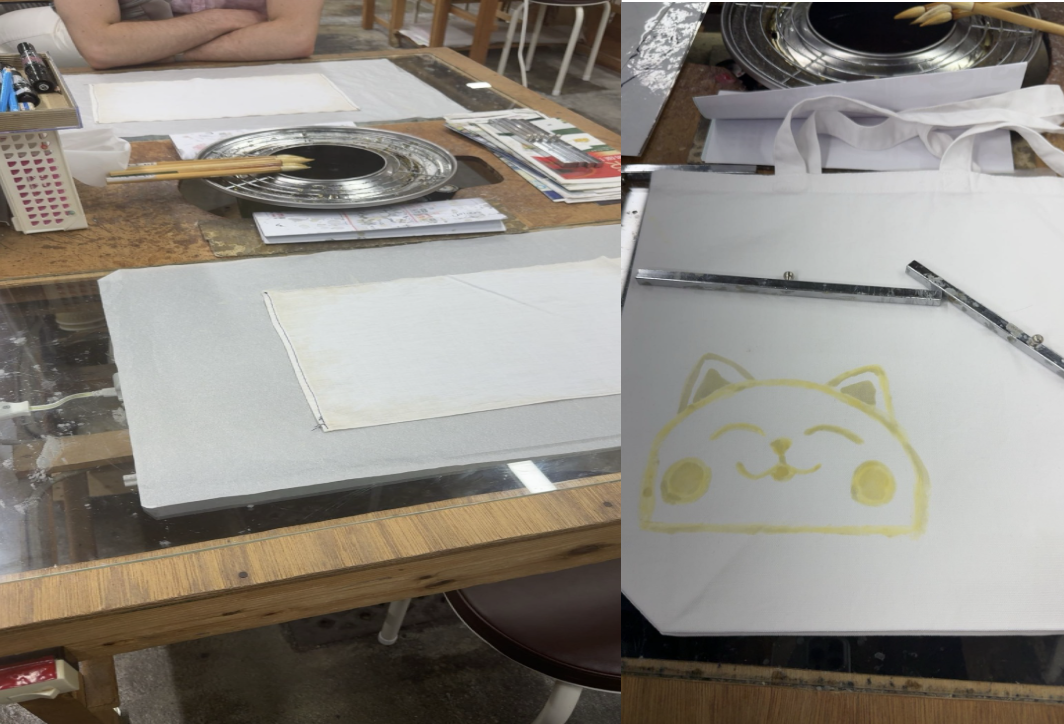
A dyeing station

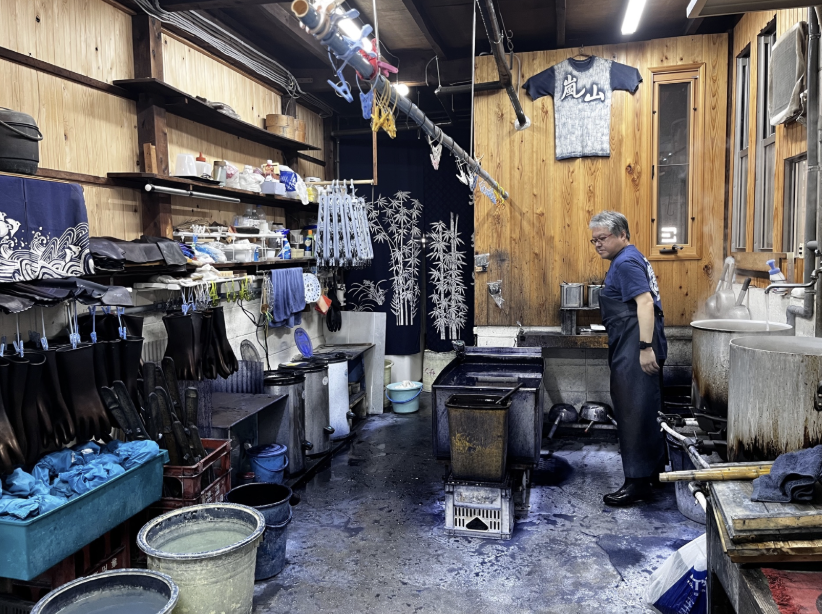
Roketsu is a family business that has been working in kimono dyeing for over 50 years and going in there, we learned about the process of this dyeing method and the antibacterial properties of indigo.  We were seated at wax stations and checked out our lights, brushes and wax before we went on to do a practice round on a piece of cloth. After the practice round, we picked out our designs and then we traced them twice on our product of choice (bag, t shirt or noren) with hot wax. After that, we started the dyeing process. This involved dipping the tote bag into a tub of indigo solution and then swishing and pushing it down the tub to get the wax out (for 8 minutes). The bag is then submerged into a cylinder of water (90 degrees Celsius), then put into boiling soap and then rinsed in water once more. Finally, you wring it out and hang it to dry before ironing it. In doing all this, we wore thick rubber gloves, aprons, and boots.  

We all appreciate the time, effort, and care that goes into dyeing these products. Again, this TREK has shown us the importance of textiles (just like the lessons from Maruwa Textiles or Nishijin Textiles Center) and it goes beyond textiles and encompasses the values of patience and discipline. Being exposed to these behind-the-scenes crafts and invisible labor really put us out of the tourist gaze and into a state of reflecting and experiencing the value of what we wear, eat and consume in general.  

Another thing that was eye-opening about this experience was the sheer amount of intentionality needed for each step, from tracing with the hot wax to the dyeing process. This especially applied to something that seemed deceivingly simple, which was holding the brush to trace our designs onto our product of choice. Each movement required careful and deliberate thought; the amount of pressure applied, the angle of the brush, the steadiness of the hand, and the speed of each stroke. A simple trace required an immense amount of concentration and precision. If not, one single mishap could impact the final product, which made each action purposeful. With all these factors in mind, one trait truly determined the outcome of the product: patience. In our daily lives, we are accustomed to seeing products ready for consumption without thinking about the labor behind them – and this workshop revealed the time, discipline, and craftsmanship required in not only creating textiles, but in various other art forms as well. 

In a sense, this type of labor is connected to our visit to Maruwa Textiles, too. At Maruwa, we learned about the textile industry and the production of fabrics on a larger scale. Participating in the dyeing workshop, however, allowed us to experience firsthand labor, skill, and expertise behind a different type of textile production. The intentionality needed for each brushstroke and each step of the dyeing process showed us that textiles go beyond simple manufactured goods and are products that are shaped by skilled hands and generations of knowledge. They remind us that the value of textiles comes from both the material and the care and tradition that is invested in its creation. 

Enjoy these photos!:
Medicine and Tea in Japan

By: Jessica Latham and Akua

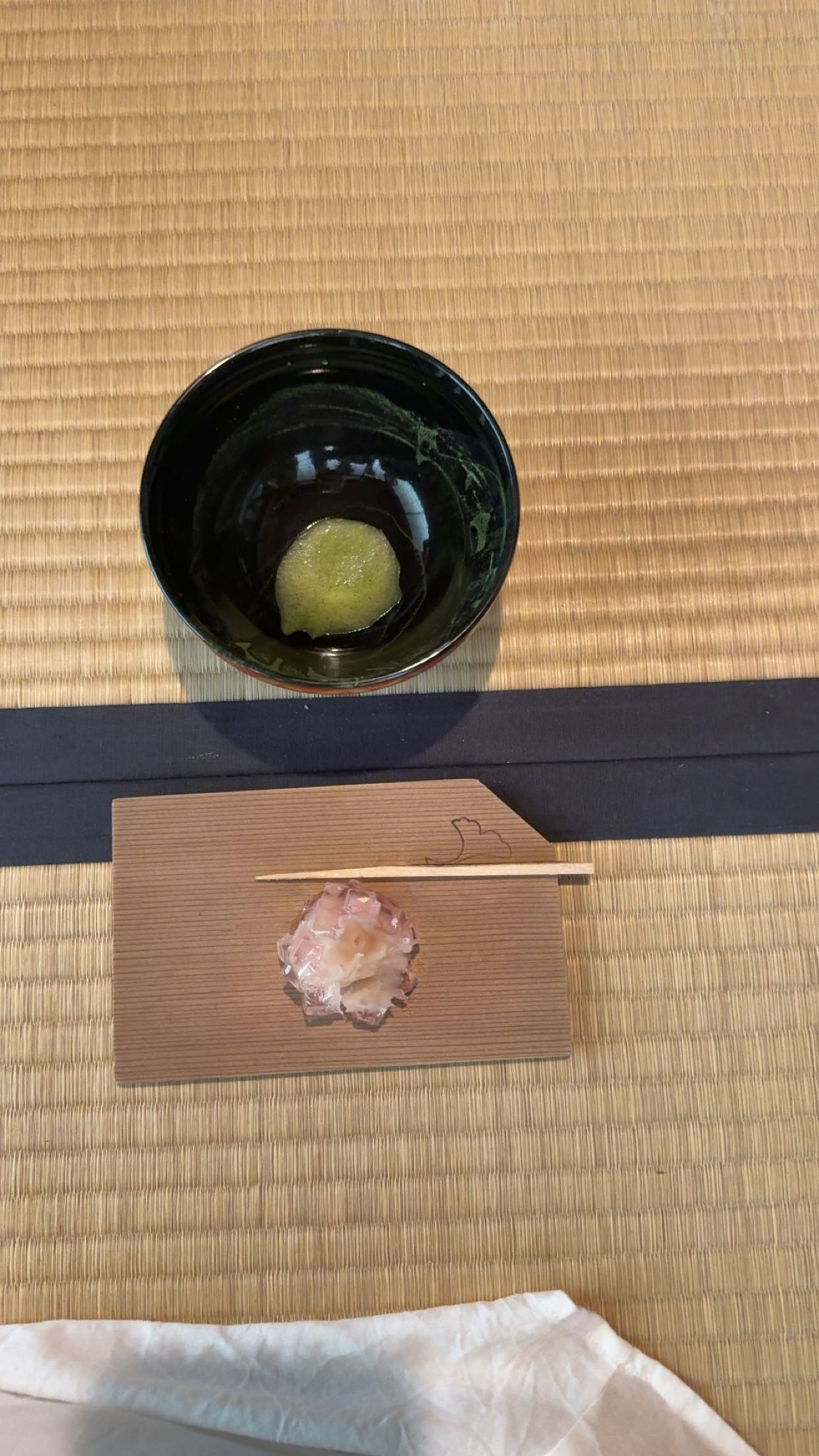
A traditional Japanese tea ceremony is a practice that has been used since the Edo period after the importation of tea from China. As it was typically used among elites, tea ceremonies were a great method of establishing diplomacy between two parties. Depending on the tea type; whether formal of informal, the ceremony can take 45-60 minutes or even 2 hours. The ceremony begins with the group in the garden: with guests sitting, watching the host gather herbs to be prepared in the ceremony. Usually, there is a place for both parties to purify their hands by rinsing them with water- a practice we have seen at multiple locations in japan, especially, at Shinto shrines. The group then moves into a tea room, where the meal and tea is served to each guest. In this act, there are roles for both guests and hosts- both showing respect to each other through methods of consuming or giving to the other.

Tea is an important part of Japanese culture and many things played a part in the infiltration of tea in the country’s culture and lifestyle. The first is the role of women in spreading tea culture through education. The tea ceremony was introduced into Japan’s education system for women to teach them bodily discipline and the grace needed for the “good wife and wise mother” (ryosai kenbo) ideology. Another way tea became a very important part of Japanese culture is through capitalists who kept tea connected to power through media depictions and sales. They use their power to ensure that tea is trademarked as Japanese and known as Japanese. Lastly, we have the intellectuals who define what tea is and in a book called “The Book of Tea” there are depictions of the origins of tea and everything was translated for a wider audience. This book and other works and conversations opens the world up to tea in Japan and its importance and change from a state craft to a national pride.

We also discussed and learned about medicine in Japan. Kampo originated from China when Buddhist monks brought over Chinese medicinal texts to be interpreted, imagined and translated. Medicine, as a whole, typically has four main understandings: functions of the body, methods of diagnosis, treatment, and prognosis. With Chinese medicine and Kampo, no one is defined by their illness. Rather, they deal with the manipulation and maintaining of essential life energy: Qi (known in Chinese medicine) and Ki (known in Japanese Medicine). Overall, we see the national pride of tea and medicine in Japan and how much discipline, grace, and bodily connections are a part of Japan. More so, how global markets and healthcare impact the establishment of nationalized culture.

Journey to Kyoto

By: Akua and Zach

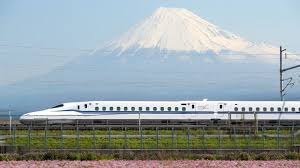
On this day, we began our journey to Kyoto on the Shinkansen bullet train. This is Japan’s high speed bullet train that is known for its fast and efficient system. It connects many cities across Japan with its structure and well-planned rails. Operated by the Japan Railway Group, the Shinkansen is admired for its high-speed travel and little to no delays (if late, it would be seconds rather than minutes). This transportation is seen as a symbol of technological advancement for the country and is a transportation system that can inspire other countries.  

Thinking about the Shinkansen experience, one reason the USA does not have high- speed railway systems like this one is because the country was built to be largely car centric. Accessible trains are mostly in large cities like New York City. Although the U.S.A. has regional lines like Flordia’s brightline that connects Orlando to Miami, projects like that are only possible because of Flordia’s lax zoning laws. Unlike the car centric nature of USA, we realized that although many Japanese people love cars and have a car culture of their own, few Japanese people drive cars because of how difficult it is to park a car or get around as quickly as a train or subway.  

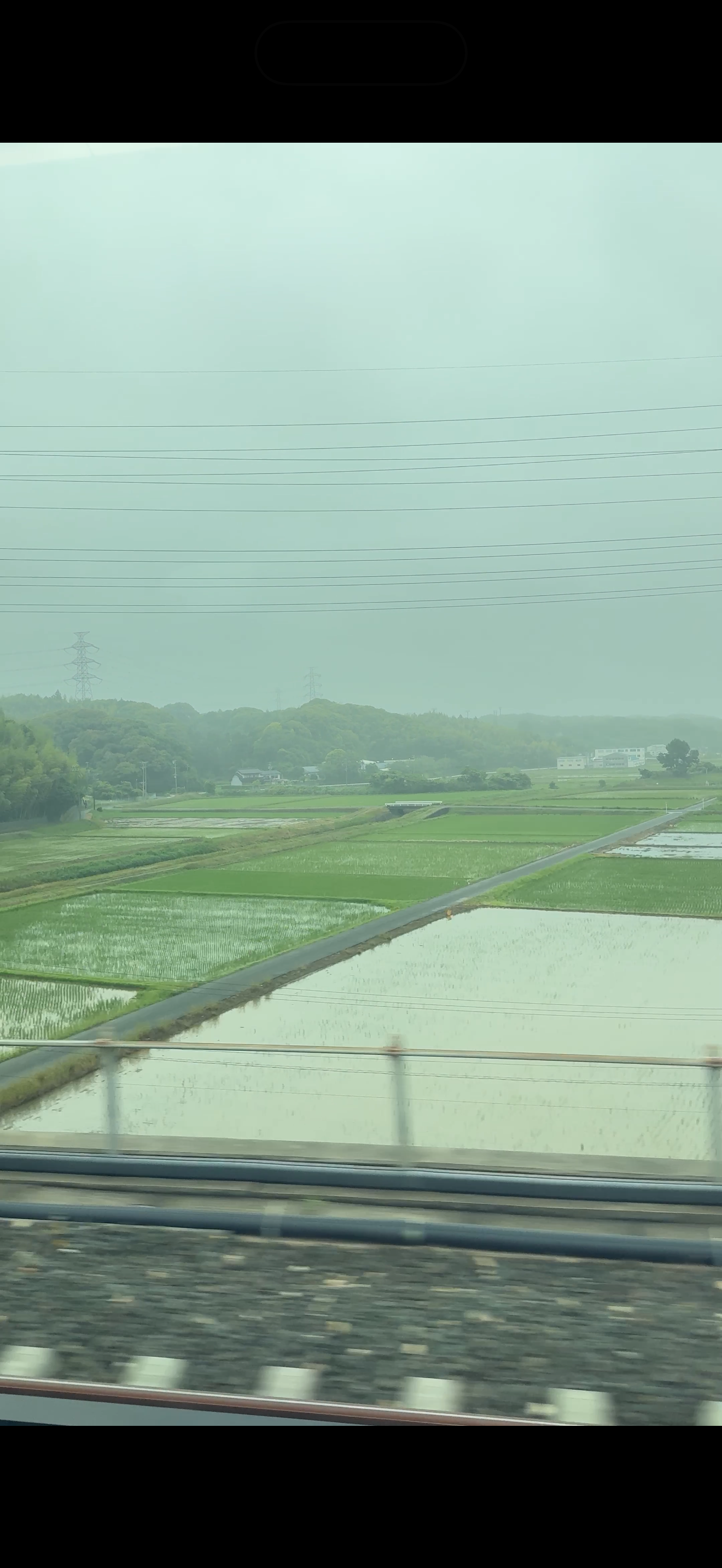
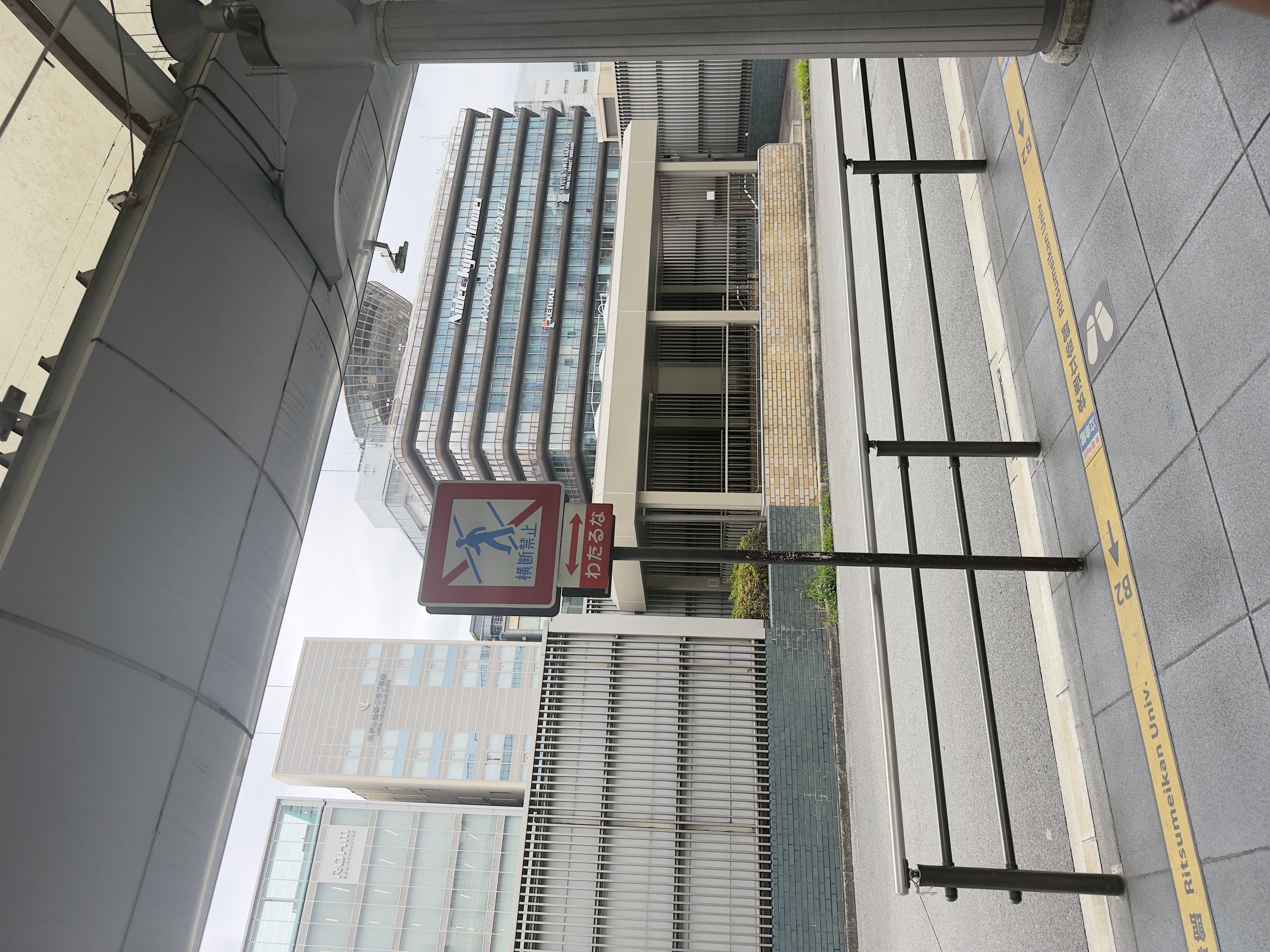
On our way to Kyoto, we observed how the train had a lot of leg room, overhead space for suitcases and more room for luggage at the back. As a group we all got bento boxes from the station and had them on the train. While on the journey we noticed the difference between Kyoto and Tokyo throughout the train ride. Kyoto had many farms, rice fields and mountains, and the urban design was outside of the typical high-rise city architecture. We got off the train after two hours and made our way to our first bus ride of the whole Japan transportation experience. It is quite similar to the U.K. bus system because it had the same card transaction method (Suica in Japan and Oyster in U.K.) and the same seat style. While riding the bus, we noticed more differences between Kyoto and Tokyo because Kyoto seemed to have more buses, bicycles and felt more homey in the sense of having an elderly population (for the area we stayed at). Kyoto was much quieter and as opposed to Tokyo, there were fewer high-rise buildings.  

To conclude, we had a very smooth ride on the Shinkansen and ultimately were immersed into a different experience in Kyoto tan Tokyo. They differed in many ways from the common transportation mode to the architecture and in some ways the demographic residing in the aera. To immerse yourself in our Shinkansen ride, you can imagine a fast, smooth, quiet, and zero turbulence car ride or a much better airplane ride.  

Exploring commodities at the Edo Tokyo museum

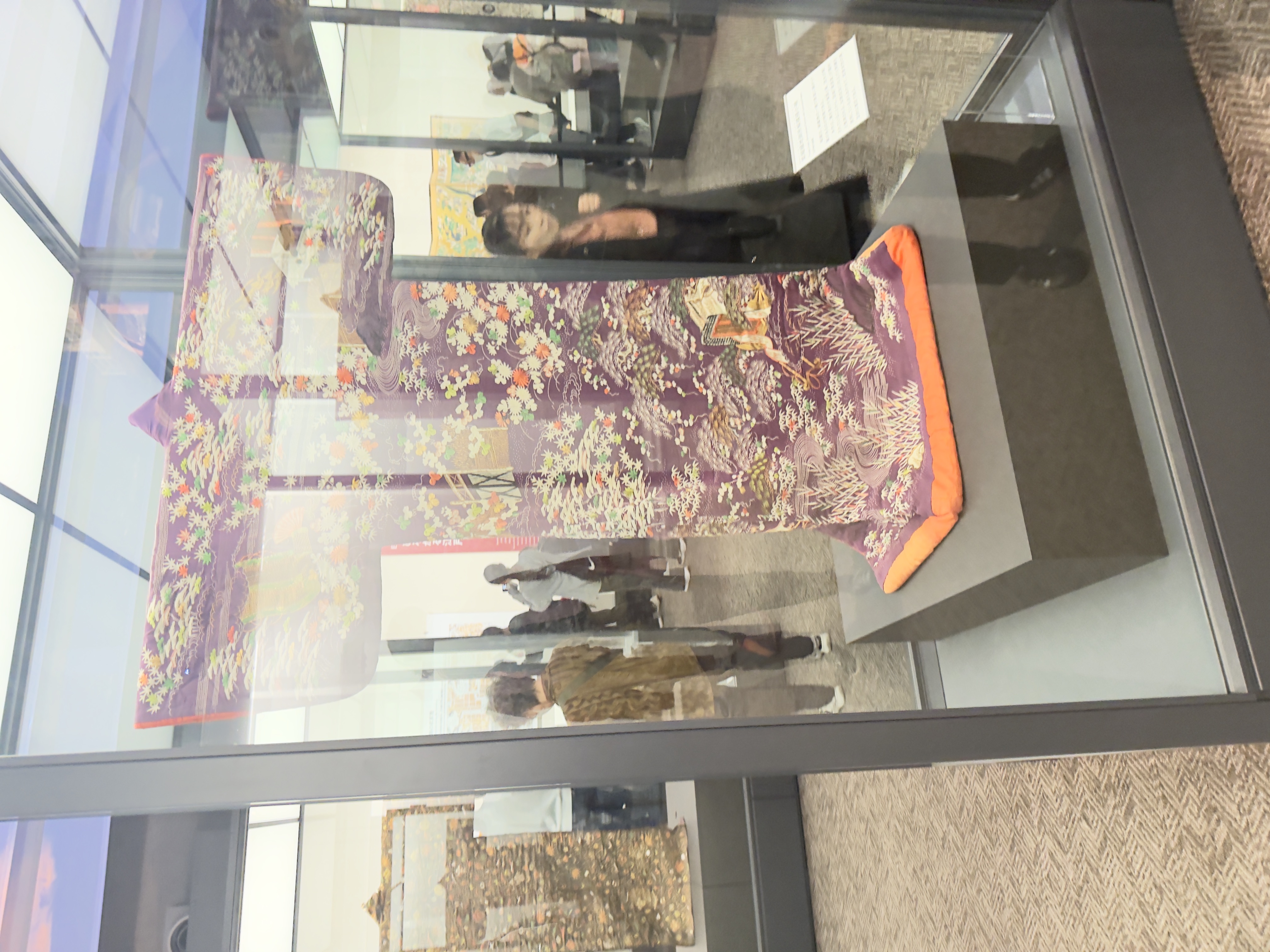
Purple Kimono.

May 22: Edo Tokyo Museum Day

Akua and Gabby

As a group, we delved deep into the fascinating Edo period by exploring the newly renovated Tokyo Museum, which depicts the period spanning from 1603 to 1868. This period was known for its unprecedented peace due to the hierarchical chain that took warriors off the battlefield and into aristocratic seats of government. The reigning shogun of the period was Tokugawa Yoshimune (who lived as long as his rule), who imposed internal isolation on Japan to avoid war. In spite of this, Tokyo was a thriving city with a bustling culture, and its life was supported by commodities that helped shape the distinct features of the Edo period. As we explored the museum, we discovered 3 commodities that were part of the lives of Edo citizens, such as medicine, textiles, and sugar. 

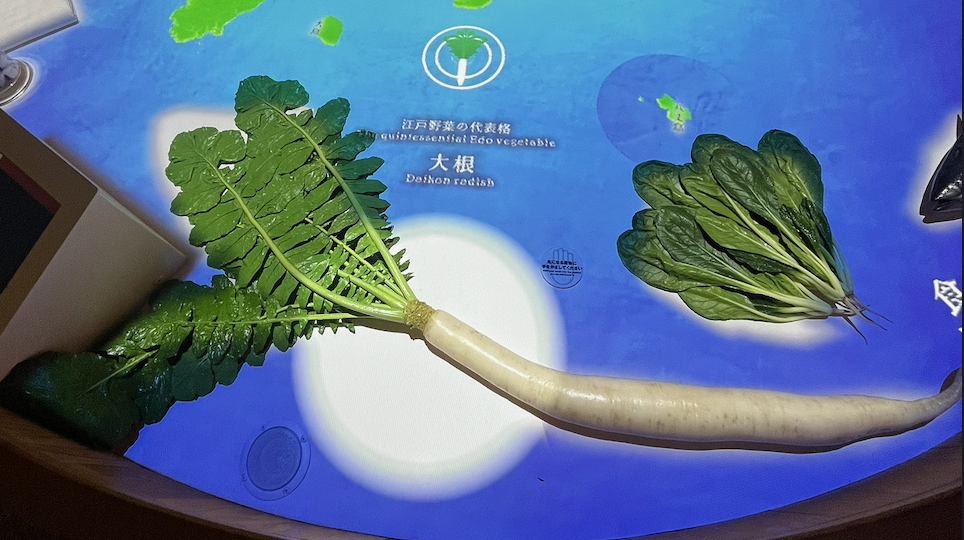
A commodity is a raw material or primary good used to produce other goods (products). In the Edo period, the commodities in medicine were not branded products; they were raw materials that became medicine in their use. During this period, there was one superfood that took on this role, with locals calling it “the doctor of the kitchen” or isho-goroshi; this was known as the daikon radish. It was given this name because it was known to prevent indigestion, respiratory issues (e.g., colds), and disease. Its medicinal properties turned a seemingly “simple” radish into a superfood that works as both nutritional and medicinal, safeguarding the people and adding to the long tenure of peace.

The second commodity we discovered was the use of kimonos as textiles. We saw a section of different silk kimonos from the Edo period. The kimonos did not have much writing next to them, but after doing some research, we found that the purple ‘murasaki’ kimono was originally made from silk. In early Japanese history, the color purple as a dye was a lawfully forbidden color for people of the lower classes because the color represented the imperial family and the high-ranking nobles. However, during the Edo period, the Shogun Tokugawa Yoshimune led the change in policies in agriculture, allowing the cultivation of the murasaki plant (which had purple dye) that became a way for townspeople to be able to wear the purple color. The lower class started wearing silk kimonos with purple accents as they were unable to attain large amounts of the dye; the commodity of purple silk kimonos was only available to the shogunate’s family. Later on, the color was popularized by Kabuki theatre because the characters wore or embraced the purple color as a symbol of defiance. 

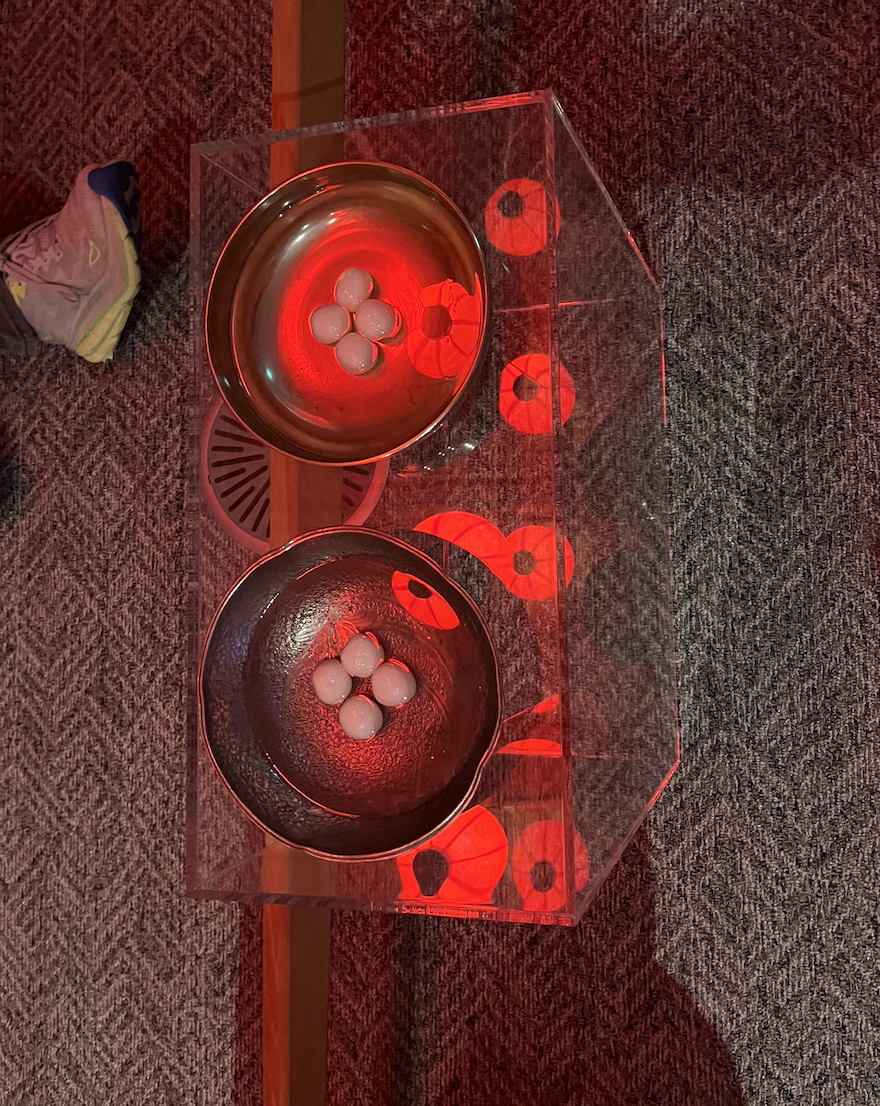
The third commodity that played a defining role in Japan is sugar. This commodity is now known as a cultural marker for the country, which is sugar. What was so fascinating about what is now known as a crucial phenomenon in Japan, sugar in the Edo time period was diluted into cold water with mochi balls floating on it, mainly for the shogun’s family; this also showed how difficult it was to access sugar, which mainly came from trade with the Chinese and the dutch thought he Nagasaki port, making the commodity of sugar a formally exclusive material.

 To conclude, commodities play a large role in the lives of people, especially in cities with constant trade. A commodity’s use and popularity hold power; it can be like sugar and purple kimonos that are only accessible to the common few, or it can be like the daikon radish that served a role in medicine, and its gains in popularity only aided the population’s health and safety, regardless of commitment. It plays a significant role, and the functioning of societies and their niches does not go unrecognized.

Privacy Statement